Think Differently: A big relief to bona fide buyers on input credit provided that 14-point Guide line to department before invoking 16 (2) C of CGST – A Measured Relief for Genuine Buyers: 14 Guidelines the Department Must Follow Before Invoking Section 16(2)(c) of the CGST Act
Summary: The Punjab & Haryana High Court in Shaurya Alloys Pvt. Ltd. v. State of Punjab & Another, CWP-34296-2024 (O&M) and connected cases, 2026 considered a large batch of writ petitions concerning denial of Input Tax Credit under Section 16(2)(c) of the CGST Act where suppliers allegedly failed to pay tax to the Government. While upholding the constitutional validity of Section 16(2)(c) and declining to read it down, the Court held that the provision cannot be invoked routinely or mechanically. It prescribed 14 guidelines for proper officers of the Central Government, Punjab, Haryana and the UT of Chandigarh. These require application of mind before issuing an SCN, disclosure of supplier particulars and relied-upon material, establishment of a direct link with the buyer, foundational facts where fraud or suppression is alleged, consideration of evidence produced by the purchasing dealer, scrutiny of retrospective cancellation of suppliers, examination of recovery proceedings against defaulting sellers and application of the law applicable to the relevant tax period. The guidelines also address Section 155 burden of proof, re-availment under Section 41(2) and Rule 37A, cancellation of registration, personal hearing, cross-examination, speaking orders and deposits made during investigation. The Court did not determine the genuineness of individual transactions and instead directed the proper officers to reconsider the petitioners’ cases in accordance with these procedural safeguards.
Introduction
The Punjab & Haryana High Court has decided Shaurya Alloys Pvt. Ltd. v. State of Punjab and Another along with a large batch of connected writ petitions, and the ruling is of real significance for genuine buyers who have taken Input Tax Credit (ITC) on purchases from suppliers who later defaulted. After an extensive review of the earlier decisions, the Court has laid down 14 guidelines that the proper officers of the Central Government, Punjab, Haryana and the UT of Chandigarh must follow before invoking Section 16(2)(c) against a purchasing dealer. As the saying goes, justice may be delayed but is not denied, and the judgment makes a serious effort at separating the genuine buyer from the one who is part of the chain.
It is important to read the relief in its proper scope. The Court upheld the constitutional validity of Section 16(2)(c) and declined to read it down to cases of fraud, collusion or non-existent transactions, citing judicial discipline in view of the Gujarat High Court’s Maruti Enterprises ruling and the Supreme Court’s dismissal of the SLP in Bhandari Scrap Traders. What it did was hold that the provision cannot be applied mechanically, and that its guidelines “do not dilute or add to” the conditions of Section 16(2) but ensure they are enforced as the statute contemplates. The Court also did not examine the facts of individual cases, since the Revenue asserted that several transactions were not genuine.
1. Authorities Considered
The following are the principal decisions discussed in the judgment.
| Court | Case | Relevance in the judgment |
|---|---|---|
| Supreme Court | Bhandari Scrap Traders v. Union of India, 2026 SCC OnLine SC 1570 (order dated 24.07.2026) | SLP dismissed against the Gujarat High Court’s Maruti Enterprises ruling upholding Section 16(2)(c); noted no parity between the Delhi VAT Act and the CGST Act. |
| Supreme Court | G.R. Infra Projects Ltd., Ratlam v. State of M.P. (decided 19.08.2026) | Requirements for a valid Section 74 notice must appear in the notice itself, not be supplied later by a counter affidavit. |
| Supreme Court | Tata Steel Ltd. v. Union of India, 2026 INSC 920 (decided 25.08.2026) | Officer’s satisfaction on fraud or suppression must be evident from the notice; the words cannot be recited mechanically. |
| Supreme Court | Commissioner of Trade & Tax, Delhi v. Arise India Ltd., (2018) SCC OnLine SC 3859 | SLP dismissed against the Delhi High Court’s On Quest ruling (under the Delhi VAT Act). |
| Gujarat High Court | Maruti Enterprises v. Union of India, 2026 SCC OnLine Guj 4013 | Upheld the constitutional validity of Section 16(2)(c); followed by the Punjab & Haryana High Court. |
| Delhi High Court | On Quest Merchandising India Pvt. Ltd. v. Govt. of NCT of Delhi | Read down the Delhi VAT provision to protect bona fide purchasers; the Court declined to read down Section 16(2)(c) on these lines. |
| Other High Courts | Sahil Enterprises v. Union of India, 2026 SCC OnLine Tri 4 (Tripura); Instakart Services Pvt. Ltd. v. Union of India, 2026 SCC OnLine Kar 2469 (Karnataka); National Plasto Moulding v. State of Assam (Gauhati) | Cited for the reading-down approach under GST. |
| Punjab & Haryana High Court | Gheru Lal Bal Chand v. State of Haryana (Division Bench) | Cited in the reading-down discussion; the Court, citing judicial discipline, did not read down Section 16(2)(c) on this basis. |
2. The 14 Guidelines (Paragraph 103)
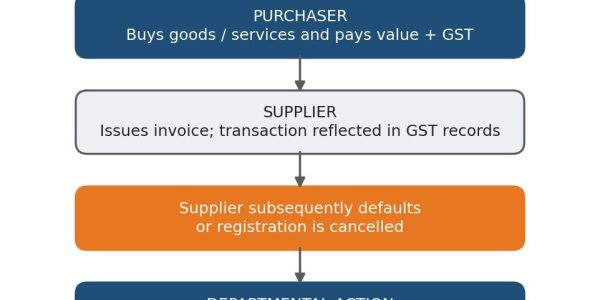
Section 16(2)(c) of the CGST Act makes ITC conditional on the supplier actually paying the tax to the Government. The Court’s guidelines are as follows.
1. No routine or mechanical invocation of Section 16(2)(c). Retrospective cancellation of the seller’s registration, a “nil” or short tax liability in the seller’s return, or an alert or complaint may be a legitimate starting point for an inquiry, but none of these by itself justifies denying or reversing the buyer’s ITC. [Para 103(i)]
2. Application of mind before the SCN. The proper officer must examine and record satisfaction on the seller’s particulars, invoices, tax periods and ITC involved; the precise nature of the default (not paid, short paid, or paid through inadmissible ITC); why the seller defaulted; and what recovery proceedings (Sections 73, 74, 75(12) with 79, or 76) are pending against the seller. [Para 103(ii)]
3. Direct link with the buyer. The investigation must establish some direct link between the purchasing dealer and the suppliers to show breach of the conditions of Section 16(2). [Para 103(iii)]
4. Full disclosure in the SCN. The notice must disclose these particulars, the material relied upon, the supplier details and how ITC is alleged to have been wrongly availed. Relied-upon documents (alert notices, inspection reports, panchnamas, statements, e-way bill, vehicle, toll and banking data) must be supplied, subject to any lawful privilege. [Para 103(iv)]
5. Foundational facts for fraud (Section 74 / 74A). The notice itself must state the facts from which fraud, wilful misstatement or suppression is inferred; a bald recital of these words is not enough and cannot be cured by a counter affidavit. The seller’s fraud is not the buyer’s fraud unless the notice connects the buyer to it. [Para 103(v)]
6. Burden on the buyer under Section 155. The purchasing dealer must establish eligibility, and may do so with the tax invoice and proof of receipt of goods or services (e-way bills, transport receipts, weighbridge slips, stock and consumption records). The officer must consider this material and deal with it in the order. [Para 103(vi)]
7. Scrutiny of retrospective cancellation. Where denial rests on retrospective cancellation of the seller’s registration, the officer must examine the grounds and the date of cancellation and whether they have any bearing on the genuineness of the particular supply to the buyer. [Para 103(vii)]
8. Remedy against the seller cannot be rendered toothless. The officer must ascertain and record the status of proceedings against the seller and coordinate with the seller’s jurisdictional officer where needed. If the tax is recovered from or paid by the seller, it must be accounted for so the same tax is not realised twice, and the buyer may avail or re-avail credit as permitted by the proviso to Section 41(2) and Rule 37A, subject to Section 17(5)(i). [Para 103(viii)]
9. Apply the law as it stood in the relevant period. The officer must keep in mind the phases of the scheme: before 01.10.2022 (original Section 41; no re-availment mechanism), from 01.10.2022 (Section 41 substituted, clause (ba) inserted in Section 16(2)), and from 26.12.2022 (Rule 37A). Later amendments, including clause (aa) of Section 16(2) from 01.01.2022, cannot be applied to earlier periods. [Para 103(ix)]
10. No cancellation of the buyer’s registration on this ground alone. The buyer’s registration cannot be cancelled, least of all retrospectively, merely because ITC was taken on purchases from a seller whose registration was later cancelled, without independent satisfaction of a ground under Section 29(2) and compliance with procedure. [Para 103(x)]
11. Personal hearing and cross-examination. A personal hearing must be given under Section 75(4). Where third-party statements are relied upon and cross-examination is sought, the request must be considered and decided by a reasoned order. [Para 103(xi)]
12. Speaking order. The order must set out the facts and basis of decision (Section 75(6)), deal with the reply and documents, and record a specific finding on each disputed condition of Section 16(2) and, under Section 74, on the fraud, wilful misstatement or suppression attributable to the noticee. [Para 103(xii)]
13. Deposit during investigation does not cure a defective SCN. A deposit made during investigation, whether through Form GST DRC-03 or otherwise, does not by itself dispense with the need for the SCN to disclose foundational facts. Its character and effect are for the proper officer to determine on the facts. [Para 103(xiii)]
14. Applicability. The guidelines govern proceedings pending before proper officers (Central Government, Punjab, Haryana and the UT of Chandigarh) as well as proceedings initiated hereafter. [Para 99, 103(xiv)]
3. Directions in the Present Petitions (Paragraph 105)
Because the Court did not decide the facts of individual cases, it disposed of the petitions with the following directions. These apply to the petitioners before it, not automatically to every buyer.
- Where the matter is at SCN stage, the petitioners may file a reply or supplementary reply with supporting material within eight weeks, after which the proper officer must pass a reasoned, speaking order following a hearing and keeping the guidelines in view.
- Where an SCN lacks the particulars or material contemplated by the guidelines, the proper officer must supply them.
- If a supplementary notice or corrigendum introduces a new ground or provision, the noticee may object and the objection must be decided in the fresh order.
- Where orders have already been passed, the proper officer must revisit the matter in light of the guidelines, after a personal hearing, and pass a fresh reasoned order; the impugned orders are not interfered with but will abide by the fresh decision.
- Amounts already deposited or recovered (including by ITC reversal or debit of the ledgers) will abide by the fresh decision and be adjusted or refunded with admissible interest where warranted.
- No fresh coercive recovery action against the petitioners on the impugned notices or orders until the proper officer decides.
- All pleas on merits are left open, and the Department remains free to proceed against the defaulting selling dealers.
4. Practical Takeaways for Buyers
- Keep the proof ready. The burden under Section 155 is on you. Maintain tax invoices, e-way bills, transport and weighbridge records, stock and consumption records, and bank payment evidence for every purchase on which ITC is claimed.
- Check the notice, not just the demand. Test any SCN against the guidelines: does it disclose the supplier particulars, relied-upon documents, the link to you and, under Section 74, the foundational facts of fraud?
- Insist on process. Ask for missing documents, a personal hearing, and where third-party statements are used, cross-examination. Expect a reasoned order.
- Watch the seller’s status. If the supplier later pays the tax, credit may be re-availed under Section 41(2) proviso and Rule 37A, subject to Section 17(5)(i). Track the period, as the legal position differs before and after 01.10.2022 and 26.12.2022.
Note: This article is a summary prepared from the text of the judgment for general information and is not legal advice. Readers should consult the full judgment and a qualified professional for their specific facts.