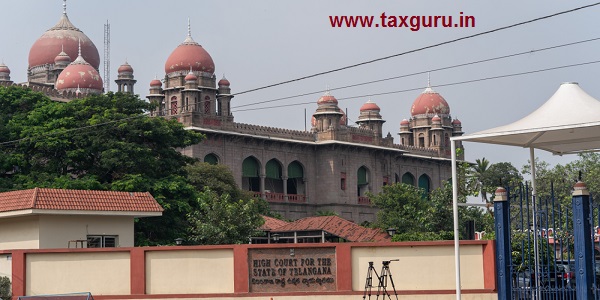
This analysis examines the applicability of the 10% pre-deposit requirement introduced by amendments to Sections 107(6) and 112(8) of the CGST Act, effective October 1, 2025, for appeals against penalty-only orders without tax demand. Evaluating recent rulings in Gaurav Jain (Delhi High Court) and Reddy Veeranna Constructions (GSTAT Hyderabad), the text explains that the right of appeal is a substantive, vested right that attaches at the time the lis commences (such as the issuance of a show-cause notice) rather than the date of adjudication or appeal filing. Consequently, newly introduced, more onerous pre-deposit conditions cannot ordinarily be applied retrospectively to impair pre-existing appellate rights unless explicitly provided by statute. Grounded in Supreme Court precedents, the material distinguishes between a plea for waiver due to financial hardship and a plea of statutory inapplicability based on the commencement date of the lis. Furthermore, it highlights potential constitutional concerns under Articles 14, 19(1)(g), and 226 regarding excessive pre-deposits that render remedies illusory, concluding that the appellate package available when proceedings initiated continues to govern connected appeals absent express legislative intendment.
1. Introduction
The amendments to Sections 107(6) and 112(8) of the CGST Act, effective from 1 October 2025, introduced a ten per cent pre-deposit in appeals against orders demanding penalty without any corresponding demand of tax.
The crucial issue is:
Can this new pre-deposit condition apply where the underlying proceedings had already commenced before 1 October 2025?
Two recent rulings have addressed this question:
- Gaurav Jain & Anr. v. Joint Commissioner (Appeals-II), CGST Delhi Zone & Anr. (Delhi High Court), W.P.(C) 8414/2026, decided on 31 July 2026; and
- Reddy Veeranna Constructions Pvt. Ltd. v. Appeal Commissioner & Ors., order dated 28 July 2026, GSTAT Hyderabad Bench.
The first concerns Section 107. The second concerns Section 112. Both proceed on the doctrine that the right of appeal is a vested substantive right.
2. Statutory change
| Appellate stage | Position before 1 October 2025 | Position from 1 October 2025 |
|---|---|---|
| First appeal under Section 107 against ordinary penalty-only order | No general percentage-based pre-deposit | 10% of penalty |
| Appeal against Section 129(3) order | 25% of penalty | 10% of penalty |
| Appeal before GSTAT under Section 112 in penalty-only matter | No specific percentage-based penalty deposit | Additional 10% of penalty |
The amendment is beneficial for Section 129(3) matters because the deposit falls from twenty-five per cent to ten per cent.
For other penalty-only orders, however, it introduces a new financial burden.
3. Delhi High Court: Section 107(6)
In Gaurav Jain, the show-cause notice under Section 122(1A) was issued on 25 June 2025, before the amendment.
The order-in-original was passed on 16 December 2025, after the amendment.
Penalties of approximately ₹346.55 crore were imposed upon each petitioner without any tax demand in their individual capacities. Application of the amended provision would have required a pre-deposit of approximately ₹34.66 crore by each petitioner.
The Delhi High Court held that the lis commenced with the show-cause notice.
The subsequent adjudication order merely made the right of appeal capable of exercise. It did not create the appellate right for the first time.
Accordingly, the Court held that the amended ten per cent requirement could not apply to proceedings initiated before 1 October 2025.
4. GSTAT Hyderabad: Section 112(8)
In Reddy Veeranna Constructions Pvt. Ltd., GSTAT Hyderabad reportedly applied the same principle at the Tribunal stage.
The Tribunal held that the newly introduced ten per cent pre-deposit under Section 112(8) could not ordinarily be imposed retrospectively in a penalty-only appeal where the appellate proceedings had commenced before 1 October 2025.
The ruling recognises that a subsequent amendment cannot impose an additional condition upon a pre-existing appellate right unless the legislature expressly provides for retrospective operation.
5. Common legal principle
Commencement of lis
↓
Vesting of appellate right
↓
Adjudication order
↓
Exercise of appeal
The appellate right vests when the lis commences.
The adverse order only enables the aggrieved person to exercise that right.
Therefore, the relevant date is not always the date of filing of the appeal.
6. Supreme Court precedents
Hoosein Kasam Dada (India) Ltd. v. State of Madhya Pradesh
1953 SCR 987 : AIR 1953 SC 221 : 1953 SCC OnLine SC 33
The Supreme Court held that a newly introduced deposit condition could not govern an appeal arising from proceedings commenced before the amendment.
A condition which may prevent the filing of an appeal is not merely procedural.
Garikapati Veeraya v. N. Subbiah Choudhry
AIR 1957 SC 540 : 1957 SCR 488 : (1957) 1 SCC 180
The Constitution Bench held that:
- the right of appeal is substantive;
- it vests when the lis commences;
- the original proceeding and appeals form one connected legal proceeding; and
- the vested right can be taken away only by express words or necessary intendment.
Videocon International Ltd. v. SEBI
(2015) 4 SCC 33
The Supreme Court described the appeal as a statutory “package” consisting of:
- the appellate forum;
- the scope of appeal;
- the conditions governing appeal; and
- the limitations attached to it.
A later amendment which makes this package more onerous ordinarily cannot impair a right already vested.
Tecnimont Pvt. Ltd. v. State of Punjab (2019) 12 SCC 477
This judgment confirms that where a statutory pre-deposit validly applies, the appellate authority cannot waive it merely on the ground of hardship.
However, that is different from asking whether the amended provision applies at all to an earlier lis.
7. Rules of interpretation
Presumption against retrospectivity
A law imposing a new burden is ordinarily prospective unless the statute clearly provides otherwise.
Substance over label
A pre-deposit may appear procedural, but where it restricts access to appeal, it affects a substantive right.
Express words or necessary intendment
A vested right cannot be impaired merely because the amended section says that “no appeal shall be filed” without deposit.
Such language regulates filing. It does not necessarily make the provision retrospective.
Substitution is not automatically retrospective
Replacement of an earlier provision does not by itself extinguish rights already vested under the earlier law.
Absence of saving clause is not conclusive
Even without an express saving provision, vested rights ordinarily remain protected unless clearly taken away.
8. Constitutional perspective
Article 14
An uncapped pre-deposit based upon a very high penalty may raise concerns of arbitrariness and disproportionality, particularly when the pre-deposit relating to disputed tax is subject to a statutory ceiling.
Article 19(1)(g)
An excessive deposit may seriously affect the ability of an assessee to carry on business or profession.
Article 21
Access to justice forms part of the constitutional rule of law. A statutory remedy should not be rendered practically illusory.
Article 226
A High Court may intervene where the dispute is not merely about financial hardship, but about the very applicability of the amended pre-deposit provision.
9. Practical position
| Situation | Likely position |
|---|---|
| SCN issued after 1 October 2025 | New pre-deposit ordinarily applies |
| SCN issued before 1 October 2025, order passed later | Strong case for applying the earlier law |
| Penalty order passed before 1 October 2025 | Stronger case against application of new deposit |
| First appeal filed before 1 October 2025, GSTAT appeal filed later | Strong argument against fresh Section 112 burden |
| Section 129(3) matter | Separate analysis required because amendment is beneficial |
| Appellant seeks waiver only on hardship | Appellate authority ordinarily cannot waive |
| Appellant disputes applicability of amendment | Writ remedy may be available |
10. Inapplicability is different from waiver
This distinction is important.
Waiver plea
The provision applies, but the deposit should be reduced because of financial hardship.
Inapplicability plea
The provision does not govern the appeal because the lis commenced before the amendment.
The first depends upon statutory power to waive.
The second concerns the correct law applicable to the proceedings.
The Delhi High Court accepted the second approach.
11. Conclusion
The two recent rulings reinforce an important principle of appellate law:
A fresh pre-deposit condition ordinarily cannot burden a vested appellate right attached to proceedings commenced before the amendment.
The key date is the commencement of the lis, not necessarily:
- the date of adjudication;
- the date of filing of the appeal; or
- the date on which the portal permits filing.
Where a substantive show-cause notice was issued before 1 October 2025, the appellate package then available should ordinarily continue to govern the connected appeal, unless Parliament has expressly or by necessary implication provided otherwise.
The emerging position may be summarised as follows:
Earlier lis
+
Later onerous pre-deposit
+
No express retrospectivity
=
Earlier appellate conditions continue
The issue is not whether pre-deposit provisions are generally valid.
The real issue is whether a condition introduced later can rewrite the appellate rights attached to an earlier dispute.
The Delhi High Court has answered that question under Section 107.
GSTAT Hyderabad has carried the same principle to Section 112.
Disclaimer: This article is for professional and academic discussion. The legal position may depend upon the precise dates of the show-cause notice, adjudication order, appellate proceedings and the nature of the penalty order. The complete judgments and statutory amendments should be examined before taking any legal position.