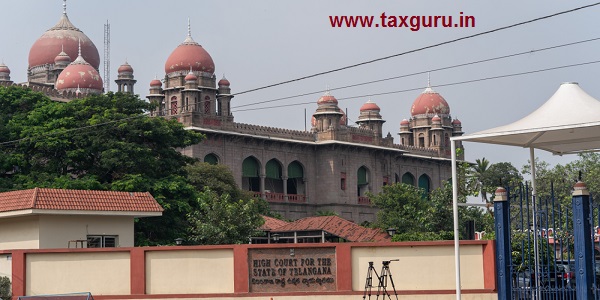
Nayan Jitendra Shah Vs Superintendent (Kerala High Court)
Summary: The Kerala High Court considered a challenge to rejection of a GST registration application filed by a partnership firm on the ground that a latest rent agreement had not been uploaded. The principal place of business mentioned in the application was a building originally taken on lease by the first petitioner, the managing partner of the applicant firm, along with his siblings under a lease deed dated 30.01.1989. A subsequent deed dated 06.06.1998 permitted the lessees to conduct a BATA showroom or any other showroom in the premises. The GST authority rejected the firm’s application because the lease deed produced did not establish tenancy directly in favour of the applicant partnership firm.
The GST authority contended that under Form GST REG-01, submitted under Rule 8(1), an applicant occupying rented or leased premises was required to upload a valid rent/lease agreement along with a document supporting the lessor’s ownership, such as the latest property tax receipt, municipal khata copy or electricity bill. The documents initially furnished by the firm included its partnership deed, a tax receipt in the landlord’s name and an authorisation by one of the managing partners. When queries were subsequently raised, the firm produced the 1989 lease agreement and an unsigned undertaking to produce the latest rent agreement. The authority maintained that the lease agreement did not establish tenancy in favour of the applicant firm. Similar documentary requirements for rented or leased premises are explained in TaxGuru’s coverage of proof of principal place of business for GST registration.

The landlords, who were impleaded as additional respondents, disputed the firm’s entitlement to GST registration from the premises. Their case was that the original lease deeds did not confer any right upon the first petitioner to constitute a partnership with another person and operate the partnership’s business from the premises. According to them, such an arrangement amounted to an impermissible sublease. The petitioners, however, relied upon the lease deeds and an authorisation from the other lessees permitting the first petitioner to form a partnership firm and conduct business from the premises.
The High Court held that while considering an application for GST registration, the registering authority is not expected to undertake a detailed adjudication of the extent of the applicant’s rights under the lease. The relevant satisfaction for registration purposes is whether the applicant is in legal possession of the premises. If legal possession is established from the documents produced with the application, registration cannot be denied merely because the landlord has raised a dispute requiring interpretation of the lease by a competent civil court. The landlord remains free to pursue appropriate statutory remedies before the competent Civil Court or Rent Control Court.
On the facts, the Court observed that the subsequent lease deed permitted the lessees to conduct any showroom in the premises, all the lessees had authorised the first petitioner to form a partnership and conduct business, and the partnership firm had already been constituted. The rent-control proceedings instituted by the landlords against the first petitioner and his siblings had been dismissed for non-prosecution, though an application for restoration was stated to be pending. The Court considered the institution of those rent-control proceedings itself as showing the first petitioner’s lawful possession. Since the first petitioner was the managing partner of the applicant firm and the other lessees had authorised formation of the partnership, the Court found that prima facie legal possession had been established and was sufficient for GST registration purposes.
The Court nevertheless did not direct immediate grant of registration. It noted that the application which had been rejected was not accompanied by material documents such as the subsequent deed and the authorisation from the other lessees. Accordingly, instead of interfering with the rejection on the basis of the deficient application, the High Court disposed of the writ petition by permitting the petitioners to submit a fresh GST registration application with the necessary documents. If such application is submitted within two weeks from receipt of the judgment, the GST authority was directed to decide it, taking into account the Court’s observations, within one month from receipt of the fresh application. The documentary framework for such applications is also discussed in TaxGuru’s coverage of CBIC guidelines for the GST registration process and GST registration involving an unregistered rent agreement.
FULL TEXT OF THE JUDGMENT/ORDER OF KERALA HIGH COURT
The petitioners are aggrieved by the rejection of the application submitted by them for registration of their establishment under the provisions of CGST Act. The 1st petitioner is the managing partner of the 2nd petitioner partnership firm. Ext.P6 is the acknowledgment of the application for registration submitted in the name of the 2nd petitioner firm. The place of business shown in the said application was the building owned by the additional respondents 2 to 4, which was taken on lease, by the 1st petitioner along with his siblings. Ext.P1 is the lease deed dated 30.01.1989, which was executed to enable the 1st petitioner and his siblings, to conduct business in the building covered by the said deed. The application for registration submitted in the name of the 2nd petitioner was rejected by the 1 st respondent, as per Ext.P8 order, on the ground that, the latest rent agreement has not been uploaded and hence, the application cannot be approved. The 2nd petitioner was further directed to re-apply with requisite documents.
2. The challenge is raised against the said order on the ground that, despite the fact that the petitioners are in lawful possession of the building, the application is not being considered. It is pointed out that, after execution of Ext.P1, a further deed was executed, as evidenced by Ext.P2, between the 1st petitioner and his siblings on one side and the landlord of the building on the other side. Ext.P2 was executed on 06.06.1998. In the said deed, the tenants were permitted to conduct a BATA showroom or any other showroom, in the said building.
3. The 2nd petitioner is a partnership firm by the 1st petitioner, who is one among the lessees referred to in Ext.P1 and P2, along with a third person. It is also the case of the petitioners that, even though the present landlords, the additional respondents 2 to 4, had in fact submitted RCP No.112/2010 before the Rent Control Board, Kozhikode, as evidenced by Ext.P3, the same was dismissed for default, as per Ext.P4 order dated 30.06.2025. Thus, according to the petitioners, they are in legal possession of the building, and the application submitted by the petitioner was wrongly rejected. The reliefs sought by the petitioners are as follows:-
A: Issue a WRIT OF CERTIORARI quashing Ext. P-8 Order:
B: Issue a WRIT OF MANDAMUS directing Respondent to allow Ext. P-6 application:
C: Pass such other orders as the Petitioner may pray for and this Court may deem fit to grand in the circumstances of the case:
D: Award costs of the Petitioner
4. A counter affidavit has been submitted by the 1st respondent wherein, the averments contained in the writ petition are denied and the reliefs sought by the petitioners are opposed. It is specifically averred that, as per Form GST REG01, which is to be submitted under Rule 8(1) of the CGST Act, 2017, the documents to be uploaded for GST registration as per the Act, includes a copy of the valid rent/lease agreement with any document in support of the owners/zip of the premises of the lessor like latest property tax receipt or municipal khata copy or copy of electricity bill. In this case, initially the 2nd petitioner produced the partnership deed, tax receipt in the name of the landlord and the authorization by one of the managing partners. Subsequently, when queries were raised as part of processing the said application, the 2nd petitioner submitted Ext.P1 Lease agreement, and an unsigned letter, undertaking that they will produce the latest rent agreement as well. However, on going through Ext.P1, it was found that, it does not contain any tenancy in favour of the applicant/2nd petitioner firm and therefore the same was rejected. Thus, it is pointed out that, there is no illegality in the action taken by the 1 st respondent in rejecting the application and thus, the reliefs sought by the petitioners cannot be entertained.
5. The landlords/the additional respondents 2 to 4 got themselves impleaded in this writ petition and filed a counter affidavit, disputing the rights of the petitioners to get registered under the provisions of the CGST Act. According to the additional respondents, the 2nd respondent is not a tenant, and Ext.P1 and P2 would not create any right, in favour of the 2 nd petitioner. According to the said respondents, the Ext.P1 and P2 deeds would not confer any right upon the 1st petitioner to create a partnership firm, with any other person, and to get registration under the provisions of the CGST Act. The specific case of the additional respondents is that, creation of such partnership for, and to conduct business in the premises, covered by Ext.P1 and P2 lease deed, amounts to sublease, which is not specifically permitted under the lease deed. Therefore, the claim of the 2nd petitioner to get registration, is not legally sustainable, it was pointed out. Therefore, the additional respondents 2 to 4 sought for dismissal of the writ petition.
6. Heard Sri. Premjith Nagendran, the learned Counsel for the petitioner Sri.J.Vishnu, the learned Standing Counsel for the 1st respondent, and Smt.Apoorva Ramkumar, the learned counsel appearing for the additional respondents 2 to 4.
7. The learned counsel for the petitioners, specifically contented that, Ext.P1 and P2 documents would clearly reveal the entitlement of the petitioners to get the registration and therefore, the 1st respondent could not have denied the registration. On the other hand, the learned Standing counsel for the 1st respondent specifically contented that, going by the documents produced along with the application, there was nothing to indicate the tenancy in favour of the 2nd petitioner and therefore, under no circumstances, the Ext.P8 could be treated as an invalid order, warranting interference by this Court under Article 226 of Constitution of India.
8. The learned counsel appearing for the additional respondents 2 to 4, the landlords, would vehemently content that, the relief relating to the registration under the CGST Act, at the instance of the 2nd petitioner, is clearly beyond the right conferred upon the lessees as per Ext.P1 and P2, and hence they do not have any vested right to seek the reliefs in the writ petition.
9. I have carefully gone through the records and examined the contentions raised by all the parties. Of course, it is true that, going by the nature of documents that are admittedly produced along with the application that resulted in Ext.P8 order, the petitioners did not establish the tenancy in favour of the 2nd petitioner. Therefore, it is for the petitioners to submit a proper application along with necessary documents to substantiate the legal possession which the 2nd petitioner, the applicant, is having in respect of the said building. Since all the parties have raised their contentions with reference to their respective rights based on Ext.P1 and P2 documents, in the form of pleadings, I am of the view that, some observation will have to be made, based on the contentions raised by the parties before this Court, to avoid multiplication of litigation.
10. While considering the said aspects, it is to be noted that, Ext.P1 is the basic lease deed which is executed by the then landlord of the building, in favour of the 1st petitioner and his siblings. As per the same, the 1st petitioner and his siblings were authorized to carryout business activities in the said building, subject to the terms and conditions in Ext.P1. Subsequently, Ext.P2, which is yet another deed, was executed between the parties, where the lessees were specifically permitted to conduct a BATA showroom or any other showroom in the leased premises. According to the petitioners, subsequently, one of the lessees, namely the 1st petitioner, had formed a partnership firm, along with another person, and the application was submitted for conducting the business in the name of the 2nd petitioner. Along with the reply affidavit submitted, by the petitioners, Ext.P9 was also submitted, which is the authorization of the other lessees enabling the 1st petitioner to form a partnership firm and to conduct the business in the premises.
11. Of course, the landlords have a specific case that the same is beyond the scope of tenancy created as per Ext.P1 and P2 lease agreement, and therefore the 1st petitioner does not have any right to approach the 1st respondent for getting a registration under the CGST Act. However, even though they have serious contentions with respect to the same, I am of the view that, issue has to be considered from the point of view of the 1st respondent, and the powers vested upon him, when an application for registration under the CGST Act is being considered. On considering such an application, it may not be possible for the 1st respondent to go deep into the question regarding the extent of right available to the party, which is applying for registration but the satisfaction that is required for the purpose of granting registration is by considering the question whether the applicant is in legal possession of the bidding or not.
12. To be precise, if it is borne out from the records produced along with the application that, the party is in legal possession, the registration cannot be denied. The fact that the land lord raised certain dispute, with regard to the extent of right of the party, which requires interpretation of the terms and conditions in the lease deed by a competent civil court, cannot be a reason, to deny the registration. In such cases, it is for the landlord to invoke the statutory remedies available, by approaching the competent Civil Court including the Rent Control Courts, if any cause of action for such proceedings are attracted.
13. Here, in this case, when that question is considered for the limited purpose of considering an application for registration, it can be seen that, Ext.P2 would permit the lessees to conduct any showroom in the property. In this case, all the lessees granted authorization to the 1st petitioner to form a partnership and conduct a business and accordingly, a partnership firm is already registered. It is also discernible from Ext.P3 that, the rent control petition submitted by the landlords stands rejected for non-prosecution. Of course it is pointed out that, the application for restoration of the said rent control petition is now pending consideration.
14. Anyhow, I am of the view that, those are matters to be pursued by the landlord, and the fact that, the rent control petition has been submitted against the 1st petitioner and the siblings itself shows that, the 1st petitioner is in lawful possession. As far as the 2nd petitioner is concerned it is an undisputed fact that, the managing partner of the said establishment is the 1st petitioner himself, and other lessees have authorized the 1st petitioner to form such partnership firm. Therefore, prima facie, legal possession is established, which is sufficient for the purpose of getting registration under the provisions of the CGST Act.
15. However, as mentioned above, since the application which is now dismissed as per Ext. P8 was not accompanied with the documents such as Ext.P2, the authorization of the other lessees, etc, I do not find it proper to interfere with Ext.P6. Instead, this writ petition is disposed of, permitting the petitioner to submit a fresh application along with the necessary documents and upon submission of such application, a decision thereon shall be taken by the 1st respondent, taking note of the observations made by this Court. It is ordered that, in case, such an application is submitted within a period of two weeks from the date of receipt of a copy of this judgment, a decision thereon shall be taken by the 1st respondent within a period of one month from the date of receipt of such an application.