Advertisement
Advertisement
Skip to content
Follow Us on
Advertisement
TOP STORIES
Goods and Services Tax

GST Claims Barred After Resolution Plan Approval: Allahabad HC

Case Law Details

Case Name
Arena Superstructures Private Limited Vs Union of India And 4 Others (Allahabad High Court)
Date of Judgement/Order
Only available for paid members
Advertisement

Arena Superstructures Private Limited Vs Union of India And 4 Others (Allahabad High Court)

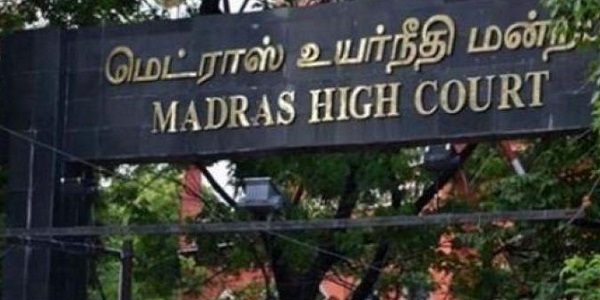
Allahabad High Court rules GST demand for pre-CIRP period invalid after NCLT approves resolution plan, citing Supreme Court judgments on IBC finality.

Allahabad: In a significant ruling reinforcing the finality of resolution plans approved under the Insolvency and Bankruptcy Code (IBC), 2016, the Allahabad High Court has quashed a Goods and Services Tax (GST) assessment order and demand notice issued against a company after its Corporate Insolvency Resolution Process (CIRP) had concluded and the resolution plan was approved by the National Company Law Tribunal (NCLT). The court held that claims for periods prior to the CIRP initiation are extinguished once the resolution plan is approved, and statutory authorities cannot raise such demands subsequently.

The case involved Arena Superstructures Private Limited, which had undergone CIRP. The company’s insolvency resolution process commenced on October 10, 2020, with the appointment of a Resolution Professional (RP). As part of the standard procedure under the IBC, the RP undertook the process of inviting claims from all creditors, including statutory authorities. The petitioner specifically informed the High Court that notice regarding the CIRP proceedings and the invitation for claims was also sent to the GST Department in Noida.

Following the procedural steps mandated by the IBC, a Resolution Plan for Arena Superstructures Private Limited was formulated and submitted for approval to the NCLT, the adjudicating authority under the Code. The NCLT subsequently approved the Resolution Plan on July 19, 2022. The approval of a resolution plan by the NCLT is a pivotal stage in the CIRP, intended to provide a framework for the revival of the corporate debtor and bring finality to the claims against it.

However, despite the NCLT’s approval of the Resolution Plan in July 2022, the Deputy Commissioner of GST issued an assessment order dated February 4, 2025, along with a consequential demand notice against Arena Superstructures Private Limited. This demand pertained to the financial year 2017-2018, a period prior to the commencement of the CIRP in October 2020. The company challenged this post-approval GST demand before the Allahabad High Court through a writ petition, seeking the quashing of the assessment order and demand notice and a direction restraining the respondents from recovering the demanded tax, interest, and penalty.

The core argument advanced by the petitioner, Arena Superstructures Private Limited, before the High Court was that once a Resolution Plan has received the imprimatur of the NCLT, it becomes binding on the corporate debtor and all its stakeholders, including the Central Government, State Governments, and any local authority to whom a debt in respect of the pre-CIRP period is due. According to the petitioner, the law, as settled by the Supreme Court, dictates that all claims that existed for the period prior to the CIRP commencement date, and which were not included as part of the approved Resolution Plan, stand extinguished. Therefore, the GST Department could not legally raise a demand or pass an assessment order for the financial year 2017-2018 more than two years after the NCLT had approved the Resolution Plan.

To support their arguments, the petitioner’s counsel relied on several judgments, primarily from the Supreme Court, which have interpreted the effect of an approved resolution plan under Section 31(1) of the IBC. The Allahabad High Court, in its judgment, also considered these precedents as the established legal position.

One of the key judgments cited and relied upon by the High Court was the Supreme Court’s decision in Ghanshyam Mishra and Sons (P) Ltd. Vs. Edelweiss Asset Reconstruction Co. Ltd. This landmark ruling unequivocally established that once a Resolution Plan is approved by the adjudicating authority under Section 31(1) of the IBC, all claims, including those owed to the Central Government, State Government, or any local authority in respect of a period prior to the CIRP commencement date, which are not a part of the Resolution Plan, shall stand extinguished and the corporate debtor shall be discharged from all such claims. The Supreme Court had held that the legislative intent behind Section 31 was to provide a “clean slate” to the successful resolution applicant.

Another significant Supreme Court judgment considered was Committee of Creditors of Essar Steel India Ltd. Vs. Satish Kumar Gupta & Others. While this case dealt with broader issues under the IBC, the High Court specifically referenced paragraph 107 of the Supreme Court’s decision. In this paragraph, the Supreme Court had highlighted the importance of finality, stating that a successful resolution applicant cannot “suddenly be faced with ‘undecided’ claims” after the resolution plan is accepted. The Court emphasised that all claims must be submitted to and decided by the Resolution Professional so that the prospective resolution applicant knows exactly what needs to be paid to take over the business on a “fresh slate.” Allowing new claims post-approval would create uncertainty and undermine the fundamental objective of the IBC.

The Allahabad High Court also referred to its own previous judgment in N.S. Papers Ltd. Vs. Union of India and Others. In that case, which involved income tax demands raised after the approval of a resolution plan, the High Court had extensively reviewed Supreme Court judgments and decisions of other High Courts. It had categorically held that if an assessment or re-assessment for a prior period is kept pending during the CIRP and culminated only after the approval of the Resolution Plan, such action is not permissible. The High Court in N.S. Papers Ltd. had stated that saddling the successful resolution applicant with an unknown burden after the plan approval would be an “anathema to the fundamental principles of the moratorium” and the “fresh start” principle of the Code. It had observed that creating new liabilities post-approval would be “inherently and palpably illegal.”

Furthermore, the Allahabad High Court noted that the principle established in Ghanshyam Mishra had been fortified by a recent Supreme Court decision in Vaibhav Goyal & Another Vs. Deputy Commissioner of Income Tax & Another. The High Court quoted relevant paragraphs from the Vaibhav Goyal judgment, where the Supreme Court reiterated that all statutory dues owed to the Central Government, if not part of the approved Resolution Plan, stand extinguished. The Supreme Court in Vaibhav Goyal had explicitly stated that additional demands made against the corporate debtor after the plan approval would “operate as roadblocks in implementing the approved Resolution Plan” and prevent the appellants from restarting operations on a “clean slate.” The Supreme Court had concluded in Vaibhav Goyal that such post-approval demands were “invalid and cannot be enforced.”

In light of these consistent and clear pronouncements from the Supreme Court and its own previous judgment, the Allahabad High Court found that the legal position was “crystal clear.” The Court held that once a Resolution Plan has been approved by the NCLT, all other creditors, including government departments, are barred from subsequently raising claims that pertain to the period prior to the CIRP commencement, as doing so would fundamentally disrupt the entire resolution process and violate the principle of providing a clean slate to the revived entity.

Finding no valid reason to keep the matter pending, the Allahabad High Court allowed the writ petition. The Court quashed the impugned Assessment Order dated February 4, 2025, passed under Section 74(9) of the CGST/UPGST Act, 2017, and the consequential demand notice issued against Arena Superstructures Private Limited relating to the financial year 2017-2018. The court’s decision reinforces the supremacy and finality of the IBC process once a resolution plan receives judicial approval.

FULL TEXT OF THE JUDGMENT/ORDER OF ALLAHABAD HIGH COURT

Heard Sri Rahul Agarwal, learned counsel appearing along with learned counsel, Ms. Saumya Srivastava and Sri Ami Tandon for the petitioner and Sri Naveen Chand Gupta, learned counsel appearing along with learned counsel, Sri Gopal Varma, for the Union of India.

This is a writ petition under Article 226 of the Constitution of India, wherein the writ-petitioner has sought the following prayers along with certain ancillary reliefs:

“(i) Issue an appropriate writ, order or direction in the nature of CERTIORARI or any other appropriate writ for quashing the Impugned Assessment Order dated 04.02.2025 bearing Reference No: ZD090225039501M passed under Section 74(9) of CGST/UPGST Act, 2017 by the Deputy Commissioner [Respondent No. 5] as well as the Impugned Demand Notice issued in pursuance to the Impugned Order dated 04.02.2025 passed under Section 74 of the CGST/UPGST Act, 2017 against the Petitioner relating to financial year 2017-2018.

(ii) Issue an appropriate writ, order or direction in the nature of MANDAMUS or any other appropriate writ commanding/directing the Respondents not to recover tax, interest and penalty imposed upon the Petitioner in pursuance to the Demand Notice and Impugned Order dated 04.02.2025 bearing Reference No: ZD090225039501M passed by the Deputy Commissioner [Respondent No. 5] against the Petitioner.”

The case of the petitioner is that the petitioner went into a Corporate Insolvency Resolution Process (hereinafter referred to as CIRP), on October 10, 2020. A Resolution Professional was appointed on the same day and thereafter proceedings continued before the National Company Law Tribunal (in brevity NCLT). As per the procedure, the creditors were asked to submit their claims before the Resolution Professional. Specific notice was also sent to G.S.T. Department at Noida by the Resolution Professional to the/of the petitioner. The impugned order, with regard to the Assessment Year 2017-18 was passed by the respondent No. 5 on February 4, 2025. On 19.07.2022, the Resolution Plan was approved by the NCLT.

Sri Rahul Agarwal, learned counsel appearing on behalf of the petitioner, to buttress his argument that once the Resolution Plan has been approved by the NCLT, the G.S.T. Department cannot create further dues by way of passing orders, has relied upon the following judgments, viz. (i) Ghanshyam Mishra and Sons (P) Ltd. Vs. Edelweiss Asset Reconstruction Co. Ltd., reported in [SC] [2021] 126 Taxmann.com 132/166 SCL 237 (SC), (ii) N.S. Papers Ltd. Vs. Union of India and Others [Writ Tax No. 408 of 2021, decided on December 11, 2024], (iii) Vaibhav Goyal & Another Vs. Deputy Commissioner of Income Tax & Another [Civil Appeal No. 49 of 2022, decided on March 20, 2025] (SC) and (iv) Committee of Creditors of Essar Steel India Ltd. Through Authorised Signatory Vs. Satish Kumar Gupta & Others [2019] 16 S.C.R. 275].

This Court, in Writ Tax No. 408 of 2021 [M/S NS Papers Limited And Another Vs. Union of India Through Secretary and Others], after dealing with a catena of judgments rendered by the Supreme Court and also other High Courts held as follows:

“11. He further submits that if proceedings under the Act could be initiated, continued with and culminated during the course of CIRP and institution of Moratorium u/s 14 of the Code, the following may also kindly be considered, for these have a bearing on the fact that income tax proceedings should not get shadowed or extinguished merely by the institution of CRIP and passage of a moratorium order, unless the proceedings were clearly inconsistent with or repugnant to any provisions of the Code, which is not the case here.

12. Upon considering the facts and circumstances of the case, we are of the view that the arguments raised by the learned counsel appearing on behalf of the respondents is without any merit on two counts. Firstly, it is clear by the letter dated March 8, 2021 that the petitioner had informed the Income Tax Authorities with regard to approval of resolution plan. Secondly, the department itself had filed a claim before the Resolution Professional, and accordingly, the argument that the department was not aware of the IBC proceedings holds no water.

13. Even assuming that the department was not informed about the proceedings, the law is very clear as expounded in the judgments cited above. The resolution applicant cannot be saddled with new claims once a resolution plan has been approved.

14. The argument that an assessment that has been kept pending for a prior period and is quantified subsequent to the approval of the Resolution Plan is an argument in sophistry. If this argument is accepted then all authorities would be in a position to keep assessment/re-assessment pending till completion of the Resolution Plan, and thereafter, culminate the same and saddle the successful Resolution Applicant with an unknown burden. Such an action cannot be countenanced as the same would be an anathema to the fundamental principles of the moratorium provided under the Code. The law cannot be read in a manner wherein the basic structure of the Code is breached by hindering the flow of the same by creation of roadblocks and dams – the underlying principle of the Code is to give a fresh start to the Resolution Applicant. Any new liability being fastened after the approval of the Resolution Plan would inherently and palpably be illegal and go beyond the Lakshman Rekha of the Code.

15. In light of the above, the impugned assessment order dated April 28, 2021 is quashed and set aside. In the event any penalty proceedings have been initiated by the department, the writ petitioner shall be at liberty to challenge the same in accordance with law.”

The above view has been fortified by the Supreme Court in Vaibhav Goyal & Another Vs. Deputy Commissioner of Income Tax & Another [Civil Appeal No. 49 of 2022, decided on March 20, 2025] (SC). The relevant paragraphs are delineated below:

8. In view of the declaration of law made by this Court, all the dues including the statutory dues owed to the Central Government, if not a part of the Resolution Plan, shall stand extinguished and no proceedings could be continued in respect of such dues for the period prior to the date on which the adjudicating authority grants its approval under Section 31 of the IB Code. In this case, the income tax dues of the CD for the assessment years 2012-13 and 2013-14 were not part of the approved Resolution Plan. Therefore, in view of sub-section (1) of Section 31, as interpreted by this Court in the above decision, the dues of the first respondent owed by the CD for the assessment years 2012-13 and 2013-14 stand extinguished.

12. Once the Resolution Plan is approved by the NCLT, no belated claim can be included therein that was not made earlier. If such demands are taken into consideration, the appellants will not be in a position to recommence the business of the CD on a clean slate. On this aspect, we may note what is held in paragraph 107 of the decision of this Court in the case of Committee of Creditors of Essar Steel India Ltd. [Civil Appeal No. 49 of 2022]. Paragraph 107 reads thus:

107. For the same reason, the impugned NCLAT judgment [Standard Chartered Bank v. Satish Kumar Gupta, 2019 SCC OnLine NCLAT 388] in holding that claims that may exist apart from those decided on merits by the resolution professional and by the Adjudicating Authority/Appellate Tribunal can now be decided by an appropriate forum in terms of Section 60(6) of the Code, also militates against the rationale of Section 31 of the Code. A successful resolution applicant cannot suddenly be faced with “undecided” claims after the resolution plan submitted by him has been accepted as this would amount to a hydra head popping up which would throw into uncertainty amounts payable by a prospective resolution applicant who would successfully take over the business of the corporate debtor. All claims must be submitted to and decided by the resolution professional so that a prospective resolution applicant knows exactly what has to be paid in order that it may then take over and run the business of the corporate debtor. This the successful resolution applicant does on a fresh slate, as has been pointed out by us hereinabove. For these reasons, NCLAT judgment must also be set aside on this count.”

(emphasis added)

13. The additional demands made by the first respondent in respect of the assessment years 2012-13 and 2013-14 will operate as roadblocks in implementing the approved Resolution Plan, and appellants will not be able to restart the operations of the CD on a clean slate.

14. We, therefore, hold that the demands raised by the first respondent against the CD in respect of assessment years 2012-13 and 2013-14 are invalid and cannot be enforced. We set aside the impugned orders of NCLT and NCLAT and allow the appeal accordingly.”

In view of the above law laid down by the Supreme Court, we are of the view that the principle is crystal clear that once Resolution

Plan has been approved by the NCLT, all other creditors are barred from raising their claims subsequently, as the same would disrupt the entire resolution process. The Supreme Court has categorically held the same as indicated above.

We accordingly find no reason to keep this matter pending and accordingly the impugned Assessment Order dated 04.02.2025 bearing Reference No: ZD090225039501M passed under Section 74(9) of CGST/UPGST Act, 2017 by the Deputy Commissioner [Respondent No. 5] as well as the Impugned Demand Notice issued in pursuance to the Impugned Order dated 04.02.2025 passed under Section 74 of the CGST/UPGST Act, 2017 against the Petitioner relating to financial year 2017-2018, are quashed.

The writ petition is accordingly allowed.

Advertisement

Author Info

CA Sandeep Kanoi
Qualification: CA in Job / Business
Company: Taxguru Consultancy
Location: Mumbai, Maharashtra
Articles Published: 17,295

Join TaxGuru's Network for the latest updates on Income Tax, GST, Company Law, Corporate Laws and other related subjects.
Leave a Reply

Your email address will not be published. Required fields are marked *