Summary: Notification No. 03/2026–Central Tax dated 26 October 2026 brings Sections 153, 154 and 155 of the Finance Act, 2026 into force from 1 November 2026, amending Sections 15, 34 and 54 of the CGST Act, 2017. The amendments simplify the treatment of post-supply discounts by removing the earlier requirements for a pre-existing agreement and linkage to specific invoices, while requiring a supplier-issued credit note and reversal of attributable input tax credit by the recipient. Section 34 is correspondingly amended to expressly recognise credit notes for such discounts. Section 54(6) extends the statutory facility of up to 90% provisional refund to eligible inverted duty structure claims, potentially improving working capital availability. Section 54(14) removes the ₹1,000 minimum refund restriction for goods exported with payment of tax. Businesses should review discount schemes, credit-note procedures, recipient ITC reversals, refund calculations and reporting systems before implementing the changes. Transitional discounts, updated refund procedures and the treatment of earlier CBIC clarifications remain important areas for monitoring.
Three GST Amendments Take Effect on 1 November 2026
Post-supply discounts, provisional refunds and export refunds: what changes and what businesses should do about it
The Central Government, through Notification No. 03/2026–Central Tax dated 26 October 2026, has brought sections 153, 154 and 155 of the Finance Act, 2026 into force from 1 November 2026. Between them, these provisions amend sections 15, 34 and 54 of the CGST Act, 2017.
There are only a handful of changes, but they will be felt. The valuation rules for post-supply discounts have been loosened considerably, provisional refunds for inverted duty structure (IDS) claims now rest on a statutory footing, and one irritating technical barrier to small export refunds has been removed. This note walks through each change, shows how it works with numbers, and flags the practical questions that finance and tax teams are likely to run into.
- The Amendments at a Glance
- 1. Post-Supply Discounts: The Biggest Change
- How the conditions have changed
- A worked example
- Issues to think about
- 2. Section 34 Falls in Line
- 3. 90% Provisional Refund for Inverted Duty Structure
- Points to watch
- 4. The ₹1,000 Limit Goes for Certain Export Refunds
- Where the exception does and does not reach
- What Remains Unclear
- Action Plan for Businesses
- In Conclusion
The Amendments at a Glance
| Provision | Until 31.10.2026 | From 01.11.2026 | What it means in practice |
|---|---|---|---|
| Section 15(3)(b) | Post-supply discount reduced value only if pre-agreed, linked to specific invoices, and the recipient reversed the ITC | Pre-agreement and invoice-linkage dropped. A credit note from the supplier and ITC reversal by the recipient are the core conditions | Year-end, volume and performance discounts become far easier to defend |
| Section 34(1) | Credit notes allowed for excess value or tax, return of goods and deficiency | Also covers a discount under section 15(3)(b) | The credit note route for discounts is now written into the law |
| Section 54(6) | 90% provisional refund mainly for zero-rated supplies | Extended to IDS refunds under section 54(3), first proviso, clause (ii) | Faster cash release for businesses sitting on accumulated ITC |
| Section 54(14) | No refund under 54(5) or 54(6) below ₹1,000 | Limit does not apply to tax refunds on export of goods with payment of tax | Small IGST export refunds no longer get stuck |
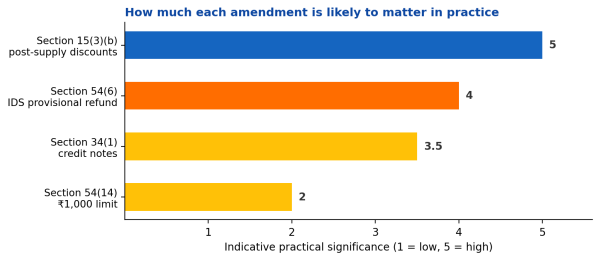
Figure 1. Indicative assessment by the author; not a statutory or official ranking.
1. Post-Supply Discounts: The Biggest Change
Section 15(3)(b) has been rewritten, and for most commercial businesses this is the amendment that matters. Until now, a discount given after the supply could reduce the taxable value only if three boxes were ticked. Those three requirements were the source of a good deal of disagreement between taxpayers and the department.
How the conditions have changed
| Condition | Until 31.10.2026 | From 01.11.2026 |
|---|---|---|
| Discount agreed at or before the time of supply | Required | Not required |
| Discount specifically linked to relevant invoices | Required | Not required |
| Credit note issued by the supplier | Not a stated condition | Required |
| Recipient reverses ITC attributable to the discount (as per section 34) | Required | Required |
Think about how discounts work in reality. A manufacturer announces in April that dealers will earn incentives depending on how the year goes. Nobody knows in April who will qualify or by how much. The figure only crystallises in March, once sales are tallied. Under the old wording, a discount like that could be challenged simply because it was not fixed precisely enough before the supply took place, even though the commercial arrangement was entirely genuine.
The amended provision accepts that discounts are often worked out after the event. The test now looks at what actually happened: was a credit note issued, and did the recipient reverse the related ITC?
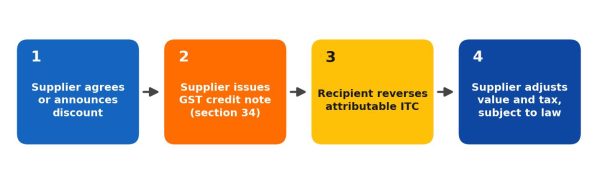
Figure 2. The discount process under the amended law
A worked example
Take the dealer scheme above. Dealer A earns a ₹10 lakh discount for the year. Assume GST at 18% and, for simplicity, that the discount is expressed before tax.
| Step | Supplier | Dealer A |
|---|---|---|
| Discount (pre-tax value) | ₹10,00,000 | ₹10,00,000 |
| GST on discount at 18% | ₹1,80,000 | ₹1,80,000 |
| Credit note total | ₹11,80,000 (issued) | ₹11,80,000 (received) |
| GST consequence | Taxable value and output tax reduced, subject to law | ITC of ₹1,80,000 reversed |
Illustrative figures only. Actual treatment depends on the facts and the supply.
Issues to think about
The amendment removes some old arguments but it does not make discounts risk-free. These are the points we expect to come up in practice:
| Issue | Why it matters | Suggested approach |
|---|---|---|
| Time limit for credit notes | Section 34(2) has its own outer limit for issuing and reporting credit notes. A discount that is decided late could miss that window | Fix the discount calculation calendar well before the cut-off; confirm the current limit before relying on a late credit note |
| Recipients who cannot reverse ITC | Unregistered buyers, composition dealers or buyers with blocked credits may have no ITC to reverse, which affects how the supplier can adjust its own liability | Segment customers by status; agree in writing who bears what |
| Recipient compliance | The supplier’s relief is tied to the recipient’s reversal. If the dealer ignores the credit note, the supplier is exposed | Send a clear credit note with a covering communication; track reversals through return matching |
| Transitional cases | Discounts relating to supplies made before 1 November 2026 but credited afterwards are not obviously addressed | Wait for clarification from CBIC; document the position taken in the meantime |
| Existing circulars | Earlier clarifications on post-sale and secondary discounts were written against the old text and may need revisiting | Review them alongside the new wording before changing practice |
| Documentation | Removing the pre-agreement condition does not remove the need to show the discount is commercially genuine | Keep scheme letters, calculation sheets and approvals on file |
2. Section 34 Falls in Line
Section 34(1) has been amended in step with the valuation change. It now expressly allows a credit note where a discount under section 15(3)(b) is given. Before this, the section spoke only of excess taxable value or tax, return of goods, and deficiency in goods or services. Discount credit notes sat in a grey area, and their validity was argued on a case-by-case basis.
With both provisions now pointing the same way, the valuation rule and the credit note rule support each other. That should cut down on the disputes that have grown up around commercial credit notes. It also means businesses that have been issuing financial or commercial credit notes outside the GST framework should look at whether they now belong inside it.
| Takeaway The credit note is now the centrepiece. If it is not issued correctly and reported on time, the benefit of the new section 15(3)(b) may be lost. |
3. 90% Provisional Refund for Inverted Duty Structure
Section 54(6) has so far provided for a 90% provisional refund mainly in zero-rated supply cases. The amendment extends it to refunds of unutilised ITC under clause (ii) of the first proviso to section 54(3), which is the IDS refund.
The problem it addresses is a familiar one. When the tax rate on inputs is higher than the rate on the output, credit builds up month after month. Every month the refund is delayed, that money is tied up in the government’s account instead of in the business. An interim administrative arrangement for provisional IDS refunds already existed. What is new is that the law itself now supports it.
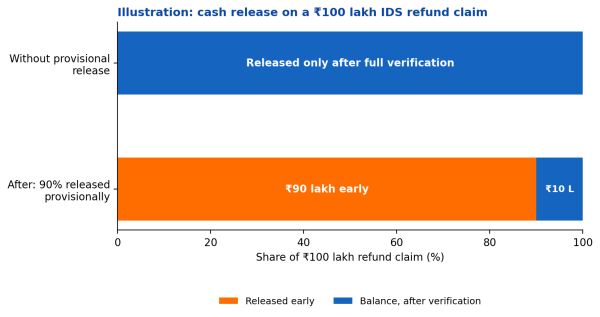
Figure 3. Illustrative cash release; the balance 10% follows once verification is complete.
Points to watch
- Conditions and safeguards. The provisional refund is available subject to prescribed conditions. Check whether the rules and forms have been updated to reflect the new statutory basis.
- Accuracy of the claim. Early release does not mean the claim is final. A refund that is later found to be excessive can attract recovery, and the risk rises when the claim is computed carelessly.
- Reconciliation first. The IDS computation depends on the input and output position in the returns. Reconcile GSTR-1, GSTR-3B and GSTR-2B before filing, not after a notice arrives.
- Working capital planning. For a business with ₹1 crore of recurring accumulation, getting ₹90 lakh early changes borrowing needs. Build this into the cash forecast only once the first provisional refund actually lands.
4. The ₹1,000 Limit Goes for Certain Export Refunds
Section 54(14) says that no refund is paid under sections 54(5) or 54(6) where the amount is less than ₹1,000. From 1 November 2026 that restriction does not apply where the refund of tax is claimed on goods exported out of India with payment of tax.
The practical effect is simple. A small exporter shipping low-value consignments will no longer find a refund held back merely because it falls under the threshold.
Where the exception does and does not reach
| Covered by the exception | Not clearly covered |
|---|---|
| Refund of tax paid on export of goods with payment of tax | Refunds on exports of services |
| Small-value claims below ₹1,000 in this category | Other refund categories, such as excess balance in the cash ledger or other claims |
| Refunds claimed without payment of tax, where the claim is for unutilised ITC |
The wording is specific, and it would be a mistake to stretch it. If a claim does not fit squarely within “export of goods with payment of tax”, the ₹1,000 limit should be assumed to apply until the department says otherwise.
What Remains Unclear
Several practical points have not yet been addressed in the material we have seen. Businesses should watch for CBIC circulars and any changes to the CGST Rules.
| # | Open question | Where it bites |
|---|---|---|
| 1 | Treatment of discounts linked to supplies made before 1 November 2026 | Annual schemes that straddle the effective date |
| 2 | Whether the CGST Rules and refund forms will be amended for statutory provisional IDS refunds | Filing and processing of refund applications |
| 3 | Whether earlier circulars on post-sale discounts will be withdrawn or replaced | Existing discount policies and audit positions |
| 4 | Manner of intimating the recipient about ITC reversal | Supplier-recipient coordination |
Action Plan for Businesses
| Team | What to do | When |
|---|---|---|
| Sales and commercial | Review dealer and distributor schemes. Make sure scheme terms, targets and payout timing are written down, even though pre-agreement is no longer a legal condition | Before the next scheme cycle |
| Finance and accounts | Align credit note workflows with section 34. Add ITC reversal checks and a calendar for credit note cut-offs | Immediately |
| Tax and compliance | Recompute exposure on past discount claims. Reconcile returns ahead of any IDS refund filing | Within the current quarter |
| Exports and logistics | Identify small IGST refund claims that were previously blocked and raise them where eligible | From 1 November 2026 |
| Legal | Update customer agreements to deal with credit note timing and the recipient’s duty to reverse ITC | At next renewal |
In Conclusion
Taken together, the amendments lean toward commercial flexibility and quicker refunds. The change to section 15(3)(b) is the one with the widest reach, because it replaces rigid advance conditions with a simpler credit-note-and-reversal test. The provisional IDS refund should ease cash flow for businesses that carry large unutilised credit, and the export change tidies up an annoying small-claims anomaly.
None of this removes the need for good paperwork. If anything, it moves the burden from the front of the transaction to the back: credit notes, reversals and reconciliations now carry the weight. Businesses that sort out their processes before 1 November will be better placed than those that wait for the first notice.
| Source and disclaimer: Effective date: 1 November 2026, under Notification No. 03/2026–Central Tax dated 26 October 2026. This note is for general information and is based on the amendments as described in the source article; it is not legal advice. Please refer to the official notification and the amended text of the CGST Act before acting. |