Partners Personally Liable to Penalty u/s 122(1A) of the CGST Act Even for Pre-2021 Transactions
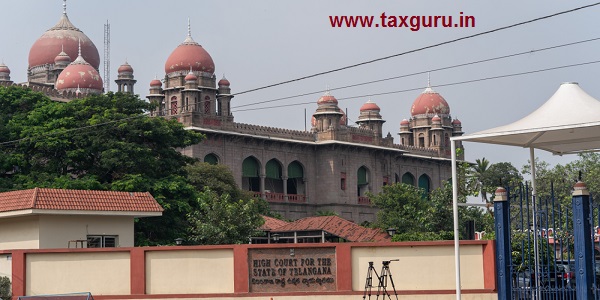
The Gauhati High Court in Mayank Bansal v. Union of India & Ors. held that partners of a partnership firm can be personally penalized under Section 122(1A) of the CGST Act even if they are not “taxable persons,” provided they retained the benefit of fraudulent transactions and such transactions were conducted at their instance. The Court ruled that the expression “any person” in Section 122(1A) has a wider scope than “taxable person” and covers natural persons responsible for GST violations committed through firms or other juridical entities. It further held that although Section 122(1A) came into force on January 1, 2021, it can be applied to transactions preceding its insertion because it does not create a new offence but merely identifies the person liable for violations already punishable under Section 122(1). The Court upheld the jurisdiction to impose personal penalties, while granting the petitioners liberty to challenge the factual findings before the GST Appellate Tribunal, where issues regarding their actual involvement and benefit remain open for adjudication.
Facts:
Mr. Mayank Bansal and Mr. Nadar Hussain (“the Petitioners”) are the partners of M/s Quantum Infratech (“the Firm”), a partnership firm engaged in the business of construction of residential buildings. Pursuant to investigation conducted by the Directorate General of GST Intelligence, a consolidated Show Cause Notice dated August 03, 2024 (“the SCN”) was issued under Section 74(1) read with Sections 122(1A) and 122(3)(a) of the CGST Act for the period July, 2017 to March, 2023 alleging:
- evasion of GST on supply of construction of residential complex to landowners;
- non-discharge of tax under reverse charge mechanism on supply of service by way of transfer of development rights; and
- availment of ineligible Input Tax Credit (“ITC”).
The SCN specifically alleged at paragraphs 9.6 and 9.7 that the Petitioners, being partners of the Firm, had concerned themselves with supply of services in contravention of the Act, suppressed turnover, collected undisclosed cash without issuing invoices, obstructed investigation by not furnishing documents called for under Section 70, and retained the benefit of the transactions carried out at their instance, thereby rendering them liable to penalty under Section 122(1A) of the CGST Act.