#AD
As financial markets become more complex, the demand for specialised risk professionals is growing. An FRM coaching is helping aspiring finance professionals build the analytical, quantitative and risk-management skills needed to navigate this changing industry.
- Why Risk Management Is Becoming Central to Modern Finance
- How FRM Builds Future-Ready Finance Professionals
- Career Opportunities in the Evolving Risk Management Landscape
- Risk Analyst
- Credit Risk Analyst
- Market Risk Analyst
- Financial Risk Manager
- Risk Consultant
- Preparing the Next Generation of Risk Professionals
- Conclusion
Why Risk Management Is Becoming Central to Modern Finance
As financial markets are becoming complex, risk management is a must-have part of modern finance. Market volatility, regulatory changes, credit exposure, liquidity worries and fast technological shifts are all combining to make new challenges for financial institutions and businesses. So, in practice, companies need experts to identify risks, analyse financial data, and back up informed decisions. If you also want to become an expert, FRM coaching in Delhi will help you build the necessary industry-relevant skills.
At the same time, this shifting landscape changes how finance professionals build their careers. Global finance credentials offer specialised routes, such as financial analysts by doing CFA vs FRM, focusing on identifying, measuring, and managing financial risks. Financial Risk Management courses help professionals build industry-relevant know-how to handle the risk-conscious finance industry.
How FRM Builds Future-Ready Finance Professionals
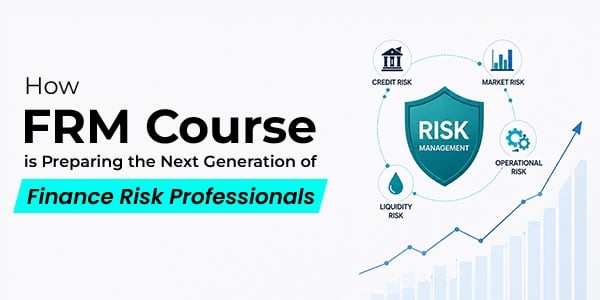
The curriculum covers market risk, credit risk, operational risk, plus quantitative analysis and financial markets. Altogether, these parts let learners grasp where financial risks occur, how they get measured in real terms, and how organisations manage their potential effects.
This more specialised angle is getting more and more relevant, especially as finance jobs drift toward being data-driven and analytical. Even though the CFA is often linked with investment analysis and portfolio oversight, FRM is more directly tied to financial risk and the whole risk management process. That difference means students can align their qualifications with the path they want, within the wider finance ecosystem.
Also, the FRM learning experience helps candidates connect theory with real financial situations. Through risk scenarios, quantitative methods and case-based problem-solving, learners can be ready to make financial decisions with better analytical sharpness, instead of guessing.
Career Opportunities in the Evolving Risk Management Landscape
The growing complexity of financial markets is directly impacting the demand for professionals who can identify, measure, and manage financial risks in real life, not just in theory. The FRM coaching in Delhi and in other popular cities, be it Mumbai, Pune, Bangalore, etc., prepares candidates for these specialised roles in banking, investment management, insurance, fintech, consulting and corporate finance. As organisations get more focused on protecting capital and making data-backed decisions, risk management is becoming a crucial part of their financial strategy.
Risk Analyst
Risk Analysts look at financial and operational risks that affect an organisation. They go through market data, review risk exposure and then help teams craft strategies to limit possible losses. You will usually find this type of role in banks, financial institutions and big corporations.
Credit Risk Analyst
Credit Risk Analysts judge how able individuals, businesses or institutions are at meeting their financial obligations. They study financial statements, credit details and other relevant information before supporting lending and credit decisions.
Market Risk Analyst
Market Risk Analysts track how changes in interest rates, currency levels, share prices and other market conditions could swing financial positions. This work is especially useful for banks, investment companies, and financial institutions that have major exposure to market movements.
Financial Risk Manager
Financial Risk Managers tend to look at an organisation’s financial risk situation a bit more broadly. They build risk frameworks, keep an eye on possible threats, and coordinate with different teams to help tighten up risk controls. As you gain experience, a lot of people end up shifting toward senior risk plus governance roles.
Risk Consultant
Risk Consultants support organisations in identifying weak points across their financial and operational processes. They might handle risk assessments, internal controls, compliance with regulatory requirements and also risk management strategies. So it can be a good route for people who like analytical work as well as advisory conversations.
And overall, FRM professionals can end up working anywhere, like banks, asset management companies, insurance providers, fintechs, consulting organisations, or big multinational groups. Lately, the wider adoption of AI, automation and data analytics is driving even more demand, especially for people who can connect tech skills with solid financial judgment.
This is where the specialised nature of FRM becomes valuable. While qualifications like CFA can support careers in investment analysis, portfolio management, and related roles, FRM is especially lined up with jobs that keep circling around financial risk. For students who want to build real expertise in that space, structured FRM coaching can offer a stronger base for certification and also the long-term career development that comes after.
Preparing the Next Generation of Risk Professionals
As financial risks continue to evolve, future risk professionals will need more than certification knowledge. They will need analytical thinking, practical understanding and the ability to respond to changing market conditions. This makes industry-oriented learning an important part of preparing for a career in risk management.
Institutes such as edZeb are focusing on this broader approach through structured FRM coaching, mentorship, practice-based learning and digital learning resources. By combining exam preparation with a better understanding of financial markets and real-world risk scenarios, such learning models can help candidates build confidence for the workplace as well as the certification.
The future of finance will require professionals who can understand opportunities while also recognising the risks behind them. For aspiring finance professionals, choosing the right specialisation and building relevant expertise can be an important step towards staying prepared for this changing industry.
Conclusion
The risk management role is growing as financial markets keep shifting, along with regulations and new tech. A FRM course can support aspiring people in gaining focused learning in financial risk, quantitative analysis and risk decision-making, and at the same time, it also prepares them for various career roles across the finance industry.
If you are thinking about finance qualifications, it can be useful to really grasp how tracks like CFA and FRM differ, so you can pick a career direction that fits your own interests. With solid training, guidance from mentors and hands-on exposure, future risk professionals can build the abilities they need to contribute to a more resilient and risk-aware financial sector.
For your first step in accelerating your career in risk management, you can visit edzeb.com or call their expert counsellors on this number 8263900900 for a personalised consultation.