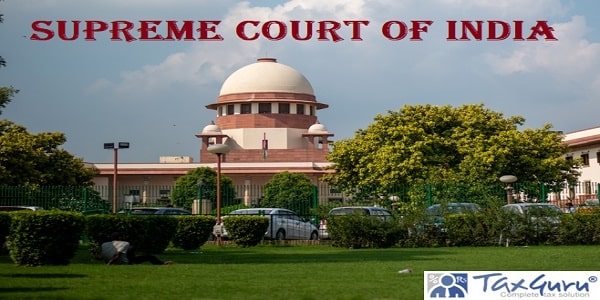
Trinity Infraventures Ltd. Vs M.S. Murthy & Ors. Etc. (Supreme Court of India)
Summary: The Supreme Court of India, in M/s Trinity Infraventures Ltd. & Ors. Vs M.S. Murthy & Ors., dismissed a batch of civil appeals arising from a prolonged property dispute concerning the erstwhile Khurshid Jah Paigah Estate in Hyderabad, particularly land situated in Survey No. 172 of Hydernagar village. The dispute involved the enforceability of a preliminary partition decree dated 28 June 1963 passed in C.S. No. 14 of 1958, the rights claimed by the legal heirs of the former Paigah holders, subsequent assignees and purchasers, and objections raised by persons asserting independent ownership over the disputed properties. The appeals challenged a common judgment of the Telangana High Court dated 20 December 2019, which had upheld the protection granted to third-party claimants resisting execution of the partition decree. The Supreme Court examined several interconnected issues, including the historical ownership of Paigah lands, the consequences of the abolition of Jagirs, the binding effect of preliminary and final partition decrees, allegations of fraud, the jurisdiction of executing courts under Order XXI of the Code of Civil Procedure, 1908, and the rights of parties who were not bound by the original partition proceedings. The Court ultimately refused to interfere with the protection afforded to the obstructionists, while making important qualifications concerning findings of fraud, the rights of the State Government and claims of other third parties.
The Supreme Court traced the origins of the dispute to the historical Paigah system under the Nizam of Hyderabad. The Paigah estates were originally granted for maintaining military forces and supporting the Nizam’s administration. These grants were not equivalent to unrestricted private ownership of the entire estate, as the holders enjoyed specified revenue, management and beneficial rights subject to the authority of the ruler. The original Paigah Estate was eventually divided into three principal estates known as Asman Jahi Paigah, Khurshid Jahi Paigah and Vikar-ul-Umrahi Paigah. The present dispute concerned properties allegedly belonging to the Khurshid Jah branch. The Court examined historical Farmans, particularly the Farman dated 17 January 1929, which distinguished properties acquired from Paigah income from the personal inheritable property of individual family members. The judgment also discussed the findings of the Paigah Committee and the restrictions governing the alienation and partition of properties belonging to the estate. These historical distinctions were relevant because the appellants claimed rights over specific lands on the footing that they formed part of the inheritable Mathruka Estate of Nawab Khurshid Jah. The Court considered the legal consequences of the Hyderabad Jagir Abolition Regulations, which came into force on 15 August 1949, and the subsequent changes affecting the ownership and administration of the former Jagir properties.
The original partition litigation commenced in 1955–56 when Dildar-Un-Nissa Begum, a descendant of Nawab Khurshid Jah, instituted O.S. No. 41 of 1955–56 in the City Civil Court, Hyderabad, claiming a 29/2944th share in properties allegedly forming part of his Mathruka Estate. The suit was subsequently transferred to the High Court and renumbered as C.S. No. 14 of 1958. Numerous heirs and other interested persons were impleaded, and the proceedings involved extensive pleadings, documentary evidence and competing claims regarding the character and ownership of various immovable and movable properties. In 1961, several parties entered into a compromise, which resulted in an application under Order XXIII Rule 3 CPC. Following the trial, the High Court passed a judgment and preliminary decree on 28 June 1963, identifying properties available for partition, determining the shares of the heirs and appointing a Commissioner for further proceedings. The decree distinguished between parties to the compromise and those against whom the claims were separately adjudicated. However, the litigation continued for several decades through numerous execution applications, assignments, transfers and claims by third parties. The Supreme Court observed that the proceedings had developed into an exceptionally complicated dispute in which the original decree was repeatedly invoked to claim rights over valuable parcels of land, including properties whose ownership had not been conclusively established against independent claimants.
The immediate controversy arose when persons claiming independent rights over land in Survey No. 172 of Hydernagar resisted attempts to obtain possession through execution of the partition decree. The obstructionists asserted that their predecessors had acquired rights through historical pattas and that the disputed lands were not available for partition as properties belonging to the Khurshid Jah Estate. They relied upon revenue records, documents concerning cultivation and ownership, and the legal consequences of the arrangements prevailing before and after the abolition of Jagirs. Applications were filed under Order XXI Rules 97 to 101 CPC to resist execution. By an order dated 26 October 2004, the learned Single Judge accepted the objections and granted protection to the claim petitioners. The matter subsequently passed through further appellate proceedings, including proceedings before the Supreme Court, before being reconsidered by the Division Bench of the Telangana High Court. By its judgment dated 20 December 2019, the Division Bench substantially affirmed the findings favouring the obstructionists and also recorded conclusions concerning fraud in the manner in which the partition decree had been used to claim the disputed properties. The assignees of the decree, certain family members, the State Government and other interested parties challenged different aspects of that judgment before the Supreme Court.
One of the principal questions before the Supreme Court concerned the legal effect of the preliminary partition decree dated 28 June 1963 and the allegation that it had been obtained or utilised fraudulently. The appellants argued that the decree had attained finality and could not be reopened through execution proceedings, particularly when fraud had not been specifically pleaded and established in accordance with the requirements of Order VI Rule 4 CPC. They contended that the High Court had exceeded its jurisdiction by treating the decree as fraudulent and void. The Supreme Court examined the distinction between the validity of a decree as between the parties to the original litigation and its enforceability against strangers asserting independent ownership. It recognised that a preliminary partition decree may conclusively determine the shares of parties to the suit without necessarily adjudicating title against persons who were not bound by those proceedings. The Court did not accept that the original decree could automatically establish ownership of every property mentioned in the partition proceedings against independent third-party claimants. At the same time, it distinguished the allegations of fraud from the separate question of whether the decree could lawfully be executed against strangers. The Court’s reasoning therefore prevented the appellants from relying upon the apparent finality of the partition decree to overcome the independent rights of the obstructionists.
The Supreme Court examined the powers and responsibilities of an executing court when resistance or obstruction is offered to delivery of possession under Order XXI Rules 97 to 104 CPC. The Court considered the statutory scheme under which disputes arising from such resistance may be adjudicated in execution proceedings, including questions relating to right, title and interest in the property. It emphasised the need to distinguish the rights established by the decree from ownership claims independently asserted by persons who were not parties to the original suit or claiming through the judgment debtors. A partition decree determines the rights and shares of persons entitled to partition, but it cannot be treated as an unrestricted instrument for obtaining possession of land belonging to persons whose independent title was not adjudicated in the suit. The Court examined whether the obstructionists had established a sufficient independent basis for resisting execution and whether the earlier proceedings had legitimately determined their rights. The objections were not liable to be rejected merely because the decree holders or their assignees possessed a preliminary decree and subsequent orders relating to partition. The Supreme Court accordingly upheld the protection granted to the obstructionists, recognising that the execution machinery could not be used to enlarge the substantive rights established by the decree.
On the question whether the disputed land formed part of the Mathruka Estate of Nawab Khurshid Jah, the Supreme Court analysed the historical grants, Farmans, revenue records and statutory developments affecting the former Hyderabad State. The appellants asserted that the properties had been included in the partition proceedings and that the 1963 decree established their entitlement to enforce the partition against persons occupying the land. The obstructionists disputed that foundation and claimed rights independent of the Paigah family. The Court considered the significance of pattas granted before 1948, historical survey records and the distinction between lands forming part of the original Paigah grants and properties subsequently held under independent proprietary arrangements. The judgment also examined the effect of the Hyderabad Jagir Abolition Regulations and the statutory framework governing Atiyat and Inam rights. The Supreme Court found no sufficient basis to disturb the concurrent conclusions protecting the claim petitioners against execution. It rejected the attempt to treat the description of properties in the preliminary decree as conclusive proof of ownership against persons claiming independently. The Court’s findings were confined to the controversies properly arising in the appeals and did not amount to a comprehensive adjudication of ownership over every parcel of land historically associated with the Paigah Estate.
The appeals filed by the State of Telangana presented a distinct issue concerning the Government’s potential rights over the disputed lands and the binding effect of findings recorded without its participation. The State argued that the lands were affected by the Hyderabad Jagir Abolition Regulations and other applicable statutory measures and that the High Court could not conclusively determine their ownership without properly considering the Government’s position. The Supreme Court examined the reasoning of the Division Bench, including its observations regarding lands covered by pattas granted before 1948 and their alleged non-vesting in the State Government. It observed that the State had not been a party before the Division Bench when the relevant findings were recorded. Consequently, the Supreme Court expressly clarified that the finding contained in paragraph 244 and the conclusion recorded in paragraph 414(d) of the High Court’s judgment would not bind the State Government. The Court also made clear that it was not finally adjudicating the State’s title to the disputed lands. Questions concerning the effect of Jagir abolition and other statutory land reforms, and the rights of persons asserting interests independent of the immediate parties, remained matters to be determined in appropriate proceedings. Although the State’s appeals were dismissed, this express qualification preserved its ability to assert legally available rights without being prejudiced by those specific High Court findings.
The Supreme Court separately considered appeals filed by Sameena Kausar, Fareeduddin Khan and other persons claiming interests through the original Paigah family or subsequent transfers. Their submissions involved the effect of oral gifts, assignments, decrees and transactions purporting to convey identified portions of the disputed properties. The Court examined the distinction between a preliminary decree declaring undivided shares and an effective partition allotting specific properties to individual shareholders. It observed that a person holding an undivided share cannot ordinarily claim exclusive ownership over an identified parcel of land merely because a preliminary decree has determined that person’s fractional entitlement. The Court considered the requirements of Order XX Rule 18 CPC and the manner in which partition of revenue-paying estates is to be implemented, including the role of the Collector under Section 54 CPC. It questioned the basis upon which particular parcels of land had been gifted, assigned or sold when the necessary partition and identification of exclusive shares had not been established in the manner contemplated by law. The appeals filed by Sameena Kausar and Fareeduddin Khan were therefore dismissed. The Court also examined the appeals of persons who had purchased individual plots from Satya Sai Co-operative Housing Society Ltd. Although those appeals were dismissed, the Court expressly observed that the purchasers remained protected by the High Court’s findings concerning third parties and the invalidity of the relevant decrees as against their independent claims.
Another issue arose from an application filed by an Asset Reconstruction Company seeking to participate in the proceedings on the basis of security interests allegedly created through equitable mortgages over the disputed properties. The company asserted that several corporate borrowers had deposited documents relating to the final decree in the partition suit as security for financial facilities. The Supreme Court noted that the alleged deposit of title deeds had taken place on 25 March 2009, when the property was already involved in substantial and prolonged litigation. It questioned how certified copies of a final decree in such a disputed partition suit could have been treated as sufficient documents of title for creating an equitable mortgage. More importantly, the Court observed that the Asset Reconstruction Company’s impleadment applications had already been dismissed by the High Court and that it had not independently challenged those orders. The company could not obtain participation in the pending Supreme Court appeals merely by relying on appeals filed by other parties. Its application was therefore dismissed, without prejudice to the rights available against the borrowers and mortgagors in accordance with law. The Court also rejected the applications of Durga Matha House Building Construction Co-operative Housing Society Ltd., concerning land in Survey No. 163 of Hydernagar. It noted that the High Court’s findings concerning fraud had been clarified as relating to Survey No. 172 and that the applicant had already pursued review proceedings before the High Court. An application in the pending appeals could not be used as a substitute for obtaining clarification or review of the High Court’s judgment through the appropriate procedure.
In its final decision, the Supreme Court dismissed the appeals filed by Trinity Infraventures Ltd. and other assignees, Sameena Kausar and other claimants, Fareeduddin Khan and others, the legal representative of Sahebzadi Hameedunnissa Begum, and the connected appellants. The five appeals filed by the State of Telangana and another were also dismissed, subject to the express clarification that paragraph 244 and conclusion 414(d) of the Telangana High Court’s judgment would not bind the State Government. The appeals filed by individual purchasers of plots from Satya Sai Co-operative Housing Society Ltd. were dismissed with the observation that their position remained protected by the High Court’s declarations concerning the preliminary and final decrees and third-party rights. The Asset Reconstruction Company’s application was dismissed without prejudice to its remedies against borrowers and mortgagors, while the applications filed by Durga Matha House Building Construction Co-operative Housing Society Ltd. were also dismissed. The judgment thus reaffirmed that a partition decree cannot be employed to defeat rights that were never lawfully adjudicated against independent third parties. It also clarified the limits of the finality of preliminary decrees, the proper consideration of fraud allegations, the protection available to persons resisting execution, and the need to preserve the rights of parties not bound by earlier proceedings. The decision is particularly significant for long-pending partition litigation involving historical estates, disputed land records, multiple assignments and transfers, and competing claims arising from statutory changes in land ownership.
Cases Discussed
1. National Textile Corporation (Maharashtra South) Ltd. Vs Standard Chartered Bank (Supreme Court of India) — (2000) 10 SCC 592. The judgment refers to this precedent while examining the High Court’s treatment of allegations of fraud during proceedings involving resistance to execution. The discussion concerns the extent to which fraud affecting judicial proceedings may be considered and the procedural foundation required before such a finding can be recorded.
2. Lachhman Dass Vs Jagat Ram and Others (Supreme Court of India) — (2007) 10 SCC 448. The Telangana High Court had relied on this precedent to support the proposition that, where collusion is apparent from the record itself, the absence of a specific pleading may not necessarily prevent judicial consideration of the issue. The Supreme Court examined that reasoning while distinguishing a finding of fraud from the separate conclusion that the preliminary partition decree could not bind persons asserting independent title.
3. Rangammal Vs Kuppuswami and Another (Supreme Court of India) — (2011) 12 SCC 220. This decision was cited in the submissions concerning the nature of partition proceedings and the distinction between partition among persons claiming common rights and adjudication of independent ownership claims. The issue was relevant to determining whether findings recorded in the earlier partition suit could conclusively affect the proprietary rights of strangers.
4. Venkata Reddy Vs Pethi Reddy (Supreme Court of India) — AIR 1963 SC 992. The appellants referred to this decision in support of the finality of a preliminary partition decree. The Supreme Court distinguished the finality of a decree among the parties from its effect upon independent third parties, holding that the earlier decree could not be relied upon to establish title conclusively against strangers.
5. Raja Ram Chandra Reddy Vs Rani Shankaramma (Supreme Court of India) — AIR 1956 SC 319. This Constitution Bench decision was cited in the submissions concerning the legal character of Jagir lands and the consequences of their abolition. The argument concerned the nature of the rights originally conferred under the former Hyderabad State arrangements and whether proprietary claims survived in the manner asserted by the appellants.
6. Sikander Jehan Begum Vs Andhra Pradesh State Government (Supreme Court of India) — AIR 1962 SC 996. This Constitution Bench decision was cited in connection with the legal status of Jagir properties, their historical character and the effect of statutory abolition upon claims derived from former Jagirdars.
7. State of Andhra Pradesh (Now State of Telangana) Vs A.P. State Wakf Board (Supreme Court of India) — 2022 SCC OnLine SC 159. The State relied upon this decision while advancing its submissions concerning historical land grants, the vesting of Jagir lands and the limitations upon private ownership claims after abolition of the Jagir system.
8. Mohd. Habbibuddin Khan Vs Jagir Administrator, Government of Andhra Pradesh (Supreme Court of India) — (1974) 1 SCC 82. The judgment records reliance on this precedent in the submissions concerning the character of Jagir interests and the legal consequences of abolition for former estate holders and persons claiming through them.