Knitpro International Vs Examiner of Trade Marks (Delhi High Court)
Settled legal position is that in order for a shape trademark to be registered, it has to be shown that the said shape is not the generic shape of the product. It has to be a distinctive shape that associates the mark with the source by itself without anything further like a name or logo appended on it. The shape must have lost its inherent or generic meaning and ought to have acquired a secondary connotation. The standard of distinctiveness required to be acquired would be quite high.
Having recorded the legal position on shape marks, since the Appellant wishes to withdraw the appeal, the same is dismissed as withdrawn. All pending applications are also disposed of. The rejection of trade mark application bearing no. 2735618 in Class 26 in respect of knitting needles and crochet hooks, is accordingly not interfered with and is upheld.
FULL TEXT OF THE JUDGMENT/ORDER OF DELHI HIGH COURT
1. The present appeal challenges the impugned order dated 26th September, 2019 passed by the Senior Examiner of Trade Marks by which the trademark application of the Appellant bearing no. 2735618 for the registration of shape of a knitting needle in Class 26 in respect of ‘knitting needles and crochet hooks’ was rejected. The image of the knitting needle sought to be registered is extracted below:
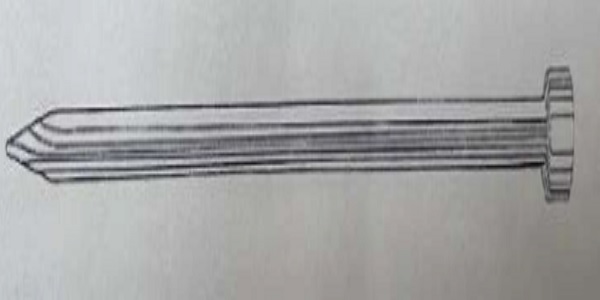
2. The application of the Appellant was found to be objectionable under Sections 9(1)(a) and 9(1)(b) of the Trade Marks Act, 1999 (hereinafter ‘Act’) and the mark was found to be devoid of any distinctive character by the Senior Examiner.
3. counsel for the Appellant submits that the shape of the knitting needle sought to be registered by the Appellant is very distinctive and has acquired secondary meaning. Mr. Harish V Shankar accepts notice.
4. The court has put to the ld. Counsel, as to what are the distinctive elements in the above needle that entitle it to a shape trade mark protection. Ld. Counsel after seeking instructions submits that he wishes to withdraw the present appeal. Thus, on facts, the appeal is dismissed as withdrawn.
5. This Court, however, for the purposes of recording the legal position on shape trademarks, notices that the erstwhile Trade and Merchandise Marks Act, 1958 defined the word ‘mark’ under section 2(1)(j) as under:
(j) “mark” includes a device, brand, heading, label, ticket, name, signature, word, letter or numeral, or any combination thereof;
6. The Trade Marks Act, 1999 expanded the definition of `mark’ and provides an illustrative definition of the word ‘mark’ in section 2(1)(m) in the following manner:
(m) “mark” includes a device, brand, heading, label, ticket, name, signature, word, letter, numeral, shape of goods, packaging or combination of colours or any combination thereof;
7. On juxtaposing definitions of the word ‘mark’ under the old and the new trade mark laws, it can be inferred that the scope and meaning of the word ‘mark’ has expanded over time and is no longer limited to what are commonly referred to as traditional trademarks. The law now extends trade mark protection to features such as shape of goods, packaging, sound, smell, and combination of colours amongst others, as long as they fulfil the quintessential function of trademark- ‘source identification’. This Court in Levi Strauss and Co. v. Imperial Online Services Private Limited [CS(COMM) 657/2021 order dated 24th March, 2022] has summed up the evolution of trade marks in the following words:
“14. Under the law of trade marks, the definition of ‘mark’ has evolved over time. Traditionally, trademarks included names, words, devices, logo, label/packaging, letters, numerals etc. However, this list of trademarks has expanded over the years to include colour, combination of colours, shape of goods, patterns of products, smell, and sound marks etc. These broad two categories of marks are loosely referred to as –