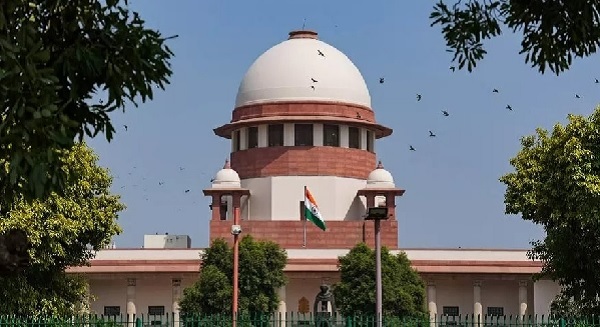
Batliboi Environmental Engineers Limited Vs Hindustan Petroleum Corporation Limited And Another (Supreme Court of India)
Supreme Court, in the case of Batliboi Environmental Engineers Limited Vs Hindustan Petroleum Corporation Limited And Another, emphasized that compensation awarded in contract disputes, particularly through arbitration, must be based on actual loss sustained and should not result in a whimsical or absurd windfall for one party at the expense of the other. The court examined the principles for computing damages when a contract is partially prevented or delayed due to the employer’s breach, noting that damages typically cover loss of profit from reduced profitability or added expenses.
The judgment delved into the complexities of calculating loss related to overheads and profits, often addressed using formulae like Hudson’s, Emden’s, or Eichleay’s. While acknowledging judicial approval of such formulae in English and Canadian precedents (Peak Construction (Liverpool) Ltd, Whittal Builders, JF Finnegan Ltd, Ellis-Don), the Court stressed caution. It highlighted that these formulae are based on assumptions that must be substantiated by the claimant. For instance, Hudson’s formula assumes the contractor could have earned similar profits elsewhere, requiring proof of available work declined due to the delay. The court warned against potential inaccuracies, such as double recovery (as noted in Hudson’s 11th edition and Property and Land Contractors Ltd v. Alfred McAlpine Homes North Ltd.), and stated these methods should be applied carefully, potentially as a last resort when direct calculation isn’t feasible.

Applying these principles to the specific arbitral award favouring Batliboi Environmental Engineers Limited (BEEL), the Supreme Court found the compensation granted for loss of overheads and profits (Rs. 1.57 crore on a contract value of Rs. 5.74 crore) to be “grossly and abnormally inflated” and “highly disproportionate.” The court noted a lack of justification for the calculation, potential overlapping or double counting of damages, and flawed reasoning regarding the mitigation of losses. An award for idle machinery was also criticized as being granted merely on the arbitrator’s assertion (ipsi dixit) without adequate reasoning or basis, especially since the site inspection occurred long after BEEL had abandoned the contract.
The Court extensively discussed the scope of judicial review of arbitral awards under Section 34 of the Arbitration and Conciliation Act, 1996 (A&C Act), as it stood before the 2015 amendment (since the challenge was filed in 1999). It traced the interpretation of the “public policy of India” ground for setting aside awards, referencing key decisions. ONGC Ltd. v. Saw Pipes Ltd. expanded this to include “patent illegality” and violation of the “fundamental policy of Indian law.” Subsequent cases like McDermott International Inc. and Rashtriya Ispat Nigam Ltd. provided further nuances.
The Court highlighted the principles laid down in ONGC Ltd. v. Western Geco International Ltd. and Associate Builders v. Delhi Development Authority, which elaborated on the “fundamental policy of Indian law.” This includes requiring a judicial approach (fair, reasonable, non-arbitrary), adherence to natural justice (application of mind, reasoned decisions), and avoiding perversity (decisions based on no evidence, irrelevant factors, ignoring vital evidence, or being irrational under the Wednesbury test). While emphasizing that courts do not sit in appeal over arbitral awards or correct mere errors of fact or law, intervention is warranted if an award conflicts with these fundamental principles, shocking the conscience of the court or demonstrating patent illegality going to the root of the matter. Based on these pre-amendment standards, the Court found the award unsustainable due to patent flaws, lack of reasoning, and unjustified calculations, upholding the High Court’s decision to set it aside.
FULL TEXT OF THE SUPREME COURT JUDGMENT/ORDER