Peps Industries Private Limited Vs. Kurlon Limited (Delhi High Court)
FACTS
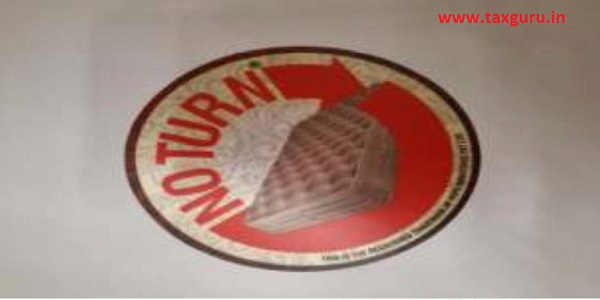
In the present case, Peps Industries Pvt. Ltd. (‘Plaintiff’) is the owner of registered trademark “NO TURN”. The Plaintiff had registered the same under Class 20 for mattresses, wall beds, adjustable beds, sofas, pillows, cushions and other related products in the year 2008. The mark was granted registration in February 2011 with effect from January 2008.
Since 15.01.2008, the Plaintiff had been continuously, consistently and uninterruptedly using its trademark NO TURN in relation to its products besides other brands. In August 2018, the Plaintiff came across the alleged dishonest use of the trademark ‘NO TURN’ by the Defendant. Therefore, the plaintiff issued a cease and desist notice dated 07.08.2018 to the Defendant. However, the Defendant did not respond to the said notice and continued using the trademark despite a second notice issued by the Plaintiff to the Defendant dated 21.08.2018.
Thereafter, the Defendant responded to the two notices of the Plaintiff vide a reply dated 31.10.2018 claiming that the Defendant was the prior user of the trademark NO TURN and had been using the same since 2007 i.e. even before the registration of the Plaintiff’s trademark.
Pursuant thereof, the Defendant filed an application dated 24.12.2018 for registration of its trademark NO TURN claiming itself to be the prior user of such trademark i.e. 08.10.2007 and had simultaneously applied for cancellation of the Plaintiff’s registered trademark on the ground of prior user under Section 34 of the Trademarks Act, 1999. However, the said application for registration of Trademark filed by the Defendant was objected by the Plaintiff before the Registrar of Trademarks.
Subsequently, the Plaintiff approached the High Court of Delhi for seeking a decree of permanent injunction against the Defendant from manufacturing, selling, offering for sale, advertising, providing services directly or indirectly dealing in goods and services under the registered mark ‘NO TURN’ or in any manner using the Plaintiff’s registered mark ‘No Turn’ or any other trademark which is deceptively similar thereto, amounting to infringement, passing off the defendant’s business as that of the Plaintiff or resulting in dilution and tarnishing of Plaintiff’s registered trademark.
ISSUES FOR CONSIDERATION
1. Whether the Defendant is a prior user of the Mark ‘NO TURN’ and if yes, whether the Defendant is entitled to protection?
2. Whether on the facts of the case Defendant is using the mark as a descriptive mark, thus, entitled to protection and hence no injunction can be granted in favour of the Plaintiff?
CONTENTIONS OF THE PARTIES
The Plaintiff contended that the use of the trademark ‘NO TURN’ by the Defendant is for the identical goods and the same constitutes an infringement of the registered mark of the Plaintiff. Also, the Plaintiff was in continuous use of the trademark ‘NO TURN’ since January 2008 which was evident from the trademark registration certificate, orders and invoices of ‘NO TURN’ labels for an uninterrupted period of 11 years.
Furthermore, the Plaintiff also contended that the use of the trademark ‘NO TURN’ by the Defendant is descriptive in nature as reflected in the broucher of the Defendant which conspicuously reflects that the mattresses would not have to be ‘turned over’ and extends to describe the quality of the mattresses.
The Defendant contended that the trademark ‘NO TURN’ had been used by the Defendant since the year 2007 prior to the filing date of the application by the Plaintiff for registration of its trademark in the year 2008. Thus, the Defendant claimed itself to be the prior user of the trademark ‘NO TURN’ and claimed for the protection of its rights, in the absence of registration, under Section 34 of the Trademarks Act, 1999.
Additionally, the Defendant argued that the mark ‘NO TURN’ had been used by the Defendant along with its brand KURLON which is a well-known trademark and had acquired the distinctiveness in the business of mattresses and does not lead to any confusion or damage of goodwill of the Plaintiff.
DISCUSSION AND FINDINGS
With regards to the first issue, the Court dealt with the rights of the registered trademark holder vis-à-vis the other registered trademark or a prior user in accordance with the Trademarks Act, 1999.
The Court in view of S. Syed Mohideen v. P. Sulochana Bai (2016) 2 SCC 683 discussed the rights of the registered holder of the trademark as per Section 28 and observed as under:
“10.)…..28. Rights conferred by registration – (1) Subject to the other provisions of this Act, the registration of a trade mark shall, if valid, give to the registered proprietor of the trade mark the exclusive right to the use of the trade mark in relation to the goods or services in respect of which the trade mark is registered and to obtain relief in respect of infringement of the trade mark in the manner provided by this Act.
(2) The exclusive right to the use of a trade mark given under sub-section (1) shall be subject to any conditions and limitations to which the registration is subject.
(3) Where two or more persons are registered proprietors of trademarks, which are identical with or nearly resemble each other, the exclusive right to the use of any of those trademarks shall not (except so far as their respective rights are subject to any conditions or limitations entered on the register) be deemed to have been acquired by any one of those persons as against any other of those persons merely by registration of the trade marks but each of those persons has otherwise the same rights as against other persons (not being registered users using by way of permitted use) as he would have if he were the sole registered proprietor.”
“26. A bare reading of this provision demonstrates the following rights given to the registered proprietor of the trade mark:
(i) Exclusive right to use the trade mark in relation to the goods or services in respect of which the trade mark is registered.
(ii) To obtain relief in respect of infringement of trade mark in the manner provide by this Act.”
Further the Court discussed the rights of the prior user protected under Section 34 of the Trademarks Act, 1999 in light of Kamat Hotels (India) Ltd. v. Royal Orchid Hotels Ltd. & Anr. and Pioneer Nuts and Bolts Pvt. Ltd. v. M/s Goodwill Enterprises and observed that:
“11.)….. 34. Saving for vested rights –Nothing in this Act shall entitle the proprietor or a registered user of registered trade mark to interfere with or restrain the use by any person of a trade mark identical with or nearly resembling it in relation to goods or services in relation to which that person or a predecessor in title of his has continuously used that trade mark from a date prior–
(a) to the use of the first-mentioned trade mark in relation to those goods or services by the proprietor or a predecessor in title of his; or
(b) to the date of registration of the first-mentioned trade mark in respect of those goods or services in the name of the proprietor of a predecessor in title of his, whichever is the earlier, and the Registrar shall not refuse (on such use being provided) to register the second mentioned trade mark by reason only of the registration of the first- mentioned trade mark.”
“13. Essentially, what section 34 provides is a defeasance of the right of the proprietor or registered user of a registered trade mark, in a certain specific eventuality. That eventuality is where another person is using a trade mark identical with or nearly resembling a registered trade mark in relation to goods or services in relation to which that person or a predecessor-in-title has continuously used that trade mark. Before the protection under section 34 can be availed of, the conditions which are spelt out in section 34 must demonstrably exist…..”
In view of the aforesaid discussion, the Court deduced the following principles with regard to the rights of the registered trademark of the same or similar trademark or prior user of the same or similar trademark:
“13.)…..(i) Rights of registered owner of the Trademark though exclusive, are subject to various provisions and thus not absolute.
(ii) The rights of a person alleging passing off the goods of the other party as that of its own, emanate from the common law and not from the provisions of the Trade Marks Act, and thus, independent from the rights conferred by the Act.
(iii) The right of the registered owner of the trademark is not higher in order to right of the person using an identical trademark or resembling thereto in relation to the similar goods and services if the other party has been continuously using the said trademark prior to the user of the trademark by the registered owner. The user by other party has to be continuous, distinct from the user which is separate, isolated or disjointed and requires the commercially continuous use of mark in relation to the same goods or services. A defendant seeking to set up a defence of prior use under Section 34 of the Trade Marks Act has also to prove the volume of sales. Mere issuance of an advertisement would not constitute user of the mark.”
Therefore, on collective reading of the Trademarks Act, 1999 the Court held that the three constituents of passing off are goodwill, misrepresentation and damage and the same are considered to be classical trinity under the law of the land. The Court further opined that a passing off action may be taken against a registered proprietor of the mark but trademark exists independently of the registration which extends the protection under the statue.
In other words, registration is merely a recognition of the rights pre-existing in common law and in case of dispute arising between two registered proprietors, the assessment of the better rights under common law is essential as the same would define whose rights between the two registered proprietors are better and superior.
In light of the present facts and circumstances, the Court concluded that as per the invoices placed on record by the parties, it is apparent that the Defendant had been using the label ‘NO TURN’ since the year 2007, however, the sales made by the Defendant are irregular in various years and do not indicate a continuous and voluminous use of the mark ‘NO TURN’ by the Defendant.
Henceforth, the Court ruled that the Defendant cannot succeed by taking the defence under Section 34 of the Trademarks Act, 1999 and also no corollary can be drawn that the Plaintiff by making misrepresenting is tarnishing and riding on the goodwill of the Defendant and thereby causing harm to the Defendant.
With regards to the second issue, the Court at length discussed the case of Marico Limited v. Agro Tech Foods Limited (2010) 174 DLT 279 (DB) and concluded that the reference of the mark ‘NO TURN’ as used by the Defendant was to describe the quality of the mattresses of the Defendant and nowhere Defendant intended to use the same as a trademark in relation to its business of mattresses.
Further, the Court opined that the use of ‘NO TURN’ on mattresses and in the brochure by the Defendant intended that the mattresses which do not require to be ‘turned around’ were labelled as ‘NO TURN’ and the same was not used as a trademark in the course of business of the Defendant.
In addition to the above, the Court observed that though the Defendant is the prior user of the mark ‘NO TURN’ and has been using the same since 2007, however, the use of the mark by the Defendant is intermittent and not voluminous and the Plaintiff being the registered owner of the trademark ‘NO TURN’ the defence under Section 34 of the Trademarks Act, 1999 is not available with the Defendant.
On the aforesaid reasoning, the Court held that the Plaintiff is the registered owner of the trademark ‘NO TURN’ however, the relief of injunction was not granted to the Plaintiff as there were not enough evidences on record to establish that the trademark of the Plaintiff had acquired distinctiveness or is known to be a well-known trademark.
ANALYSIS
The Court, in the present case, had at length discussed the rights of the registered trademark owner in accordance with Section 28 and rights of the prior user of the trademark in accordance with Section 34 of the Trademarks Act, 1999.
Further the Court discussed the concept of descriptive trademark which prima facie discusses the quality or characteristics of a product and cannot be granted protection under the law of the land.
However, the benchmark for protection and enforcement of descriptive trademark is relatively high and further the acquired distinctiveness of the trademark has to be appropriately established.
Thus, in the present case, the Court by its reasoned order had refused to grant an injunction on the basis that the alleged infringing mark is descriptive in nature and does not tarnish the goodwill of the Plaintiff. Also the same is being used as a label by the Defendant and not as a trademark per se.
FULL TEXT OF THE HIGH COURT ORDER /JUDGEMENT
1. By the present suit the plaintiff seeks a decree of permanent injunction against the defendant, its director, officers, retailers, stockists, distributors, agents, representatives and employees from manufacturing, selling, offering for sale, advertising, providing services directly or indirectly dealing in goods and services under the registered mark „NO TURN‟or in any manner using the plaintiff‟s registered mark „NO TURN‟or any other trademark which is deceptively similar thereto, amounting to infringement, passing off the defendant‟s business as that of the plaintiff or resulting in dilution and tarnishment of the plaintiff‟s registered trademark „NO TURN‟, delivery up of all the infringing material, rendition of accounts, damages and costs. Along with the plaint, the plaintiff filed IA 487 1/2019 seeking ad interim ex-parte injunction under Order XXXIX Rule 1 & 2 CPC wherein vide order dated 3rd April, 2019, this Court granted ad interim injunction in terms of the prayer against the defendant in respect of the trademark „NO TURN‟ or any other mark deceptively similar thereto. On receipt of summons, the defendant has filed the application being IA 6715/2019 under Order XXXIX Rule 4 CPC.
2. Case of the plaintiff is that the plaintiff filed a trademark application for registration of the mark „NO TURN‟on proposed to be used as its trademark on 2nd January, 2008 whereafter plaintiff started using the mark „NO TURN‟in association with its mattresses from 15th January, 2008. Plaintiff was granted registration on 4th February, 2011 with effect from 2nd January, 2008. Thus, the plaintiff has registered trademark „NO TURN‟ under Class-20 for mattresses, wall beds, adjustable beds, coir mats, spring mattresses, sofas, pillows, cushions, seats and other related products. Since 15th January 2008, the plaintiff has been continuously, consistently and uninterruptedly using its trademark „NO TURN‟ in relation to its products besides other brands. In August, 2018, the plaintiff came to know that the defendant has dishonestly adopted the trademark „NO TURN‟. Hence, the plaintiff issued a cease and desist notice through its attorney on 7th August, 2018 to the defendant. However, the defendant did not respond to the said notice and continued using the trademark despite a second notice dated 21st August, 2018. On 31st October, 2018, the defendant responded to the legal notice and claimed that it was the prior user of the trademark „NO TURN‟.
After the legal notice of the plaintiff, defendant filed an application on 24th December, 2018 for registration of the trademark „NO TURN‟ claiming user thereof from 8th October, 2007 which application has been objected to before the Registrar of Trademarks by the plaintiff. Defendant also filed an application for rectification/removal of the plaintiff‟s registered mark „NO TURN‟.
3. Plaintiff claims that besides being the registered owner of the trademark „NO TURN‟, the plaintiff has adopted and is in continuous use of the same since 15thJanuary, 2008 which is evident from the trademark registration certificate, the orders and invoices of „NO TURN‟ labels for a continuous period of around 11 years, the marketing and promotional material including brochures, steadily increasing yearly sales figure of the „NO TURN‟ mattresses and the expenses on advertisements and promotion
4. Plaintiff claims that the defence of the defendant is an afterthought. The purchase orders and invoices placed on record by the defendant are ex facie false and fabricated to wrongly claim prior use. Besides no prior use, the defendant‟s commodity is also not continuously used commercially and there is no material on record that the defendant is affixing „NO TURN‟labels on its products, and on the basis of the documents placed on record by the defendant along with the written statement no prior use is made out. Reliance is placed on the decisions reported as ILR 2010 (I) Delhi 738 Pioneer Nuts and Bolts Pvt. Ltd. vs. M/s. Goodwill Enterprises, 2009 SCC OnLine Del 1667 Mars, Incorporated vs. T. Raghulal & Anr. and 2011 (4) Maharashtra Law Journal 71 Kamat Hotels (India) Ltd. vs. Royal Orchid Hotels Ltd. & Anr.
5. Learned counsel for the defendant contends that the defendant is using the trademark since the year 2007 prior to the filing date of the application of the plaintiff wherein the mark „NO TURN‟is proposed to be used, thus, the defendant is clearly protected being a prior user. Further the defendant uses the „NO TURN‟ mark along with its brand KURLON which is a well-established and reputed brand in mattresses and hence there can be no Reliance is placed on the decisions reported as (2016) 2 SCC 683 S. Syed Mohideen vs. P. Sulochana Bai and 2019 SCC OnLine Del 7644 Intercity Hotel GMBH vs. Hotel Intercity Delhi & Ors.
6. The contention of learned counsel for the plaintiff that the defendant is not continuously using the mark „NO TURN‟is belied by the invoices of the years 2007, 2008, 2010, 2011, 2012, 2013, 2015, 2016 and 2018. The term „NO TURN‟ is used by the defendant to represent the particular characteristic of its mattresses that do not require to be „turned over‟ after a long period of use. This quality of the mattresses stems from the asymmetric design where one surface is pre-loaded with additional features. Upon receiving the legal notice the defendant filed the trademark application for the mark „NO TURN‟ as also the rectification application seeking cancellation of the plaintiff‟s mark „NO TURN‟ on the ground of prior user under Section 34 of the Trade Marks Act, 1999. The rights of the defendant are protected under Section 34 of the Trade Marks Act, 1999 being the prior user even in the absence of registration of trademark „NO TURN‟.
7. Learned counsel for the defendant further claims that by the ex-parte injunction the defendant is not only suffering a monetary loss but also its brand-value is affected, hence, the interim injunction be vacated.
8. Rebutting the arguments of learned counsel for the defendant, learned counsel for the plaintiff submits that since the plaintiff and defendant are using „NO TURN‟for identical goods i.e. mattresses, there is a clear likelihood of confusion amongst the customers. Reliance of learned counsel for the defendant on the decision in Syed Mohideen (supra) which has been relied upon in Intercity Hotel‟s case is misconceived for the reason the plaintiff therein was on trans-border reputation and the trademark of the plaintiff therein was not registered in India when the test to be applied is: “Whether an ordinary man with able collection will be able to distinguish the mark used in relation to the goods once it is established that the defendant is clearly liable for the infringement” and thus, the injunction is liable to be continued.
9. From the contention of the parties, two issues which need determination are whether the defendant is a prior user of the mark „NO TURN‟and if yes, whether the defendant is entitled to protection? Secondly, whether on the facts of the case defendant is using the mark as a descriptive mark, thus, entitled to protection and hence no injunction can be granted in favour of the plaintiff?
10. Supreme Court in S. Syed Mohideen‟scase (supra) dealing with the right of the registered trademark holder vis-а-vis the other registered trademark or a prior user, held as under:-
“25. Section 28 which is very material for our purpose, as that provision confers certain rights by registration, is reproduced below in its entirety:
“28. Rights conferred by registration.—(1) Subject to the other provisions of this Act, the registration of a trade mark shall, if valid, give to the registered proprietor of the trade mark the exclusive right to the use of the trade mark in relation to the goods or services in respect of which the trade mark is registered and to obtain relief in respect of infringement of the trade mark in the manner provided by this Act.
(2) The exclusive right to the use of a trade mark given under sub-section (1) shall be subject to any conditions and limitations to which the registration is subject.
(3) Where two or more persons are registered proprietors of trade marks, which are identical with or nearly resemble each other, the exclusive right to the use of any of those trade marks shall not (except so far as their respective rights are subject to any conditions or limitations entered on the register) be deemed to have been acquired by any one of those persons as against any other of those persons merely by registration of the trade marks but each of those persons has otherwise the same rights as against other persons (not being registered users using by way of permitted use) as he would have if he were the sole registered proprietor.”
26. A bare reading of this provision demonstrates the following rights given to the registered proprietor of the trade mark:
(i) Exclusive right to use the trade mark in relation to the goods or services in respect of which the trade mark is registered.
(ii) To obtain relief in respect of infringement of trade mark in the manner provided by this Act.
27. Sub-section (3) of Section 28 with which we are directly concerned, contemplates a situation where two or more persons are registered proprietors of the trade marks which are identical with or nearly resemble each other. It, thus, postulates a situation where same or similar trade mark can be registered in favour of more than one person. On a plain stand-alone reading of this Section, it is clear that the exclusive right to use of any of those trade marks shall not be deemed to have been acquired by one registrant as against other registered owner of the trade mark (though at the same time they have the same rights as against third person). Thus, between the two persons who are the registered owners of the trade marks, there is no exclusive right to use the said trade mark against each other, which means this provision gives concurrent right to both the persons to use the registered trade mark in their favour. Otherwise also, it is a matter of common sense that the plaintiff cannot say that its registered trade mark is infringed when the defendant is also enjoying registration in the trade mark and such registration gives the defendant as well right to use the same, as provided in Section 28(1) of the Act.
28. However, what is stated above is the reflection of Section 28 of the Act when that provision is seen and examined without reference to the other provisions of the Act. It is stated at the cost of repetition that as per this Section owner of registered trade mark cannot sue for infringement of his registered trade mark if the appellant also has the trade mark which is registered. Having said so, a very important question arises for consideration at this stage, namely, whether such a respondent can bring an action against the appellant for passing off invoking the provisions of Section 2 7(2) of the Act. In other words, what would be the interplay of Section 2 7(2) and Section 28(3) of the Act is the issue that arises for consideration in the instant case. As already noticed above, the trial court as well as the High Court have granted the injunction in favour of the respondent on the basis of prior user as well as on the ground that the trade mark of the appellant, even if it is registered, would cause deception in the mind of the public at large and the appellant is trying to encash upon, exploit and ride upon on the goodwill of the respondent herein. Therefore, the issue to be determined is as to whether in such a scenario, the provisions of Section 2 7(2) would still be available even when the appellant is having registration of the trade mark of which he is using.
29. After considering the entire matter in the light of the various provisions of the Act and the scheme, our answer to the aforesaid question would be in the affirmative. Our reasons for arriving at this conclusion are the following.
30. Firstly, the answer to this proposition can be seen by carefully looking at the provisions of the Trade Marks Act, 1999 (the Act). Collective reading of the provisions especially Sections 27, 28, 29 and 34 of the Trade Marks Act, 1999 would show that the rights conferred by registration are subject to the rights of the prior user of the trade mark. We have already reproduced Section 27 and Section 29 of the Act.
30.1. From the reading of Section 27(2) of the Act, it is clear that the right of action of any person for passing off the goods/services of another person and remedies thereof are not affected by the provisions of the Act. Thus, the rights in passing off are emanating from the common law and not from the provisions of the Act and they are independent from the rights conferred by the Act. This is evident from the reading of the opening words of Section 2 7(2) which are “Nothing in this Act shall be deemed to affect rights….”
30.2. Likewise, the registration of the mark shall give exclusive rights to the use of the trade mark subject to the other provisions of this Act. Thus, the rights granted by the registration in the form of exclusivity are not absolute but are subject to the provisions of the Act.
30.3. Section 28(3) of the Act provides that the rights of two registered proprietors of identical or nearly resembling trade marks shall not be enforced against each other. However, they shall be same against the third parties. Section 28(3) merely provides that there shall be no rights of one registered proprietor vis-а-vis another but only for the purpose of registration. The said provision 28(3) nowhere comments about the rights of passing off which shall remain unaffected due to overriding effect of Section 27(2) of the Act and thus the rights emanating from the common law shall remain undisturbed by the enactment of Section 28(3) which clearly states that the rights of one registered proprietor shall not be enforced against the another person.
30.4. Section 34 of the Trade Marks Act, 1999 provides that nothing in this Act shall entitle the registered proprietor or registered user to interfere with the rights of prior user. Conjoint reading of Sections 34, 27 and 28 would show that the rights of registration are subject to Section 34 which can be seen from the opening words of Section 28 of the Act which states “Subject to the other provisions of this Act, the registration of a trade mark shall, if valid, give to the registered proprietor….” and also the opening words of Section 34 which states “Nothing in this Act shall entitle the proprietor or a registered user of registered trade mark to interfere….” Thus, the scheme of the Act is such where rights of prior user are recognised superior than that of the registration and even the registered proprietor cannot disturb/interfere with the rights of prior user. The overall effect of collective reading of the provisions of the Act is that the action for passing off which is premised on the rights of prior user generating a goodwill shall be unaffected by any registration provided under the Act. This proposition has been discussed in extenso in N.R. Dongre v. Whirlpool Corpn. [N.R. Dongre v. Whirlpool Corpn., 1995 SCC OnLine Del 310 : AIR 1995 Del 300] wherein the Division Bench of the Delhi High Court recognised that the registration is not an indefeasible right and the same is subject to rights of prior user. The said decision of Whirlpool [N.R. Dongre v. Whirlpool Corpn., 1995 SCC OnLine Del 310 : AIR 1995 Del 300] was further affirmed by the Supreme Court of India in N.R. Dongre v. Whirlpool Corpn. [N.R. Dongre v. Whirlpool Corpn., (1996) 5 SCC 714]
30.5. The above were the reasonings from the provisions arising from the plain reading of the Act which gives clear indication that the rights of prior user are superior than that of registration and are unaffected by the registration rights under the Act.
31. Secondly, there are other additional reasonings as to why the passing off rights are considered to be superior than that of registration rights.
31.1. Traditionally, passing off in common law is considered to be a right for protection of goodwill in the business against misrepresentation caused in the course of trade and for prevention of resultant damage on account of the said misrepresentation. The three ingredients of passing off are goodwill, misrepresentation and damage. These ingredients are considered to be classical trinity under the law of passing off as per the speech of Lord Oliver laid down in Reckitt & Colman Products Ltd. v. Borden Inc. [Reckitt & Colman Products Ltd. v. Borden Inc., (1990) 1 WLR 491 : (1990) 1 All ER 873 (HL)] which is more popularly known as “Jif Lemon” case wherein Lord Oliver reduced the five guidelines laid out by Lord Diplock in Erven Warnink Besloten Vennootschap v. J. Townend & Sons (Hull) Ltd. [Erven Warnink Besloten Vennootschap v. J. Townend & Sons (Hull) Ltd., 1979 AC 731 at p. 742 : (1979) 3 WLR 68 : (1979) 2 All ER 927 (HL)] (“the Advocaat case”) to three elements: (1) goodwill owned by a trader, (2) misrepresentation, and (3) damage to goodwill. Thus, the passing off action is essentially an action in deceit where the common law rule is that no person is entitled to carry on his or her business on pretext that the said business is of that of another. This Court has given its imprimatur to the above principle in Laxmikant V. Patel v. Chetanbhai Shah [Laxmikant V. Patel v. Chetanbhai Shah, (2002) 3 SCC 65] .
31.2. The applicability of the said principle can be seen as to which proprietor has generated the goodwill by way of use of the mark/name in the business. The use of the mark/carrying on business under the name confers the rights in favour of the person and generates goodwill in the market. Accordingly, the latter user of the mark/name or in the business cannot misrepresent his business as that of business of the prior right holder. That is the reason why essentially the prior user is considered to be superior than that of any other rights. Consequently, the examination of rights in common law which are based on goodwill, misrepresentation and damage are independent to that of registered rights. The mere fact that both prior user and subsequent user are registered proprietors are irrelevant for the purposes of examining who generated the goodwill first in the market and whether the latter user is causing misrepresentation in the course of trade and damaging the goodwill and reputation of the prior right holder/former user. That is the additional reasoning that the statutory rights must pave the way for common law rights of passing off.
32. Thirdly, it is also recognised principle in common law jurisdiction that passing off right is broader remedy than that of infringement. This is due to the reason that the passing off doctrine operates on the general principle that no person is entitled to represent his or her business as business of other person. The said action in deceit is maintainable for diverse reasons other than that of registered rights which are allocated rights under the Act. The authorities of other common law jurisdictions like England more specifically Kerly ‘s Law of Trade Marks and Trade Names, 14th Edn., Thomson, Sweet & Maxwell South Asian Edition recognises the principle that where trade mark action fails, passing off action may still succeed on the same evidence. This has been explained by the learned author by observing the following:
“15-033. A claimant may fail to make out a case of infringement of a trade mark for various reasons and may yet show that by imitating the mark claimed as a trade mark, or otherwise, the defendant has done what is calculated to pass off his goods as those of the claimant. A claim in ‘passing off’ has generally been added as a second string to actions for infringement, and has on occasion succeeded where the claim for infringement has failed.”
32.1. The same author also recognises the principle that the Trade Marks Act affords no bar to the passing off action. This has been explained by the learned author as under:
“15-034. Subject to possibly one qualification, nothing in the Trade Marks Act, 1994 affects a trader’s right against another in an action for passing off. It is, therefore, no bar to an action for passing off that the trade name, get up or any other of the badges identified with the claimant’s business, which are alleged to have been copies or imitated by the defendant, might have been, but are not registered as, trade marks, even though the evidence is wholly addressed to what may be a mark capable of registration. Again, it is no defence to passing off that the defendant’s mark is registered. The Act offers advantages to those who register their trade marks, but imposes no penalty upon those who do not. It is equally no bar to an action for passing off that the false representation relied upon is an imitation of a trade mark that is incapable of registration. A passing off action can even lie against a registered proprietor of the mark sued upon. The fact that a claimant is using a mark registered by another party (or even the defendant) does not of itself prevent goodwill being generated by the use of the mark, or prevent such a claimant from relying on such goodwill in an action against the registered proprietor. Such unregistered marks are frequently referred to as ‘common law trade marks’.”
32.2. From the reading of the aforementioned excerpts from Kerly ‘s Law of Trade Marks and Trade Names, it can be said that not merely it is recognised in India but in other jurisdictions also including England/UK (Provisions of the UK Trade Marks Act, 1994 are analogous to the Indian Trade Marks Act, 1999) that the registration is no defence to a passing off action and nor the Trade Marks Act, 1999 affords any bar to a passing off action. In such an event, the rights conferred by the Act under the provisions of Section 28 have to be subject to the provisions of Section 2 7(2) of the Act and thus the passing off action has to be considered independent “Iruttukadai Halwa” under the provisions of the Trade Marks Act, 1999.
33. Fourthly, it is also a well-settled principle of law in the field of the trade marks that the registration merely recognises the rights which are already pre-existing in common law and does not create any rights. This has been explained by the Division Bench of the Delhi High Court in Century raders v. Roshan Lal Duggar & Co. [Century Traders v. Roshan Lal Duggar & Co., 1977 SCC OnLine Del 50 : AIR 1978 Del 250] in the following words: (SCC OnLine Del para 10)
“10. ’16. … First is the question of use of the trade mark. Use plays an all-important part. A trader acquires a right of property in a distinctive mark merely by using it upon or in connection with his goods irrespective of the length of such user and the extent of his trade. The trader who adopts such a mark is entitled to protection directly the article having assumed a vendible character is launched upon the market. Registration under the statute does not confer any new right to the mark claimed or any greater rights than what already existed at common law and at equity without registration. It does, however, facilitate a remedy which may be enforced and obtained throughout ‘the State and it established the record of facts affecting the right to the mark. Registration itself does not create a trade mark. The trade mark exists independently of the registration which merely affords further protection under the statute. Common law rights are left wholly unaffected.’ [Ed.: As observed in L.D. Malhotra Industries v. Ropi Industries, 1975 SCC OnLine Del 172, para 16.] ”
(emphasis supplied)
33.1. The same view is expressed by the Bombay High Court in Sunder Parmanand Lalwani v. Caltex (India) Ltd. [Sunder Parmanand Lalwani v. Caltex (India) Ltd., 1965 SCC OnLine Bom 151 : AIR 1969 Bom 24] in which it has been held vide AIR para 32 as follows: (SCC OnLine Bom paras 1 & 2)
“1. A proprietary right in a mark can be [„Iruttukadai Halwa’] obtained in a number of ways. The mark can be originated by a person, or it can be subsequently acquired by him from somebody else. Our Trade Marks law is based on the English Trade Marks law and the English Acts. The first Trade Marks Act in England was passed in 1875. Even prior thereto, it was firmly established in England that a trader acquired a right of property in a distinctive mark merely by using it upon or in connection with goods irrespective of the length of such user and the extent of his trade, and that he was entitled to protect such right of property by appropriate proceedings by way of injunction in a court of law. Then came the English Trade Marks Act of 1875, which was substituted later by later Acts. The English Acts enabled registration of a new mark not till then used with the like consequences which a distinctive mark had prior to the passing of the Acts. The effect of the relevant provision of the English Acts was that registration of a trade mark would be deemed to be equivalent to public user of such mark. Prior to the Acts, one could become a proprietor of a trade mark only by user, but after the passing of the Act of 1875, one could become a proprietor either by user or by registering the mark even prior to its user. He could do the latter after complying with the other requirements of the Act, including the filing of a declaration of his intention to use such mark. See observations of Llyod Jacob, J. in Vitamins Ltd. ‘s Application, In re [Vitamins Ltd. ‘s Application, In re, (1956) 1 WLR 1 : (1955) 3 All ER 827 : 1956 RPC 1] at RPC p. 12, and particularly the following: (WLR p. 10)
2. Law in India under our present Act is similar.”
(emphasis supplied)
33.2. We uphold the said view which has been followed and relied upon by the courts in India over a long time. The said views emanating from the courts in India clearly speak in one voice, which is, that the rights in common law can be acquired by way of use and the registration rights were introduced later which made the rights granted under the law equivalent to the public user of such mark. Thus, we hold that registration is merely a recognition of the rights pre-existing in common law and in case of conflict between the two registered proprietors, the evaluation of the better rights in common law is essential as the common law rights would enable the court to determine whose rights between the two registered proprietors are better and superior in common law which have been recognised in the form of the registration by the Act.”
11. Dealing with the rights of the prior user protected under Section 34 of the Trade Marks Act, in Kamat Hotel‟scase (supra), it was held:-
“11. The Trade Marks Act, 1999 incorporates specific provisions for the consequence of registration. The remedy of infringement is available upon registration. Under sub-section (1) of section 27 no person is entitled to institute any proceeding to prevent, or to recover damages for the infringement of an unregistered trade mark. Sub-section (2), however, saves the right of action for passing off of goods or services and the remedies in respect thereof. Under subsection (1) of section 28 the registration of a trade mark, if valid, furnishes to the registered proprietor the exclusive right to the use of the mark “in relation to the goods or services in respect of which the trade mark is registered” and to obtain relief in respect of infringement in the manner provided by the Act.
12. Section 34 of the Act provides for the saving of vested rights in the following terms:
“34. Saving for vested rights — Nothing in this Act shall entitle the proprietor or a registered user of registered trade mark to interfere with or restrain the use by any person of a trade mark identical with or nearly resembling it in relation to goods or services in relation to which that person or a predecessor in title of his has continuously used that trade mark from a date prior—
(a) to the use of the first-mentioned trade mark in relation to those goods or services by the proprietor or a predecessor in title of his; or
(b) to the date of registration of the first-mentioned trade mark in respect of those goods or services in the name of the proprietor of a predecessor in title of his, whichever is the earlier, and the Registrar shall not refuse (on such use being provided) to register the second mentioned trade mark by reason only of the registration of the first-mentioned trade mark.”
13. Essentially, what section 34 provides is a defeasance of the right of the proprietor or registered user of a registered trade mark, in a certain specific eventuality. That eventuality is where another person is using a trade mark identical with or nearly resembling a registered trade mark in relation to goods or services in relation to which that person or a predecessor-in-title has continuously used that trade mark. Before the protection under section 34 can be availed of, the conditions which are spelt out in section 34 must demonstrably exist. In order to facilitate analysis, it would be convenient to break down section 34 into its component elements:
(i) Section 34 commences with a non obstante provision which gives it overriding force over the other provisions of the Act;
(ii) The effect of section 34 is that a proprietor or registered user of a registered trade mark is disabled from interfering with or restraining the use by any person of a trade mark identical with or resembling it;
(iii) The use by the other of a trade mark identical with or nearly resembling the registered trade mark must be in relation to goods or services in relation to which that person or a predecessor-in-title has continuously used that trade mark;
(iv) The use by the other must be from a date prior (a) to the use of the first mentioned trade mark in relation to those goods or services by the proprietor or a predecessor-in-title; or (b) to the date of registration of the first mentioned-trade mark in respect of those goods or services, in this name of the proprietor or a predecessor-in-title of his, whichever is earlier.
14. Section 34 carves out an exception and creates an overriding provision which within the sphere of its operation prevents-a proprietor or registered user of a registered trade mark from interfering with the Use of an identical trade mark or a mark which nearly resembles the registered mark. Section 34 in consequence provides-for a defeasance of the statutory entitlement which flows from the registration of a trade mark. Before such a consequence ensues the conditions which Parliament has enacted‟ must be fulfilled. The most „fundamental requirement is four fold. Firstly, the use by a person of a mark which is identical to or nearly resembles a registered trade mark must be in relation to those goods and services for which the first mentioned mark has been registered Secondly, the use that is postulated by section 34 is a continuous use of the trade mark. Thirdly, in order to avail of the protection the trade mark must be used by the proprietor or by his predecessor-in-interest. Fourthly, the mark in respect of which protection is sought must have been used from a date prior to the use of the registered trade mark or the date of registration of the registered trade mark whichever is earlier. Hence, as an illustration, if the user by the Plaintiff is prior to registration, then the use by the Defendant must be established to be prior to the use by the Plaintiff. If the Plaintiff has not used the mark prior to the date of registration, the use by the Defendant has to be prior to the date of registration of the Plaintiff’s mark. The use must be in respect of goods and service’s for which the Plaintiffs mark is registered. The use has to be by the Defendant or by his predecessor-in-title. The use must be continuous. The expression “continuously used that trade mark” by Parliament has a specific connotation. The concept of continuous use emphasizes that a right vests in a person when he puts his goods with the mark in the market. A use which is continuous is distinct from a use which is stray, isolated or disjointed. The notion of a continuous use establishes that a mere adoption of a mark is not sufficient. The legislation mandates that in order to avail of the benefit of section 34 a test of a high order must be fulfilled which requires a commercially continuous use of the mark in relation to goods or services. Section 34 thus provides for specific requirements which relate to (i) the nature of the goods or services in relation to which the mark is used; (ii) the nature and character of use;(iii) the person who must use; and (iv) the date from which the mark should have been used. Section 2(2)(b) provides that in the Act, unless the context otherwise requires, any reference to the use of a mark is to be construed as a reference to the use of printed or other visual representation of the mark. Any reference to the use of a mark in relation to goods shall be construed as a reference to the use of the mark upon or in any physical or in any other relation whatsoever, to such goods. The Supreme Court has interpreted these words in the context of section 46(1)(b) in Hardie Trading Ltd. v. Addisons Paint and Chemicals Ltd, (2003) 11 SCC 92 : AIR 2003 SC 3377.”
12. This Court, in Pioneer Nuts‟case (supra) dealing with the rights of the prior user held:-
“17. Before the contentions of the parties are discussed, this court would briefly recapitulate the law. In Smith Bartlet and Co. v. The British Pure Oil Grease and Carbide Co. Ltd., (1934) 51 RPC 157, a distinction was drawn between the standard of proof of continuous prior user of an unregistered trade mark as required in an infringement action and that required in a rectification proceeding. The standard requited to defeat an infringement action was more stringent and rigorous. It was observed that Section 41 of the Trade Marks Act of the United Kingdom (which required like Section 34 TM Act continuous prior user) had put “the owner of a registered Trade Mark in a very exceptional position, whether he has used the mark or not, and he is entitled to the exclusive user of it unless under the proviso to Section 41 somebody else is able to show, not an occasional user from a date anterior to the user by the owner of the registered trade mark, but a continuous user by him.”
18. In Amaravathi Enterprises v. Karaikudi Chettinadu, 2008 (36) PTC 688 (Madras) (DB), it was observed that apart from prior continuous use of the trade mark and trade name, the Defendant seeking to set up a defence of prior use under Section 34 of the TM Act had to also prove the volume of sales. In Veerumal Praveen Kumar v. Needle Industries (India) Pvt. Ltd., 2001 (21) PTC PTC 889 (Delhi), a Division Bench of this Court emphasized that a trade mark does not arise from the mere use of a word or words or a formula or a mark. It had to be shown that in relation to particular goods, there is a course of trading and that a goodwill connecting the trader with the goods by the reason of the trade mark under which the goods are marketed has resulted. It was observed: “it follows that where, in relation to particular goods, there is no such course of trading as to give rise to goodwill, there is no interest to be protected by a trademark and no such mark can subsist in vacuo.”
19. In Revue Trade Mark (1979) RPC 27, the question was whether there had been use of the trade mark within the meaning of Section 26 of the Trade Mark Act of the United Kingdom. It was observed that mere offers for sale and orders resulting from such offers do not constitute the use of a trade mark. It was necessary that the proprietor of the trade mark, by the time an offer for sale is published, should “take positive steps to acquire goods marked with the trade mark” for then he would have done enough for his combined actions to constitute use on, or in relation to goods. These observations were approved by the learned single Judge of the Calcutta High Court in Kabushiki Kaisha Toshiba (Toshiba Corporation) v. Toshiba Appliances Co. 1994 (14) PTC 53 (Cal), where a reference was made to the observations of Falconer, J. in Hermes Societe Anonyme v. B.H. Ries Ltd., 1982 RPC 425. It was observed in the latter case that the issuance of a series of advertisements as part of an introductory campaign may be use of the mark in the course of trade but “not upon the goods or in physical relation thereto”. It was observed that this exposition of the law would equally be applicable in India. This part of the judgment of the learned Single Judge was not been disturbed by the Division Bench of the Calcutta High Court and later by the Supreme Court in Kabushiki Kaisha Toshiba v. Toshiba Appliances, (2008) 37 PTC (SC). Likewise in Harold Radford, (1951) 68 RPC 221, it was held that the mere issuance of an advertisement would not constitute a user of the mark. It was observed that otherwise the proprietor of a trade mark might, without having any goods to offer, advertise its marks at periodical intervals and thereby prevent any attack being made upon the mark. It was emphasized that “use of a mark in advertising media must be concurrent with the placing of the goods in the market if it is to be regarded as a trade mark”.
20. xxxx xxxx
21. xxxx xxxx
22. xxxx xxxx
23. Turning to the case on hand, the Defendant has been unable to show that its goods bearing the mark TUFF were at any point of time since 1991 and prior to 1996 available in the market. There is absolutely no evidence placed on record by the Defendant to show that it has actually sold its goods using the mark “TUFF‟or “TUFF & TUFF‟ even For proving prior user, the Defendant repeatedly referred to the two newspaper advertisements inserted by it in 1993, the six trade enquiries between 1994 and 1995 emanating from these advertisements. Between 1993 and 1995, there were seven indents of John and John Traders and one indent of Bolt House. There is also a letter from John and John Traders asking the Defendant to send goods from outside. Then we have the grant by the Postal Department of the telegraphic address “TUFF‟ to the Defendant.
24. In light of the law as explained in the aforementioned decisions as applied to the facts of the present case, the advertisements issued in the newspapers can hardly constitute the proof of service on the user of the mark from those dates. Likewise, the grant of a telegraphic address, or the soliciting of business, or the receipt of trade enquiries cannot by themselves satisfy the legal requirement of the defendant having to show that it used the marks, earlier than the Plaintiff did, in relation to goods.
25. xxxx xxxx
26. xxxx xxxx
27. It needs to be noted that in the present appeal, counsel for the Defendant sought to place on record for the first time certain additional documents. It was claimed that the Defendant had lost crucial documents in 1998 as one of the partners who was carrying them in a scooter fell down while riding it. A copy of the purported police complaint dated 3.3.1998 that had been lodged in that regard was sought to be produced. The Defendant also sought to produce copies of income tax returns, sales tax assessments and certain other documents showing sales made by it. When asked whether the originals of these additional documents sought to be filed could be produced, the counsel for the Defendant replied in the negative. Be that as it may, this court refused to permit the additional documents to be placed on record by the Defendant for the first time at the appellate stage with no convincing explanation why they could not be produced earlier. In any event the police complaint would only show that certain documents were lost in 1998. There was no explanation why documents pertaining to sales by the Defendants of goods with the mark TUFF for the years thereafter were not produced.”
13. From the decisions as noted aforesaid, the following principles with regard to the rights of the registered trademark of the same or similar trademark or prior user of the same or similar trademark can be deduced as under:-
(i) Rights of registered owner of the trademark though exclusive, are subject to various provisions and thus not absolute.
(ii) The rights of a person alleging passing off the goods of the other party as that of its own, emanate from the common law and not from the provisions of the Trade Marks Act and thus, independent from the rights conferred by the Act.
(iii) The right of the registered owner of the trademark is not higher in order to right of the person using an identical trademark or resembling thereto in relation to the similar goods and services if the other party has been continuously using the said trademark prior to the user of the trademark by the registered owner. The user by other party has to be continuous, distinct from the user which is separate, isolated or disjointed and requires the commercially continuous use of mark in relation to the same goods or services. A defendant seeking to set up a defence of prior use under Section 34 of the Trade Marks Act has also to prove the volume of sales. Mere issuance of an advertisement would not constitute user of the mark.
14. Thus, the collective reading of the Trade Marks Act indicates that the action for passing off which is premised on the rights of the prior user generating a goodwill, shall be unaffected by any registration provided under the Act. The three ingredients of passing off are goodwill, misrepresentation and damage which ingredients are considered to be classical trinity under the law of passing off. A passing off action can even lie against a registered proprietor of the mark sued upon. A trademark exists independently of the registration which merely affords a further protection under the Statute, the common law rights being left wholly unaffected. To put it conversely, registration is a mere recognition of the rights pre-existing in common law and in case of conflict between two registered proprietors, the evaluation of the better rights in common law is essential as the same would determine whose rights between the two registered proprietors are better and superior.
15. The plaintiff‟s registered trademark „NO TURN‟for its mattresses is used in the following manner:-