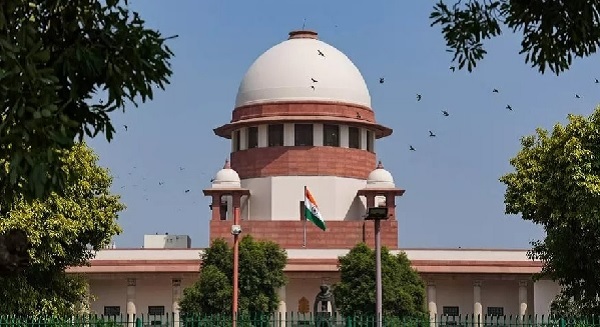
Union Public Service Commission Vs Bibhu Prasad Sarangi and Others (Supreme Court of India)
Summary: The Supreme Court of India set aside the judgment of the Orissa High Court dated 21 November 2019 in a dispute concerning the selection of Bibhu Prasad Sarangi to the Indian Administrative Service (IAS). The Court found that the High Court had failed to independently examine the legal and factual issues arising from an order of the Central Administrative Tribunal (CAT), Cuttack Bench, dated 13 March 2019. Instead, the High Court had extensively reproduced the Tribunal’s observations and concluded that no jurisdictional error had been committed. The Supreme Court held that such an approach did not constitute adequate judicial reasoning.
The underlying dispute concerned the effect of a minor disciplinary penalty imposed on the officer in 2011 on his consideration for selection to the IAS against vacancies for 2015, 2016 and 2017. The Tribunal had directed reconsideration of his candidature, observing that his overall service record should be evaluated rather than treating the earlier penalty as an automatic disqualification. The UPSC contested this approach, submitting that Department of Personnel and Training (DoPT) guidelines governing departmental promotions were distinguishable from the UPSC guidelines applicable to selection from State Civil Services to the IAS, framed under Article 320 of the Constitution.
The Supreme Court emphasised that judicial decisions must contain substantive reasoning and cannot merely reproduce the findings of another adjudicatory authority. While technology can improve judicial efficiency, the use of copying and pasting cannot replace independent application of mind. The Court observed that the quality of judicial reasoning is fundamental to public confidence in the administration of justice and that the length of a judgment does not necessarily indicate the quality of its analysis.
Importantly, the Supreme Court did not decide whether the officer was entitled to selection to the IAS or which guidelines should ultimately govern his candidature. It restored W.P.(C) No. 13029 of 2019 to the Orissa High Court for fresh consideration. Since the officer had retired and the outcome could affect his pensionary benefits, the Supreme Court requested the High Court to endeavour to dispose of the writ petition within four months of receiving a certified copy of its order.
Cases Discussed
- Union of India v. A.K. Narula, AIR 2007 SC 2296 — Discussed concerning the discretion of a Departmental Promotion Committee in assessing service records and suitability.
- Union of India v. K.V. Jankiraman, AIR 1991 SC 2010 — Discussed concerning the right to be considered for promotion and the relevance of disciplinary penalties.
- Union of India & Anr. v. S.K. Goel & Ors., Civil Appeal No. 689 of 2007 — Discussed regarding the discretion of expert selection committees and limits of judicial interference.
- Supreme Court, Civil Appeal No. 10854 of 2014 — Referred to by appeal number in the supplied High Court judgment concerning judicial reassessment of service records. The party names are not established by the supplied material.
FULL TEXT OF THE SUPREME COURT JUDGMENT/ORDER
1. Selection Committee and thereafter, to reconsider the first respondent similarly for 2016 and 2017 if the first respondent was found unsuitable for promotion in the year 2015. Consequential benefits were directed to be released in the event that the Review Selection Committee found the first respondent suitable.
2. Leave granted.
3. This appeal arises from a judgment and order of a Division Bench of the High Court of Orissa dated 21 November 2019.
4. The appellant moved before the High Court in proceedings under Article 226 of the Constitution for challenging an order of the Central Administrative Tribunal, Cuttack Bench1 dated 13 March 2019. The Tribunal had directed the appellant to reconsider the case of the first respondent for promotion to the IAS in accordance with the vacancies for 2015 by reconvening a meeting of the
5. For the purpose of the present appeal, it is not necessary for the Court to consider the facts of the case in detail in view of what we indicate hereafter. In paragraph 4 of its judgment dated 21 November 2019, the High Court extracted portions of the judgment of the Tribunal. Thereafter, the High Court noted that “the Tribunal has elaborately discussed the law” while issuing directions. Having said this, the High Court made the following observations in paragraph 6 of its judgment: “6. We have heard learned counsel for the parties and perused the materials including the impugned order. Learned Tribunal has elaborately dealt with the contentions of learned counsel for the parties with reference to the materials available on record.”
6. In paragraph 7, the High Court held that the Tribunal has not committed any jurisdictional error and no interference is warranted. There has been no independent application of mind to the controversy by the High Court.
7. Cutting, copying and pasting from the judgment of the Tribunal, which is placed in issue before the High Court, may add to the volume of the judgment. The size of judicial output does not necessarily correlate to a reasoned analysis of the core issues in a case. Technology enables judges to bring speed, efficiency and accuracy to judicial work. But a prolific use of the ‘cut-copy-paste’ function should not become a substitute for substantive reasoning which, in the ultimate analysis, is the defining feature of the judicial process. Judges are indeed hard pressed for time, faced with burgeoning vacancies and large case-loads. Crisp reasoning is perhaps the answer. Doing what the High Court has done in the present case presents a veneer of judicial reasoning, bereft of the substance which constitutes the heart of the judicial process. Reasons constitute the soul of a judicial decision. Without them one is left with a shell. The shell provides neither solace nor satisfaction to the litigant. We are constrained to make these observations since what we have encountered in this case is no longer an isolated aberration. This has become a recurring phenomenon. The National Judicial Academy will do well to take this up. How judges communicate in their judgments is a defining characteristic of the judicial process. While it is important to keep an eye on the statistics on disposal, there is a higher value involved. The quality of justice brings legitimacy to the judiciary.
8. In the present case, the issue was whether the first respondent was correctly denied selection to the IAS having regard to the fact that a disciplinary penalty had been imposed upon him on 29 September 2011. The UPSC has submitted that the DOPT Guidelines apply to the constitution of Departmental Promotion Committees for the purpose of promotion, whereas, in matters relating to selection of officers from the state civil services to the IAS, the UPSC Guidelines which have been framed in exercise of powers under Article 320 of the Constitution would have to be considered.
9. We do not express any opinion on the merits of the rival submissions. It was necessary for the High Court to do so since it was seized of proceedings under Article 226 of the Constitution. The High Court having not carried out the exercise, we set aside the impugned judgment and order of the High Court dated 21 November 2019. The writ petition under Article 226, WP(C) 13029 of 2019, shall stand restored to the file of the High Court.
10. The first respondent has, in the meantime, retired from service. The outcome of the proceedings will have a bearing on his pensionary benefits. Hence, we request the High Court to take up the writ petition for disposal at an early date and to endeavour to do so within a period of four months from the date on which a certified copy of this order is placed on the record.
11. The appeal is accordingly disposed of.
12. Pending application, if any, stands disposed of.
1. Delay condoned.
2. Leave granted.
3. The appeal is disposed of in terms of the signed reportable judgment.
4. Pending application, if any, stands disposed of.