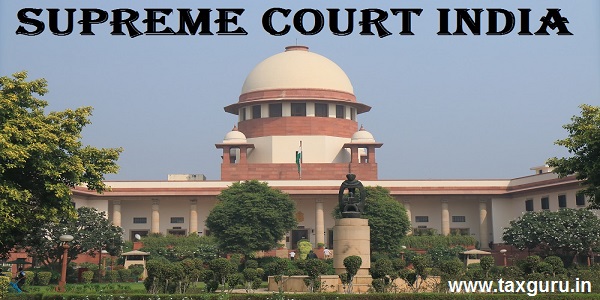
Bandari Ramchander & Ors. Vs Maitri Coop. Housing Society Ltd. & Ors. (Supreme Court of India)
Bogus Revenue Entries Cannot Confer Title Over Government Land: Supreme Court
1. Background of the Miyapur land dispute and conflicting claims of ownership: The Supreme Court, comprising Justice M.M. Sundresh and Justice Satish Chandra Sharma, dismissed a batch of civil appeals concerning approximately 550 acres and 39 guntas of valuable land situated in Survey Nos. 100 and 101 of Miyapur Village, Serilingamapally Mandal, Ranga Reddy District, Telangana. The appeals challenged the common judgment dated 16 April 2003 of the Andhra Pradesh High Court, which had upheld the ownership of the State over the disputed lands. The controversy arose from competing claims advanced by several individuals, legal heirs, purchasers and cooperative housing societies, who traced their alleged ownership through different historical grants, succession arrangements, gifts, agreements of sale and revenue records. The Supreme Court noted that the dispute had a long and complicated history extending back to 1912, when the original survey and settlement records classified 277 acres and 5 guntas in Survey No. 100 and 273 acres and 34 guntas in Survey No. 101 as Sarkari poramboke lands. These classifications were reflected in the classer register and Sethwar, providing important contemporaneous evidence of the governmental character of the properties. Proceedings were subsequently instituted before the Special Court constituted under the Andhra Pradesh Land Grabbing (Prohibition) Act, 1982. In Land Grabbing Case Nos. 21 and 22 of 1994, where the State was not impleaded, certain private parties were declared land grabbers. However, in LGC Nos. 110 of 1994 and 131 and 136 of 1995, where the State participated, the Special Court held that the lands belonged to the government and declared the contesting private parties land grabbers. The High Court upheld the latter findings and set aside the inconsistent earlier determination. Examining the historical documents, statutory provisions and competing claims, the Supreme Court affirmed that private conveyances and disputed revenue entries could not establish ownership over land already vested in the State.
2. Reilly Commission, Nizam’s firman and the limited nature of Paigah and Jagir rights: A substantial part of the dispute concerned claims derived from Rafi-un-nisa Begum and her son Nawab Mohammad Khaisaruddin Khan. The appellants relied upon the historical settlement of Paigah estates, the report of the Reilly Commission dated 30 April 1927 and the subsequent firman issued by the Nizam of Hyderabad in 1929. The Reilly Commission had examined competing claims concerning Paigah properties and recommended restoration of certain villages, including Miyapur and Bahadurpalli, to Rafi-un-nisa Begum. The Nizam’s firman subsequently recognised specified arrangements concerning the relevant Jagirs. However, the Supreme Court emphasised that the legal character of the grant had to be determined from its terms and the applicable statutory framework, rather than from isolated references to restoration or succession. The firman imposed express restrictions on dealings with Paigah immovable properties, prohibiting their sale, purchase, mortgage or gift without the Nizam’s sanction. The Court explained that a Paigah grant ordinarily related to an estate granted for maintaining military establishments, while a Jagir represented rights associated with land revenue rather than an unrestricted proprietary title. The historical grant therefore could not automatically be equated with absolute ownership of the underlying lands. Referring to Trinity Infraventures Ltd. v. M.S. Murthy, 2023 SCC OnLine SC 738, the Court distinguished the limited rights of a Jagirdar from the ownership of land. The appellants’ reliance on inheritance, oral gifts and subsequent conveyances was insufficient because no person claiming through a predecessor could acquire a better title than that predecessor legally possessed. Consequently, the historical documents did not establish the unrestricted and transferable ownership asserted by the appellants.
3. Abolition of Jagirs, statutory vesting and extinguishment of former Jagirdars’ rights: The Supreme Court undertook a detailed examination of the Andhra Pradesh (Telangana Area) (Abolition of Jagirs) Regulation, 1358 Fasli, which came into force on 15 August 1949. The regulation fundamentally altered the legal position of Jagirdars and Paigah estates by abolishing the earlier Jagirdari arrangements and providing for the transfer of administration to the government. A notification dated 7 September 1949 transferred the administration of the relevant Jagirs to the State of Hyderabad with effect from 15 September 1949. The Court examined Regulations 2, 3, 4, 5 and 6 and explained their combined effect. Regulation 4 prohibited the appointment or recognition of any person as a Jagirdar after commencement of the regulation, including by succession. Regulation 5 provided for the transfer of Jagir administration, while Regulation 6 directed the inclusion of Jagirs in the Diwani and transferred the relevant powers, rights and liabilities from the Jagirdar to the Jagir Administrator. The Court held that the statutory abolition framework extinguished the limited Jagirdari rights previously enjoyed by the grant holders. The position could not be reversed merely because succession to a former Jagirdar was subsequently recognised or because documents continued to describe a person as an heir of an earlier grant holder. The Court also referred to Ahmad-Un-Nissa Begum v. State, AIR 1952 Hyderabad 163, in which the Full Bench had explained the consequences of Jagir abolition and the incorporation of Jagir tenures into State lands. The statutory scheme distinguished the former entitlement to income or compensation from ownership of the land itself. Accordingly, the appellants claiming through Khaisaruddin Khan could not rely on pre-abolition grants or subsequent succession proceedings to defeat the State’s title.
4. Jagir commutation compensation, Atiyat grants and the limited effect of Muntakhab proceedings: The Supreme Court further considered the Andhra Pradesh (Telangana Area) Jagirs (Commutation) framework and the Hyderabad Atiyat Inquiries Act, 1952, explaining that these provisions operated within the statutory consequences of Jagir abolition. The Jagir Administrator had issued a provisional commutation award on 8 May 1957 and a revised award on 8 April 1958 in favour of Nawab Mohammad Khaisaruddin Khan. The records established the determination of a commutation amount in respect of the relevant Jagir villages. Separately, proceedings under the Atiyat legislation resulted in an order dated 28 October 1968 concerning the grant of Muntakhab for two villages. The Board of Revenue subsequently allowed an appeal on 29 December 1976 and recognised the claim in respect of four villages, including Miyapur. The appellants relied on these proceedings to contend that the earlier rights had been preserved or confirmed. Rejecting that interpretation, the Supreme Court examined the definition of Atiyat grants under Section 2(1)(b) and the definition of Muntakhabs and Vasiqas under Section 2(1)(c) of the Atiyat Inquiries Act. It explained that, in the case of abolished Jagirs, the relevant Atiyat entitlement consisted of the commutation sum payable as compensation for the extinguished Jagirdari rights. A Muntakhab issued following succession or Inam proceedings enabled the recognised beneficiary to receive the corresponding Atiyat entitlement; it did not restore ownership of the abolished Jagir or override the vesting provisions. The Court also considered the order dated 30 March 1995 rejecting an application for restoration of the four Jagir villages, including Miyapur. That order had specifically recognised the abolition of Jagirs, their transfer to the Diwani and the determination of commutation compensation. The Court concluded that the statutory commutation arrangement could not be transformed into a continuing proprietary claim over the disputed government lands.
The Supreme Court has dismissed a batch of appeals concerning approximately 550 acres and 39 guntas of land in Miyapur, Telangana, holding that the disputed lands vested in the State and that private claims founded on restricted jagir grants and fraudulent revenue entries could not establish ownership.
In Bandari Ramchander & Ors. v. Maitri Coop. Housing Society Ltd. & Ors., 2026 INSC 1175, decided on 29 October 2026, the Bench of Justice M.M. Sundresh and Justice Satish Chandra Sharma upheld the Andhra Pradesh High Court’s judgment. It found that the proceedings disclosed attempts to usurp valuable government lands and declined to grant equitable relief.
Background of the land dispute
The litigation concerned lands in Survey Nos. 100 and 101 of Miyapur Village, Serilingamapally Mandal, Ranga Reddy District. Records dating back to 1912 classified the lands as Sarkari poramboke, indicating government land.
Several individuals and societies claimed ownership through inheritance, gifts and conveyances originating from three competing sources.
Proceedings were instituted before the Special Court under the Andhra Pradesh Land Grabbing (Prohibition) Act, 1982. In one set of cases, where the State had not been impleaded, the Special Court declared certain private respondents land grabbers.
In subsequent cases involving the State, the Special Court held that the disputed lands belonged to the government. The High Court considered the proceedings together, upheld State ownership and set aside the inconsistent earlier determination.
Historical grants did not establish ownership
Some appellants traced their claims to Rafi-un-nisa Begum and Nawab Mohammad Khaisaruddin Khan, relying on historical proceedings and a Nizam’s firman concerning paigah villages.
The Supreme Court examined the Reilly Commission report, the firman and the subsequent statutory framework. It held that the grant conferred restricted and limited jagirdari rights, rather than the ownership asserted by the appellants.
The firman itself restricted dealings in the relevant properties, including sale, mortgage and gift without the Nizam’s sanction.
More fundamentally, the limited rights were extinguished through the Andhra Pradesh (Telangana Area) (Abolition of Jagirs) Regulation, 1358 Fasli, which came into force on 15 August 1949. Administration of the relevant lands was subsequently transferred to the State.
Commutation entitlement did not preserve land title
The Court read the abolition regulation together with the jagir commutation framework and the Hyderabad Atiyat Inquiries Act, 1952.
It explained that, in relation to abolished jagirs, the relevant entitlement was to a commutation sum in the nature of compensation. A muntakhab or other competent order confirming an Atiyat grant did not restore ownership of the abolished jagir.
The determination and receipt of commutation compensation therefore disentitled Khaisaruddin Khan and those claiming through him from asserting title over the disputed lands.
The Court also noted the unchallenged rejection of a subsequent application seeking restoration of the villages.
Home farms and personal property require proof
The Court recognised the exceptions under Regulations 17 and 18, which protect qualifying home farms and personal property.
However, the burden of establishing the exception lies on the claimant. Merely describing the land as personally granted property, or Zat Jagir, did not establish that it qualified for statutory protection.
The claim had not been supported by the necessary pleadings and evidence before the Special Court. The Court consequently rejected the attempt to place the disputed lands outside the abolition framework.
Revenue entries found fraudulent and without authority
Another group relied on entries naming Raheemunissa Begum, wife of Abdul Salam, as pattedar.
The Supreme Court found serious discrepancies. The entries appeared after statutory vesting, while the records continued to describe the lands as government poramboke. There was no supporting transfer or mutation order explaining the change.
The Court held that the entries were made without authority or jurisdiction and constituted a nullity. It expressly found them bogus and not genuine, resulting from fraud involving collusion with revenue officials.
Permission subsequently granted by the Tahsildar to alienate the property could not cure the absence of title or override statutory vesting.
Later documents and equitable pleas rejected
The Court declined to rely on an alleged auction purchase and will introduced for the first time before it. Those documents had not undergone examination for admissibility, relevance and proof before the courts below.
It also rejected the adverse-possession claim on the facts. Earlier acquisition proceedings and a legislative House Committee report did not establish private ownership or prevent the State from asserting its title.
Reiterating that fraud vitiates solemn acts, the Court found no basis for equitable protection where the appellants lacked title.
Decision
The Supreme Court dismissed all appeals without costs, upheld the High Court’s judgment and dismissed the impleadment and intervention applications. It did not adjudicate the competing private claimants’ inter se disputes.
The ruling demonstrates that unauthorised revenue entries and subsequent conveyances cannot overcome statutory vesting or supply a missing foundation of title.
Cases Discussed
1. Trinity Infraventures Ltd. v. M.S. Murthy, 2023 SCC OnLine SC 738 (Supreme Court). Cited for definitions of Paigah and Jagir and the effect of abolition on jagirdari rights and commutation. No exact TaxGuru judgment URL verified.
2. Ahmad-Un-Nissa Begum v. State, AIR 1952 Hyderabad 163 (Hyderabad High Court, Full Bench). Cited for the statutory consequences of abolition, merger of jagir tenures into State lands and surviving compensation rights. No exact TaxGuru judgment URL verified.