India’s crypto market has developed a habit of revealing its pressures through prices before they show up anywhere else. On October 8, 2026, one of those signals appeared in Tether. The Crypto Times’ India USDT Premium Index put the token at ₹99.1481 while its dollar-to-rupee reference stood at ₹96.7312, leaving a peg-adjusted premium of 2.56%. For traders used to moving between rupees and dollar-linked assets, that gap was more than a curiosity.
Exchanges such as Binance offer access to crypto through local payment routes and peer-to-peer markets, so a USDT INR quote can reflect what buyers in India are prepared to pay for dollar-linked liquidity at that moment. It isn’t an official foreign-exchange rate, and it doesn’t mean Tether has abandoned its dollar peg. Instead, the difference can expose pressure inside the local market: demand for USDT, the amount available to buy and the friction involved in turning rupees into crypto. In a country with tens of millions of crypto users, those few rupees can say a great deal about how money is moving underneath the headline prices.
Why the rupee price can diverge
USDT aims to track the dollar, but an Indian buyer reaches it through a local marketplace. That route has its own buyers and sellers. It also depends on payment access. If demand for dollar-linked crypto rises faster than available supply on rupee-facing venues, the local quote can move above the conventional dollar conversion. Thin order books add another factor because a large trade may consume offers at higher prices. The global peg and an Indian exchange quote therefore answer different questions.
Research from the Bank for International Settlements puts numbers behind this effect. In a March 2026 paper, Iñaki Aldasoro, Paula Beltrán and Federico Grinberg studied four dollar-pegged stablecoins against 27 fiat currencies across 64 exchanges from 2021 to 2025. The growing role of dollar-pegged stablecoins in international financial markets provides important context for their findings. They found persistent gaps between dollar exposure bought through stablecoins and dollars obtained through standard FX markets. Their estimates linked a 1% rise in stablecoin inflows with a 40-basis-point increase in those parity gaps.
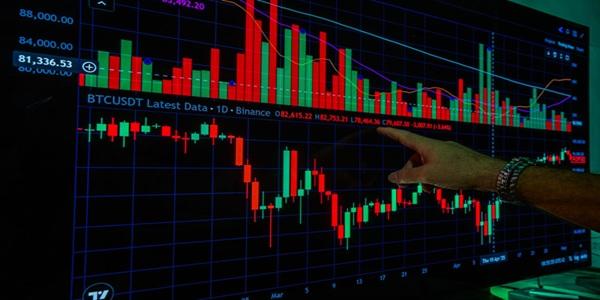
The latest premium data offers context
The October 8 reading came from five India-facing venues and used the median of valid order-book mid-prices collected during the fixing window. A month earlier, on September 8, the same series recorded a 5.29% peg-adjusted premium. October 1 produced 4.49%. By October 8, it had fallen to 2.56%. Crypto traders are accustomed to watching candles by the minute, yet this longer sequence says more about local liquidity than one screenshot taken during an active session.
Another price source shows why labels deserve attention. Gadgets 360 recorded a September 30 close of ₹95.94 and displayed Tether near ₹96.65 on October 9. Those figures measure something different from the India premium index, which samples rupee-facing exchange books and compares them with a reference FX value. When assessing a conversion, record the date and venue. Keep the execution price and settlement route as well. Two numbers can differ because their sources are measuring separate stages of the market.
Liquidity costs extend beyond the displayed price
The quote on screen begins the calculation rather than completing it. A bid-ask spread can affect the execution. Trading or withdrawal charges may reduce the final amount. Market depth counts too. The Crypto Times methodology states that an executed trade can differ from its midpoint because spreads, fees and slippage affect real orders. On a ₹1 lakh conversion, a premium of several percentage points may have a greater effect than a charge that first appeared to be the main cost.
Crypto culture rewards fast comparison. A trader may move from rupees into a stablecoin and then into another token within one session. A better record starts with the rupees paid and ends with the value received after charges. That process also builds an understanding of tax, since Indian rules concern documented transactions rather than the visual gap between a crypto quote and an FX reference. Section 115BBH taxes income from transfers of virtual digital assets at 30%. Section 194S sets a 1% tax deduction at source on qualifying consideration paid to a resident.
Dollar-linked tokens raise policy questions
India’s central bank has approached foreign-currency-pegged stablecoins with caution. In material published with its December 2024 Financial Stability Report, the RBI said emerging markets can face added challenges from extensive cross-border operations involving such instruments. Regulatory capacity can also constrain oversight. A local premium doesn’t prove that those broader risks have appeared, but persistent gaps can provide evidence of demand for dollar-linked crypto outside conventional FX channels.
BIS researchers Aldasoro, Jon Frost and Hiro Ito added another statistic in May 2026: about 98% of stablecoin value was dollar-denominated. Their study argued that wider adoption could reinforce existing currency hierarchies in emerging economies. India provides a substantial test case. Chainalysis ranked the country first across every main subindex in its 2025 Global Crypto Adoption Index. Reuters reported in July 2026 that government documents estimated around 39 million Indian crypto traders as of May.
Records give the premium meaning
For an individual trader, the practical lesson is narrower than the policy debate. Keep your order confirmation and wallet-transfer record. Save evidence of charges and rupee settlement. Those documents separate a market premium from your own gain or loss. They become more valuable when a transaction crosses a P2P route or moves through another wallet, since the displayed valuation can change between each stage.
Before converting into rupees, check the executable price and available depth. Then account for total charges and reporting obligations. A premium should be read as evidence about local liquidity and market access, not as automatic profit waiting to be collected. India’s crypto participation gives these pricing gaps weight, but venue design and settlement conditions still influence the number you see. The timestamp, transaction record and amount reaching your account provide the firmer basis for judging the trade.
*****
Disclaimer: This article is intended solely for educational and informational purposes and does not constitute financial, investment, tax, legal or trading advice. References to USDT, Tether, Binance, cryptocurrency exchanges, market premiums and third-party research do not imply endorsement or investment recommendations. USDT/INR prices and premiums vary across exchanges, trading platforms and settlement methods and may change rapidly. Stablecoins carry market, liquidity, de-pegging, counterparty, cybersecurity and regulatory risks. The tax treatment of virtual digital assets in India, including applicable TDS, reporting and disclosure requirements, depends on prevailing laws and individual circumstances. Readers should independently verify market data, transaction costs, RBI regulations and applicable tax provisions before making decisions. Neither the author nor TaxGuru accepts responsibility for financial losses or consequences arising from reliance on this article.