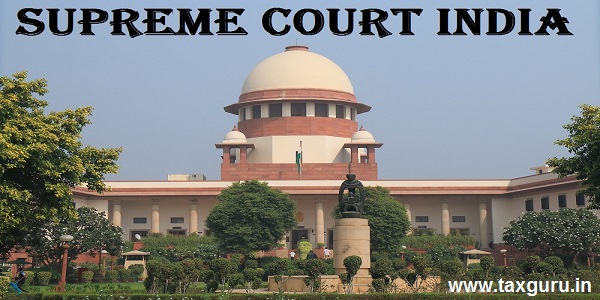
Tofan Singh Vs State of Tamil Nadu (Supreme Court of India)
Summary: The Supreme Court of India, by a 2:1 majority in Tofan Singh v. State of Tamil Nadu, delivered a landmark judgment on 29 October 2020 concerning the admissibility of confessional statements recorded under Section 67 of the Narcotic Drugs and Psychotropic Substances Act, 1985 (NDPS Act). The matter arose from a reference made by a Division Bench in Tofan Singh v. State of Tamil Nadu, (2013) 16 SCC 31, after doubts emerged regarding the correctness of earlier Supreme Court decisions permitting reliance on statements recorded by officers exercising powers under the NDPS Act. The appellant had challenged his conviction principally on the ground that it was founded upon a purported confession recorded under Section 67, which, according to him, was inadmissible under Section 25 of the Indian Evidence Act, 1872. The larger Bench was required to determine whether officers empowered under Sections 42 and 53 of the NDPS Act could be treated as police officers for the purposes of the Evidence Act and whether Section 67 authorised the recording of confessions capable of being used as substantive evidence against an accused.
The appellants contended that the NDPS Act is a stringent penal statute providing extensive powers of search, seizure, arrest and investigation, and that its provisions must be interpreted consistently with constitutional safeguards against self-incrimination. They submitted that Section 53 confers upon designated officers the powers of an officer-in-charge of a police station for investigating NDPS offences and that confessions made to such officers must therefore attract the prohibition contained in Section 25 of the Evidence Act. They further argued that Section 67 merely enables authorised officers to call for information, require the production of documents and examine persons acquainted with the facts of a case, rather than empowering them to obtain confessions for securing convictions. The Union of India and supporting respondents opposed this interpretation, maintaining that NDPS officers were not necessarily police officers within the meaning of Section 25 and that statements recorded under Section 67 could be admissible subject to applicable evidentiary safeguards. The Court consequently examined the statutory scheme of the NDPS Act, its relationship with the Code of Criminal Procedure, 1973, and the distinction between investigative powers under penal legislation and powers exercised under revenue statutes such as the Customs Act, 1962 and Central Excise Act, 1944.
Justice R. F. Nariman, writing for the majority with Justice Navin Sinha concurring, examined the constitutional protection against compelled self-incrimination under Article 20(3), the guarantees of personal liberty under Article 21 and the prohibition against confessions made to police officers under Section 25 of the Evidence Act. The majority considered the functional nature of the powers conferred upon officers under Section 53 of the NDPS Act and concluded that such officers qualify as police officers for the purposes of Section 25. It held that the statutory safeguards governing criminal investigations could not be circumvented by treating confessional statements obtained through NDPS investigative powers as admissible evidence merely because the officers concerned belonged to specialised enforcement agencies. The Court also distinguished the language and purpose of Section 67 of the NDPS Act from provisions such as Section 108 of the Customs Act and Section 14 of the Central Excise Act. In the majority’s view, Section 67 could not be interpreted as an independent source of authority to record confessions and use them as substantive evidence to establish guilt in an NDPS prosecution.
In resolving the reference, the majority expressly overruled Raj Kumar Karwal v. Union of India, (1990) 2 SCC 409, and Kanhaiyalal v. Union of India, (2008) 4 SCC 668, holding that those decisions did not correctly state the law concerning the status of NDPS officers and the evidentiary value of confessions recorded under Section 67. The Court approved the relevant legal approach reflected in Noor Aga v. State of Punjab, (2008) 16 SCC 417, and Nirmal Singh Pehlwan v. Inspector, Customs, (2011) 12 SCC 298. Justice Indira Banerjee delivered a dissenting opinion, reasoning that officers invested with powers under Section 53 should not be regarded as police officers for the purposes of Section 25 merely because they possessed specified investigative powers. In her view, the earlier decisions in Raj Kumar Karwal and Kanhaiyalal did not require reconsideration, and statements recorded under Section 67 could be tendered and proved in accordance with law. The majority interpretation, however, constituted the binding decision of the three-Judge Bench.
Answering the reference, the Supreme Court declared that officers invested with powers under Section 53 of the NDPS Act are police officers within the meaning of Section 25 of the Indian Evidence Act and that confessional statements made to them are barred by that provision and cannot be relied upon to convict an accused under the NDPS Act. It further held that a statement recorded under Section 67 of the NDPS Act cannot be used as a confessional statement in the trial of an offence under that Act. The Court dismissed Intervention Application No. 87826 of 2020 and permitted withdrawal of Intervention Application No. 81061 of 2020 in Criminal Appeal No. 433 of 2014, with liberty to pursue remedies available in law. Importantly, the Court did not finally determine the merits of all the underlying criminal appeals and special leave petitions; instead, it directed that they be placed before the appropriate Division Benches for disposal on merits in accordance with the legal principles settled by the majority judgment. The ruling therefore established a binding evidentiary safeguard governing confessional statements in NDPS prosecutions while leaving the individual cases to be decided on their respective records.
FULL TEXT OF THE SUPREME COURT JUDGMENT/ORDER