Shilpa Chowdhary Vs Principal Director of Income Tax (Investigation) (Delhi High Court)
Summary: The Delhi High Court dismissed the writ petitions filed by Shilpa Chowdhary and Vikas Chowdhary challenging income-tax search and seizure proceedings concerning their residence-cum-office and jointly held bank locker. The dispute concerned the distinct operation of Sections 132(1) and 132(1A) of the Income-tax Act, 1961, the permissibility of searching premises belonging to a third party, and the threshold of “reason to believe” necessary for an independent search warrant.
The proceedings began with warrants dated 5 February 2019 against the Kochar Group, one of which specified Vikas Chowdhary’s premises. A search there commenced on 6 February 2019, during which officers recovered documents, electronic devices and a key to Locker No. 150F at Bank of India, Punjabi Bagh. The petitioners’ statements were recorded. A fresh warrant dated 12 February 2019 was issued in their names for the locker, which was searched on 3 April 2019. Jewellery valued at Rs.1,00,67,181 was found and seized. The petitioners challenged the warrants, seizure and consequential notices under Sections 153A and 143(3).
The petitioners maintained that the first warrant authorised action against the Kochar Group only, while the later locker warrant lacked independent grounds. They relied on the Delhi High Court’s decision in Shah-E-Naaz Judge. The Revenue argued that both warrants were independently issued under Section 132(1), supported by recorded satisfaction, and objected to the petitions on grounds of delay.
After examining the warrants and satisfaction material produced in sealed cover, the Court held that an authorised search against a person can extend to third-party premises where relevant assets or documents are reasonably suspected to be kept. It rejected the argument that the initial premises search necessarily fell under Section 132(1A). For the locker search, the recovered key and the petitioners’ responses concerning the locker furnished relevant material for an independent warrant under Section 132(1). The Court reiterated that judicial review tests the existence and relevance of the reasons to believe, not their sufficiency or adequacy.
The Court distinguished Shah-E-Naaz Judge because the warrant in that case lacked the factual foundation and independent satisfaction present here. Although it did not accept the Revenue’s delay objection as a reason to avoid considering the merits, it found no jurisdictional infirmity in the searches. Both writ petitions were dismissed, and the Registry was directed to return the sealed-cover documents to the department.
Cases Discussed
- Shah-E-Naaz Judge v. Additional Director of Income Tax (Investigation)–Unit VI & Anr. — (2019) 306 CTR (Del) 42 — Distinguished: materially different warrant and supporting evidence.
- Director General of Income Tax (Investigation), Pune v. Spacewood Furnishers Pvt. Ltd. — (2015) 12 SCC 179 (SC) — Followed: existence and relevance, rather than adequacy, of reasons are judicially reviewable.
- Balwant Singh v. R. D. Shah, Director of Inspection — AIR 1969 Del 91; (1969) 71 ITR 550 — Relied upon: scrutiny of existence and rational relevance of material.
- SK Industries v. Director General of Income Tax (Investigation) — Delhi High Court — Cited by Revenue on delay and laches.
- Seth Brothers; Pooran Mal; Madhu Gupta — Referred to in the reproduced extract from Shah-E-Naaz Judge on the threshold for search authorisation.
FULL TEXT OF THE JUDGMENT/ORDER OF DELHI HIGH COURT
1. The petitioners, wife and husband, by way of separate writ petitions under Article 226 and 227 of the Constitution, impugn the validity and legality of the search action initiated by the Respondents. They seek, inter alia, (i) quashing of the impugned Warrant of Authorization [hereinafter referred to as “WoA”]; (ii) declaration that the search and seizure, conducted on them is illegal, void and without authority of law, and the exercise is without jurisdiction; (iii) direction to the Respondents to release the entire material and valuables seized under the search action; and (iv) quashing of the notices issued under Sections 153A/143(3) of the Income Tax Act, 1961 [hereinafter referred to as the “Act”]. Considering that in both the petitions the factual narrative, nature of reliefs sought and the grounds of challenge are nearly identical, the same are being decided by way of this common judgment.
Facts in W.P.(C) 5213/2020
2. The facts of the case, shorn off unnecessary detail, are as follows:-
2.1. On 05.02.2019, WoA were issued under Section 132(1) of the Act in the case of the ‘Kochar Group’, comprising of Sh. Avtar Singh Kochar, Sh. Gyandeep Singh Kochar, Sh. Hari Singh Kochar and M/s HL Impex (P.) Ltd. [hereinafter collectively referred to as “Primary Persons”]. Of the above WoAs, one in relation to Sh. Avtar Singh Kochar pertained to the residence-cum-office of the Petitioner – Shri Vikas Chowdhary at E-12/3, Vasant Vihar, New Delhi [hereinafter referred to as “Petitioner’s Premises”].
2.2. On 06.02.2019, a search and seizure operation was carried out at Petitioner’s Premises pursuant to the above WoA dated 05.02.2019. 2020:DHC:3498-DB
The said search commenced at 12:30 PM and was temporarily concluded after a period of four days i.e. on 09.02.2019, at 09:00 PM, as revealed by one panchnama dated 09.02.2019. The said panchnama, prepared under the said WoA issued against the Prima ry Persons, inventorise the items found at the Petitioner’s Premis es, which comprised of: (a) Some loose papers; (b) One hard disk (a working copy of which was seized); (c) One Digital Video Record er (“DVR”); (d) cash (which was released at the time of search), ( e) one Godrej-branded key to Locker No. 150F, Bank of India, Punjabi Bagh, New Delhi, (f) three keys belonging to cylindrical contai ners, and (g) two keys belonging to a wooden cupboard in the bedroom of the Petitioner’s daughter. Statements of both the Petitioners w ere also recorded on oath on 06.02.2019. 2.3. On 12.02.2019, Respondent No.2 issued the impugned WoA u/s 132(1) of the Act against the Petitioner and his wife (Mrs. Shi lpa Chowdhary) to search Locker No. 150F–maintained with the Bank o f India, Punjabi Bagh, New Delhi– key to which was found and seiz ed on 09.02.2019.
2.4. On 19.02.2019, Petitioner requested Respondent No.3 to provide a copy of statements recorded during the search. He also represen ted that he was not connected to any of the Primary Persons in any manner, and sought information that had led the authorities to believe or suspect that something connect ed or relevant to the Primary Persons was likely to be found a t the Petitioner’s Premises.
2.5. Then on 03.04.2019 at 5:30 PM, pursuant to the impugned WoA dat 12.02.2019, search was conducted at Locker No. 150F, Bank of In dia, Punjabi Bagh, New Delhi. Jewellery valued at Rs. 1,00,67,181/- was found and seized. It is reiterated that the above search is not to be confused with the search carried out on Petitioner’s Premises i n respect of a WoA dated 05.02.2019 issued against the Primary Persons referred to hereinabove.
2.6. On 04.04.2019, search at Petitioner’s Premises resumed under th e WoA dated 05.02.2019 issued against the Primary Persons.
2.7. On 05.04.2019, a Final Panchnama was drawn. Statement of the Petitioner was also recorded.
2.8. Ultimately on 20.04.2019, notice for assessment proceedings und er Section 153A/143(3) of the Act was issued to the Petitioner. Aggrieved with the search and seizure proceedings, Petitioner h as approached this court. Facts in W.P.(C) 5207/2020
3. Shilpa Chowdhary, the other Petitioner, is similarly aggriev ed with the WoA u/s. 132(1) of the Act issued against her and her husba nd in respect of the Locker referred to above. She also faces the assessment proceedings pursuant to notice issued u/S. 153A/143(3) of the Act. The fac ts are identical to what has been stated above in W.P.(C) 5213/2020, e xcept that the search and seizure operation carried out on 06.02.2019 at t he Petitioner’s Premises was in pursuance to the WoA addressed as “ residence-cum-office of Sh. Vikas Chowdhary bearing No.E-12/3, Vasant Vihar, New Delhi ” dated 05.02.2019 issued under Section 132(1) of the Act in the case o f Primary Contentions of the Petitioners
4. Mr. Srivastava learned counsel for the Petitioners raised se veral contentions to assail the WoA. The same are summarized as follo ws:- 4.1. The search and seizure action is entirely arbitrary and mala fide. The Competent Authority did not apply its mind while issuing the impugned WoA against the Petitioners or in conducting the searc h. The sequence of events and the actions of the search party reve al that Respondents conducted a general search on the Petitioner withou t any evidence that the Petitioners were in possession of any documen ts or valuable articles representing undisclosed income of the Primar y Persons. The action is thus abuse of power of search conferred by the Act and is completely illegal.
4.2. Search carried out under WoA dated 05.02.2019 is beyond the scope of statute. The Petitioners were neither related to the Primary Persons, nor was any material available with the Competent Authorities t o even raise a suspicion on any books of account, documents or valuabl es of the Primary Persons were kept at the Petitioner’s Premises. Regardless, the authorisation was only to the extent of search and seizure of material relevant to the Primary Persons, at Petitio ner’s Premises. Therefore, the authorised officers conducting the sea rch should have restricted their search to the extent of material o r valuables pertained to the Prima ry Persons. However, from the Panchnama, it is amply clear, the officers went beyond their ma ndate, by conducting a full-fledged search against the Petitioners and family members, as apparent from the seizure/ restraint upon Petitioner’s jewellery. Thus, the search and seizure action of the search party qua the Petitioner’s belongings was void ab initio, conducted without any ground, based purely on surmises and assumption of Respondent No.1. The law does not allow or give unbridled powers to encroach u pon the privacy of a person.
4.3. Impugned WoA seemingly issued under Section 132(1A) is illegal. As the original WoA dated 05.02.2019 was issued in the case of the Primary Persons, it can undoubtedly be inferred from the sequen ce of events, that the search action at the Petitioner’s Premises bet ween 06.02.2009 to 09.02.2009 was conducted under Section 132(1A) of the Act, on the suspicion that it housed incriminating evidence against the Primary Persons.
4.4. Arguendo, if the impugned WoA is i ssued Section 132(1), it is nonetheless illegal for the following reasons:
(i) If the stand of the Revenue is that the action in the case of t he Petitioners was taken under Section 132(1) and not under Sectio n 132(1A), then the obvious inference would be that the said acti on was illegal and unauthorised for the reason that none of the conditions stipulated in Clauses (a), (b) or (c) were either examined or found to have been s atisfied in the case of the Petitioners. The conditions provi ded under these clauses of Section 132(1) were examined in respect of the Primary Persons and not qua the Petitioner.
(ii) An authorization u/s 132(1) must fulfil a higher threshold of t test of “reason to believe”, and such reasoning has to be based on, and “in consequence of” info rmation, which is already “in possession” of the competent authority.
(iii) The existence of locker, its key or its contents was not known prior to search conducted on 06.02.2019, and came to be recorded only in the Panchnama dated 09.02.2019 drawn during search. Thus, the competent authority had no material in its possession to harbour any reasons to believe that the locker contains any jewellery or undisclosed income belonging to the Petitioner.
(iv) During the entire search action conducted on 06.02.2019, the Petitioners were not questioned about the locker’s key, content s, or the source of acquisition of the contents, until the issuanc e of the impugned WoA dated 12.02.2019. (v) The process of questioning or recording statements of persons covered u/s 132(1A) must be rest ricted to the extent the same pertains to the material found/seized in relation to the Primar y Persons.
(vi) No adverse cognizance can be deri ved merely on the basis of so-called suspicion, surmises and conjectures. The Courts in sever al decisions have held that the formation of opinion as to belief must be in “good faith and not mere pretence and subterfuge on the part of the authorities.” Respondent No. 2 could not have formed a ‘reason to believe’ that the conditions set forth in subsections (a), (b) or (c) of Section 132(1) of the Act would fulfilled in the case of the Petitioner. No evidence linking th e Petitioner’s premises to the activities of the Primary Persons or evidence against Petitioners, or information pertaining to the above-mentioned locker was retrieved during the search at Petitioner’s premises. In support of his submissions. Mr. Srivastava has also heavily relied upon the decision of this Co urt in the case of Shah-E-Naaz Judge v. Additional Director of Income Tax, (INV)–Unit VI & Anr., (2019) 306 CTR (Del) 42, specifically paragraphs 15, 17, 18, 19, 22, 23 and 24. The same are not being reproduced herei n for the sake of prolixity. Contentions of the Revenue 5. Per contra, Mr. Raghvendra Singh, learned Senior Standing Co unsel for the Revenue, defended the action of the Respondents and submitt ed that the entire foundation of the writ petitions is misconceived for the following reasons:
5.1. The petition is barred by delay and laches. Had the Petitioners felt aggrieved, the search warrant should have been challenged aroun d the time of search activity, or around the time of receipt of the n otice for assessment proceedings under Section 153A/143(3) of the Act. In the said assessment notice, the Petitioner was directed to file his return of income within the statutory time limit of 15 days. Petitioners chose not to file the same, then stayed silent for the next four mont hs, and have now approached the Court after more than eighteen months f rom the date of the alleged cause of action. In this regard, relian ce has been placed upon the judgment of this court in the case of SK Industries v. Director General of Income Tax (Inv), wherein, the challenge to a WoA raised after sixteen months was held as time barred. It was thus pleaded by Mr. Singh that the Court should decline to exercise its discretionary jurisdiction under Articl e 226 of the Constitution of India on th e ground of delay and laches.
5.2. The entire premise of the petitions is misconceived. The Petiti oners have wrongly perceived that the search and seizure action again st them has originated under Section 132(1A) of the Act, whereas s earch was conducted under Section 132(1) of the Act. This understandi ng forms the basis of the misguided grounds of challenge raised in the Petition. Elaborating on this aspect, Mr. Singh explained that the scope of Section 132(1) and 132(1A) is entirely different. Furt her, he elucidated that in the present facts, two separate search proce edings took place. He submitted that amongst the WoA dated 05.02.2019 under Section 132(1) issued in the case of the Kochar Group, on e WoA pertained to the Petitioner’s Premises, because the Issuing Authority had reason to believe that undisclosed income/books o f accounts/documents of the Kochar Group were to be found there. The said reason to believe, as noted in the Satisfaction Note along with the other relevant material, have been placed by Respondents before the Court in a sealed cover. Thus, the initial search and seizure a ction, initiated at the Petitioner’s Premises on 06.02.2019, was in th e case of the Kochar Group. During said search, material and information was discovered which constituted “reason to believe” for WoA in the case of Vikas Chowdhary and Shilpa Chowdhary. Accordingly, a fresh WoA dated 12.02.2019 (impugned) was issued in the case of both
Petitioners under Section 132(1) of the Act. It is the case of the Respondent that until 12.02.2019, the search was being conducte d on the basis of WoA dated 05.02.2019 issued against Primary Person s. Thereafter, search was conducted on the basis of impugned WoA dated 12.02.2019 issued against the Petitioners. The Respondent has placed the “reason to believe” in respect of the said WoA in a sealed cover before this Court. No WoA was issued under section 132(1A), instead search was carried out under Section 132(1) of the Act.
5.3. It is well-settled law that this Court would not go into the su fficiency or adequacy of the material that was relied upon by the authori ties for forming the reason to believe to initiate the search action. Th e Respondents have urged grounds that are founded on the subjecti ve satisfaction of the Competent Authority, and therefore, this Co urt should decline to interfere in the present petition. Findings and Analysis:
WHETHER THE PETITION IS BARRED BY DELAY AND LACHES ?
6. The impugned search action was conducted on 03.04.2019 and t he present petitions were filed on 11.08.2020. The Petitioners cite the pr esent pandemic situation and rely upon the notices under Section 153A/143(3) o f the Income-tax. Act, 1961 issued on 20.04.2020 to justify the delay. The undisputed fact is that the present petitions are predicated on the search action which served as a cause of action for the Petitioners to file the present petition. There is no convincing explanation for the delay, nev since we have extensively heard the arguments on the merits of the case, we are not inclined accept the preliminary objection raised by the Revenue and would instead like to decide the petitions on merits.
WHETHER THE IMPUGNED WARRANT IS ISSUED UNDER SECTION 132(1) OR 132(1A) OF THE ACT ?
7. Before going further, it will be fruitful to first take note of the relevant statutory provision, which reads as under:
132. (1) Where the Director of Inspect ion or the Commissioner or any such Deputy Director of In spection or Inspecting Assistant Commissioner as may be empowered in this behalf by the Board, in consequence of information in his po ssession, has reason to believe that —
(a) any person to whom a summons under sub-Section (1) of Section 37 of the Indian Income-tax Act, 1922 (11 of 1922), or under sub-Section (1) of Section 131 of this Act, or a notice under sub- Section (4) of Section 22 of the Indian Income-tax Act, 1922, or under sub-Section (1) of Section 142 of this Act was issued to produce, or cause to be produced, any books of account or other documents has omitted or failed to produce, or cause to be produced, such books of acco unt, or other documents as required by such s ummons or notice, or
(b) any person to whom a summons or notice as afor esaid has been or might be issued will not, or would not, produce or cause to be produced, any books of account or other documents which will be useful for, or relevant to, any proceeding under the Indian Income-tax Act, 1922 (11 of 1922), or under this Act, or
(c) any person is in possession of any money, bullion, jewellery or other valuable article or thing and such mo ney, bullion, jewellery or other valuable ar ticle or thing represents either wholly or partly income or pr operty which has not been, or would not be, disclosed for the purposes of the Indian Income Tax Act, 1922 (11 of 19 22), or this Act (hereinafter in this Section referred to as the undisc losed income or property),
(A) the Director of Inspection or the Commissioner, as the case may be, may authorise any Deputy Dir ector of Inspection, Inspecting Assistant Commissioner, Assistant Director of Inspection or Income-tax Officer, or
(B) such Deputy Director of In spection or Inspecting Assistant Commissioner, as the case may be, may authorise any Assistant Director of Inspection or Income-tax Officer, (the officer so authorised in all ca ses being hereinafter referred to as the authorised officer) to—
(i) enter and search any building, place, vessel, vehicle or aircraft where he has reason to suspect t hat such books of account, other documents, money, bullion, jewelle ry or other valuable article or thing are kept ;
(ii) break open the lock of any door, box, locker, safe, almirah or other receptacle for exercising the powers conferred by clause (i) where the keys thereo f are not available;
(iia) search any person who has got out of, or is abo ut to get into, or is in, the building, place, vessel, vehicle or aircraft, if the authorised officer has reason to suspect that such person has secreted about his person any such books of account, other documents, money, bullion, jewelle ry or other valuable article or thing;
(iii) seize any such books of a ccount, other documents, money, bullion, jewellery or other valua ble article or thing found as a result of such search;
(iv) place marks of identification on any books of account or other documents or make or cause to be made extracts or copies therefrom;
(v) make a note or an inventor y of any such money, bullion, jewellery or other valuable article or thing: Provided that where any building, pl ace, vessel, vehicle or aircraft referred to in clause (i) is within the area of jurisdiction of any Commissioner, but such Commission er has no jurisdiction over the person referred to in clause (a) or clause (b) or clause (c), then, notwithstanding anything contained in Secti on 121, it shall be competent for him to exercise the powers under this sub- Section in all cases where he has reason to be authorisation from the Commissioner having ju risdiction over such person may be prejudicial to the interests of the revenue. (1A) Where any Commissioner, in cons equence of information in his possession, has reason to suspect that any books of account, other documents, money, bullion, jewellery or other valuable article or thing in respect of which an officer has be en authorised by the Director of Inspection or any other Commissioner or any such Deputy Director of Inspection or Inspecting Assistant Co mmissioner as may be empowered in this behalf by the Board to take ac tion under clauses (i) to (v) of sub-Section (1) are or is kept in any bu ilding, place, vessel, vehicle or aircraft not mentioned in the authorisatio n under subsection (1), such Commissioner may, notwithstanding anything contained in Section 121, authorise the said officer to ta ke action under any of the clauses aforesaid in respect of such building, place, vessel, vehicle or aircraft.
X … X … X”
8. The foundation of the petition, indeed, is based on the prem ise that the search action against the Petitioners is under Section 132(1A) of the Act, as is evident from the grounds of challenge, wherein it was urged that “ it can be undoubtedly inferred that the sear ch action at the residence of the Petitioner between 06.02.2019 and 09.02.2019 was conducted u/s 132(1A) of the Act….”.
The Respondents firmly defend their action and argue that no WoA were issued under the said provision. Thus, at the outset, we would like to first decide this essential and germane fact, as it rel ates to assumption of jurisdiction of the competent authority and also because the above-noted two provisions apply independently and postulate different thre shold criteria for invocation. Therefore, the first question which requires to be answered is whether the search conducted in the Petitioner’s Premises on 06 was under Section 132(1A) or S ection 132(1) of the Act.
9. Insight into this factual position can be gained from the ma terial placed before us. We have carefully perused the satisfaction note and the other accompanying material presented to us in a sealed cover, and on the careful examination thereof it transpires that the portrayal of the fac ts by the Petitioner is not accurate. The genesis of the search action or iginates from the WoA dated 05.02.2019 in the cases of Primary Persons i.e. t he Kochar Group. The said WoA was undoubtedly issued in terms of Section 132(1), Rule 112 of the Rules and Form 45. It was based on detailed “re asons to believe” running into six pages. Briefly stated, the “reasons t o believe”, as enumerated in the Counter Affidavit filed by the Revenue, are a s follows:
(i) The Kochar Group were running hawala business under the guise of forex business through the company HL Forex Private Limited and several other six co mpanies owned by the family members of the Kochar Group.
(ii) Information was received from an informer in the form of electronic records of communicati ons of an employee of Kochar Group with respect to delivery of cash.
(iii) It was discovered that these people had earlier been searched by the Enforcement Dir ectorate wherein cash in Indian and Foreign currency had been re covered and thereafter arrests had been made.
(iv) The electronic records evid enced that the illegal business was continuing.
(v) Thereafter several persons were put under physical and electronic surveillance and one key employee was identified who was involved in regular delivery of cash and maintaining records
(vi) Further discreet enquiries revealed that the Kochar Group kept undisclosed income and unaccounted assets at multiple locations including houses and lockers.
(vii) It was also discovered that on e of the affiliates of Kochar Group that was facilitating the ha wala transactions in South Delhi was the Petitioner. On phys ical surveillance movement of cash was observed from the Petitioner’s premises by motorcycle borne couriers.
(viii) On the basis of techni cal surveillance, it was also discovered that the Kochar Gr oup was involved in illegal betting business. (ix) The reasons to believe identified the key locations where undisclosed income/ assets/ docu ments and other incriminating evidence is likely to be found. One of the 11 premises was residence cum office of the Petitio ner at E12/3, Vasant Vihar, New Delhi.”
[Emphasis added]
10. The Revenue thus suspected that the Petitioner’s Premises w as a location where undisclosed income/assets/documents/other incriminating e vidence relating to the Kochar Group was likely to be found.
Thus, amongst the various WoA dated 05.02.2019 in the case of Kochar Group, one w as issued pertaining to the Petitioner’s Premises.
11. Let’s now examine the relevant provision. A careful reading of Section 132 discerns that the Competent Authority can issue a WoA for s earch and seizure if such an authority, in consequence of information in his possession, has “reason to believe” that conditions stipulated in either of clauses (a), (b) or (c) of the Section are satisfied. Such authorization is give n in Form 45 under Section132 of the Act read with Rule 112(1) of the Income Tax Rules,1962. The first proviso to Section132(1) also contemplate provides that the Principal Chief Commissioner/ Chief Commissio ner or Principal Commissioner/ Commissioner of Income Tax / such other authority as named in the said proviso, has the power to author ize a search of any building, place, vessel, vehicle or aircraft of a person wh ich is under his jurisdiction and also in cases where such building, place, vess el, vehicle or aircraft is in his area of jurisdiction but he has no jurisdict ion over the persons concerned, if he has reason to believe that any delay i n obtaining authorization from the Principal CCIT/CCIT or Principal Commiss ioner/ Commissioner having jurisdiction over the person would be preju dicial to the interests of revenue. This authorization is issued under Fo rm 45A under the first proviso to sub-Section (1) of Section132of the Act wi th Rule 112 (2)(b) of the Rules. Section 132(1A) envisions a different scen ario. Under this provision, where a search for any books of account/other documents/assets has been authorized by any authority who is co mpetent to do so, and some other Chief Commissioner/Commissioner in conseq uence of information in his possession has reason to suspect that suc h books of account/other documents/assets of the assessee are kept in any building, place, vessel, vehicle or aircraft, not specified in the search warrant issued by such authority, he may authorize the Authorized Officer to s earch such other building, place, vessel, vehicle or aircraft. This warran t is issued as per Form 45B under sub-Section (1A) of Section132 read with Rule 112(2)(c)
12. Thus, we can see that the Act provides for the three differ ent warrants of authorisation which apply to different situations. Now, in the facts of the present case, the initial warrant dated 05.02.2019 was issued a gainst the Primary Persons i.e. the Kochar Group. However, in consequence information in the possession of the revenue authorities, i.e. it was suspected that books of account / other document etc. were kept in the Pe titioner’s Premises, the said property was searched. This search action wa s thus under Section 132(1) against the Primary Persons. The Petitioners hav e erroneously assumed that the search action at their Premises, b etween 06.02.2019 and 09.02.2019 was conducted under Section132(1A) of the Act, as a premises suspected to have material belonging to the Prima ry Persons. As demonstrated from the material placed on record, this is pal pably incorrect. The Respondents in their Counter Affidavit have cate gorically stated that the search was never conducted under Section 132(1A) of the Act. Having perused the WoA, we are inclined to agree. As we ha ve noticed above, the Act distinguishes between search actions under sub S ections (1) and (1A) of Section 132, however the distinction is not of rele vance in the facts of the case. Although the Petitioners are correct is subm itting that the threshold requirement to determine the validity of the authoris ation for such search under Section 132(1A) qua the premises is based on ‘reas on to suspect’, but they have ignored the vital fact that for search of premises this threshold – viz. ‘reason to suspect’- is also envisaged in Sect ion 132(1)(i) in the following words “(i) enter and search any buil ding, place, vessel, vehicle or aircraft where he has reason to suspect that such books of account, other documents, money, bullion, jewellery or other valuable article or thing are kept.” The only crucial factor to be borne in mind is that, while s earching the premises under the above provision, there must be reason to bel ieve with the Competent Authority to search the ‘person’, within the contempl ation of clauses (a), (b) or (c) of Section 132(1). Indeed, Section 132( 1) of the Act empowers the Competent Authority to authorize search of a ‘person fails to, or if such Competent Authority believes will fail to, produce books or accounts or other documents in response to a summon issued u nder the Act; or possesses some jewellery, money or other valuable or th ing representing income that such person has not disclosed or would not disclose for the purposes of the Act, and seize the relevant material fo und as a result of the search. Such search against a “person” can be carried out by the authorised officer by searching any building, place, vessel, ve hicle or aircraft where he suspects that such books of account, other documents, money bullion, jewellery etc. are kept. These premises to be search n eed not necessarily belong to the searched person. On the other hand, S ection 132(1A) confers power to different set of officers to authorize search of a ‘building, place, vehicle, vessel or aircraft ’ based on suspicion that any books of account or other documents, jewellery, valuables or ot her article or things in respect of which search has been authorized under Sec tion132(1) is or are kept, and seize the relevant material. In the case of th e Petitioner, as explained above, the WoA under Section132(1) of the Act in the case of Kochar Group pertained to the Petitioner’s Premises wherein the Issuing Authority had reasons to suspect that the undisclosed income, b ooks of account and documents of the Kochar Group were kept or to be fo und. Accordingly, the search and seizure under Section 132(1) of the Act in respect of the Kochar Group was carried out at the premises of Vikas Chowdhary on 06.02.2019. We would like to add that we have also perused the WoAs issued by Respondent No. 2 under which the searches we re initiated. As shown to us, both have been issued in Form No. 45, under Section 132 r/w Rule 112(1) of the Income Tax Rules 1962. WoA N o. 7257 dated 05.02.2019 was issued to the Primary Persons i.e. the Koc and was in respect of the Petitioner’s Premises. WoA No. 7275 d ated 12.02.2019 was issued to the Petitioners Shilpa and Vikas Chowd hary, and was in respect of their Locker No. 150F. Thus, the distinction sought to be drawn by Mr. Shrivastava is wholly irrelevant. Further the assu mption and contention that, since Vikas Chowdhary was not the searched per son under the WoA dated 05.02.2019, his premises could only be searched u nder Section 132(1A) of the Act, is entirely misconceived and is rej ected.
VALIDITY OF SEARCH CARRIED OUT ON 06.09.2019 ON PETITIONER’ S PREMISES
13. We do not find any merit in the challenge raised by the Pet itioners to the search carried out at the Petitioner’s Premises. Firstly, the P etitioners have asserted that they are not challenging the WoA for search condu cted on 06.02.2019. Secondly, no prayer has been made in this regard. B esides, as noted above, this search action in relation to the Petitioner’s Premises was under the WoA against the Kochar Group under Section 132(1) of the Act. The gist of the satisfaction note, as documented in the Counter Affidavit, has been extracted in the succeeding paras. The same pertains to th e Kochar Group, whereunder the premises of the Petitioner were searched, reveals that the WoA were issued because it was suspected that some of the valuables/documents of Sh. Avtar Singh Kochar were kept at the premises of the Petitioner. The search action between 06.02.2019 to 09.02.2 019, was therefore, not against the Petitioners but against the Primary Persons. The Petitioner’s Premises was searched not for Vikas or Shilpa Chow dhary’s accounts/documents/money/bullion/jewellery/etc. belonging to th e Primary Persons who were the subject of the search. The Respondents, on physical surveillance, observed movement of cash from the Petitioner’s P remises by motorcycle borne couriers. Therefore, the premises was identifi ed to likely have incriminating evidence. The connection and link between th e persons subjected to search (i.e. the Primary Persons) and the Petition er’s Premises was thus established. We cannot ignore the fact that documents/articles/valuables etc. belonging to Primary Persons can be kept with third parties and concealed anywhere in different places a nd locations. Thus, the authorised officer can subject any such premises to s earch if there are reasons to suspect that such location could be accommodatin g such document/articles/valuables, etc. Therefore, the jurisdictiona l precondition or the threshold for justifying such action qua the premises, w as satisfied. Though, it has been argued that such an action is unlawful, how ever the entire premise of the Petitioner’s case is essentially founded on the plea that such action qua the Petitioners was under Section 132(1A) of th e Act and not under Section 132(1) of the Act. This factual affirmation i s incorrect and has been clarified for the reasons stated hereinafter. Thus, th ere is no credible foundation laid out by the Petitioners to challenge su ch an action. Even otherwise, this action of search and the consequences ther eof are qua the Primary Persons i.e. the Kochar Group. Petitioners have no locus to challenge the same and we are not concerned with this search an d consequent proceedings against the Kochar Group. VALIDITY OF SEARCH ACTION UNDER WOA DATED 12.02.2019
14. Next, we shall deal with the search conducted on 03.04.2019 WoA dated 12.02.2019. As noted above, the precursor to this WoA is the WoA dated 05.02.2019 that was solely against the Kochar Group a nd at that stage no search was proposed to be initiated under Section 132( 1) of the Act, in the case of the Petitioners or their family members. However, during the search of the Petitioner’s Premises, material as well as inform ation was discovered, which constituted “reason to believe” for the Reven ue to proceed against the Petitioners. This material comprises of a k ey to a bank locker which was held in the name of the Petitioners and the st atements recorded under Section 132(4) of the Act.
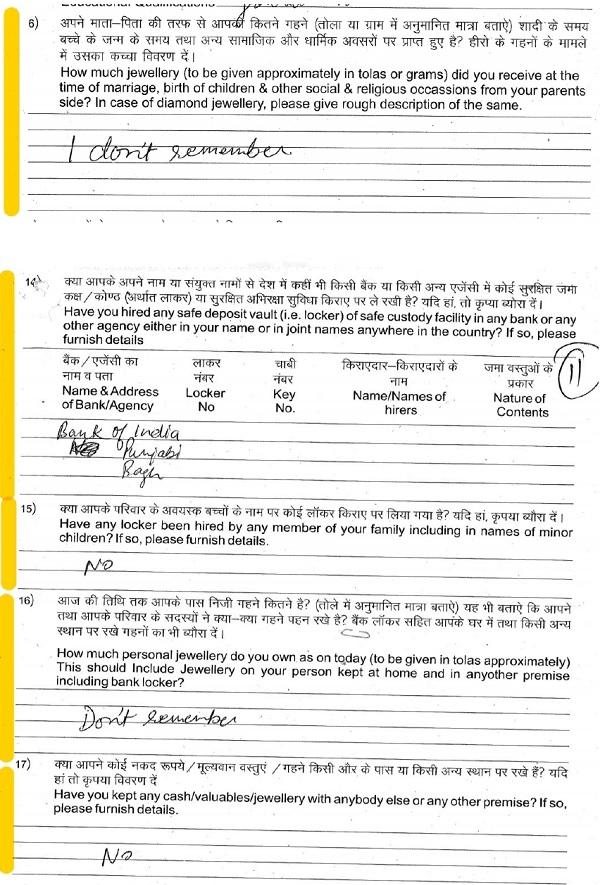
15. At this stage, it would also be relevant to note the Petiti oners’ contention regarding their statements. Mr. G.C. Srivastava, during the cou rse of the argument had contended that the Petitioners were not questioned about the locker key, the contents of the locker or the source of acquisi tion of these contents. This contention appears to be incorrect in view of th e statements recorded by the Respondents which have been shown to us. Specif ic queries were put to the Petitioners and their responses thereto are ger mane. The relevant portion of the statement of the Petitioners, recorded under Section 132(4) of the Act is extracted hereinbelow:
(a) Extracts from Statement of Shilpa Chowdhary da
(b) Extracts from the statement of Vikas Chowdhary dated 06.02.2019
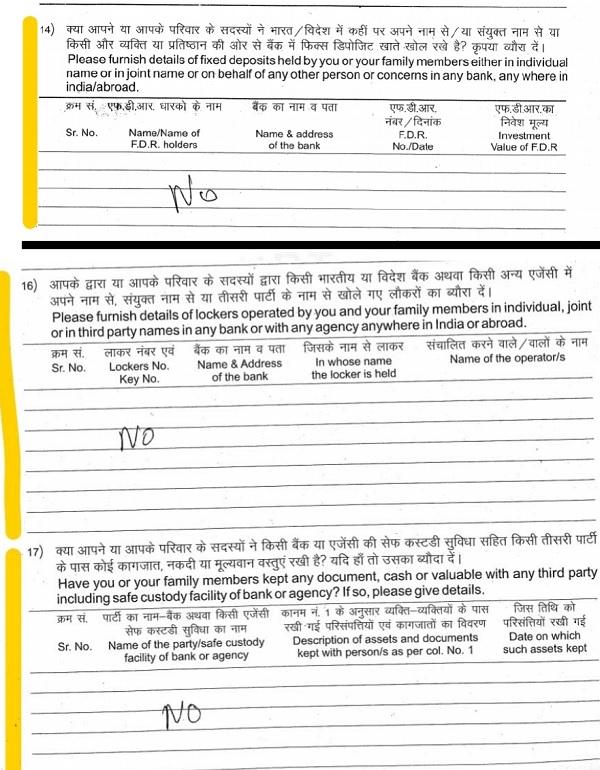
–
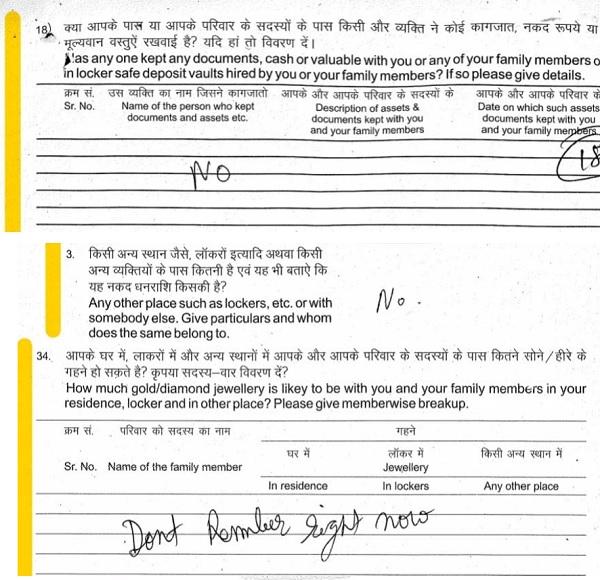
16. In this backdrop the satisfaction note recording the reason to believe for initiating the action reads as under: “Satisfaction Note in case of Lo cker No. 150F, Bank of India, Punjabi Bagh West, Delhi in the name of Sh. Vikas Chowdhary and Shilpa Chowdhary.
A search and seizure action u/s 132of the Income Ta x Act, 1961 was conducted on various premises of Kochar Group on 06.02.2019. During the course of search and seizure action u/s.132of the Income Tax Act, 1961 at residential premis es of Sh. Vikas Chowdhary i.e. E- 12/3, Vasant Vihar, New Delhi on 150F, Bank of India, Punjabi B agh, New Delhi was found in the possession of Sh. Vikas Chowdhar y and Smt. Shilpa Chowdhary. Sh. Vikas Chowdhary in his statem ent recorded u/s 132(4) of the Income Tax Act, 1961 was asked to fu rnish the details of contents of the lockers but he could not provid e the satisfactory explanation in respect of money, jewellery, documents or other valuable articles kept in the said locker. Under such circumstances, the contents of this locker are under question and need to be verified. In view of the facts discussed above, I have reasons to believe that the above mentioned locker is being utilized for parking their unaccounted assets/income. Thus, the incriminating evidences are likely to be found from the locker. Therefore, locker me ntioned below, is to be searched u/s 132of the Income Ta x Act, 1961 to seize details of unaccounted money, bullion, jewellery, assets, incriminating do cuments and other valuables: No. No. S. Name Locker Name of Bank & Branch Smt. Shilpa Chowdhary 1. Sh. Vikas Chowdhary and 150F Bank of India, Punjabi Bagh, New Delhi
17. From the above extracts, it is it is revealed that Mr. Vika s Chowdhary denied having any bank locker. Shilpa Chowdhary, while admittin g the existence of the locker, did not give any information relating to its contents. Therefore, there was indeed material with the concerned authori ty to form reasons to believe that the locker contained any articles/cash/ jewellery/other materials which represented the undisclosed income of the Petit ioner. The satisfaction arrived at by the authority meets the conditions s tipulated in Clauses (b) / (c) of Section 132(1) of the Act. The factual bac kground noted above demonstrates that the impugned WoA against the Petitioner s has been issued not merely on the ground of recovery of locker key, as M r. Srivastava has sought to project. The formation of belief by the authoriti on the statements of the Petitioners. The officers made an atte mpt to ascertain and verify the facts, post the discovery of the locke r key. The satisfaction note also records that Petitioners were asked to f urnish details of the contents of the locker, but did not provide satisfactory ex planation. In these circumstances, we believe that the Revenue was well withi n its right to proceed to search the Petitioner’s locker under section 132(1) of the Act.
COURT TO NOT EVALUATE THE ADEQUACY OF “REASON TO BELIEVE ”
18. A perusal of the satisfaction note reveals that there is fo undation for having reasons to believe in terms of the statute. The principl e, as reiterated time and again by the Courts, necessary to be borne in mind is that the words “reason to believe” mean that the reason should exist. The exis tence of such a belief can be challenged by the assessee, but not its suffici ency. The Court can examine whether the reasons to believe have a rational conn ection or are relevant bearing to the formation of such belief, and are not e xtraneous or irrelevant to the purpose of the Section. But, as at the Court cannot sit in appeal or test the adequacy of the opinion formed by the Assess ing Officer under Section 132. In Balwant Singh v. R. D. Shah, Director of Inspection, AIR 1969 Del 91:(1969) 71 ITR 550, this Court had determined th at the Court can merely examine the existence of materials and whether, on such grounds, a reasonable person can form the same opinion. In Director General of Income Tax (Investigat ion) Pune and Ors. v.Spacewood FurnishersPvt. Ltd. and Ors., (2015) 12 SCC 179, the Supreme Court held that though the reasons to believe must be in writing and a Cou rt would be entitled to examine the relevance of the reasons for the format belief, but it would not be entitled to examine the sufficiency or adequacy thereof. Thus, having regard to the settled legal position on the subjec t, we are of the view that the action initiated by the Respondents un der Section 132(1) of the Act qua the Petitioners does not call for any int erference by this Court.
19. We may clarify that we have only examined the legal validit y of the WoA. As we find that the exercise of power was authorised on th e basis of requisite belief as per the mandate of the Act, we cannot go in to the question of whether the same should have been issued, or substitute it w ith our opinion. THE SHAH-E-NAAZ JUDGE JUDGEMENT: 20. Lastly, we shall now deal with this court’s judgment in SHAH-E-NAAZ JUDGEv. Additional Director of Income Tax, (INV)–Unit VI & Anr., (2019) 306 CTR (Del) 42, on which considerable reliance has bee n placed by the Petitioner to contend that the facts of the present case are squarely covered within the ambit of said judgment. We have thus perused the judgment at great length. The facts are similar to the present case to the extent that search and seizure proceedings were commenced under Section 132(1) in relation to a primary party (named KMJ). During the s earch of his residential and business premises, the keys for three lockers w ere found, which belonged to the Petitioner in that case. On the same day, a team visited the said locker, and a restraint order under Section 13 2(3) was passed, based upon the search warrant in the case of KMJ. Conse quential search warrants under Section 132(1A) dated 27.06.2014 were sub issued for search of the three lockers, in the name of the Peti tioners therein. The lockers were forced open on the same day, and statement on oath recorded. The court had noted (in para 14) that for establishin g the validity of these search warrants, the lower parameters for “reasons to suspect” was sufficient and parties were not required to meet the higher thr eshold for “reason to believe”.
21. In the present factual matrix too, the initial search proce edings in the residential premises of the present Petitioner were conducted i n relation to Section 132(1) proceedings in respect of the Primary Persons. H owever, this is where the similarity ends between the two cases. In the pres ent case, when the locker key was recovered, and Vikas and Shilpa Chowdhary we re questioned in relation to it, they were unable to give satisfac tory answers. On this basis, a fresh WoA dated 12.02.2019 was issued u/s. 132 (1) against the Petitioner and her husband. It is important to note that, f rom this point forth, two separate proceedings were taking place: one against Mr. Kochar, and the other against Mr. & Mrs. Chowdhary. Both these proceedi ngs were undertaken by way of independent WoA, both issued under section 132(1) of the Act. Here, petitioners have raked up a controversy regar ding the initial search whereunder the key to the locker was found. In Shah-E-Naaz Judge judgment, Revenue defended the search action in respect of the locker by relying upon 132(1)(i) and 132(1A) in uncertain terms, as is ev ident from the following portion of the judgment: “11. The primary contention and submission of the respondents is that on discovery of key of locker No.7325-A, consequential search warrants dated 27thJune, 2014 were issued under Section 132(1A) for search of the three lockers. … This plea and reference to Section 132 (1A) of the Act was specifically submissions dated 6th December,2017, described as written statement, filed before us by the respondents. The submission asserts that the petitioners have misinterpreted the se arch and seizure actions as the search was in respect of the lockers and not against the petitioners in person. However, in the counter affidavit dated 27th March, 2018 filed to the amended W.P. (C) No.5937/2 016 in the case of Shah-E-Naaz Judge, the respondents had taken a different st and and stance. They have stated that warrants of authorization dated 27th June, 2014 in the present case were issued under claus e (i) to sub-section (1) to Section 132 in respect of the place i.e. locker… ”
22. Thus, in the Shah-E-Naaz case, the Revenue contended that the consequential WoA dated 27.06.2014 issued to inspect the Petiti oner’s lockers, was issued by under Section 132(1A) or under Section 1 32(1)(i). It was noted by the court that the WoA dated 27.06.2014 was issued in relation to search and seizure proceedings against the primary search pa rty, and not in relation to the Petitioner in person. Even a WoA under secti on 132(1) sub-clause(i) in respect of a premises would relate to the Primary Persons. However, the WoA dated 27.06.2014 was issued in the name of pet itioners in respect of the lockers and not against KSJ, who was the prim ary person in that case, without bringing on record any material to show any cogent nexu s between the petitioners and the primary person. Thus, the impug ned warrants are completely dissimilar and on this basis alone the Shah-E-Naaz Judge judgment is not applicable to the present case.
23. Besides, in the Shah-E-Naaz Judge judgment, heavy reliance was placed upon the satisfaction note, wherein unsatisfactory grounds were given by the Officer, which in the eyes of the court did not tantamount to e ither “reason to believe” or “reason to suspect”. On this point, the court ha d noted in paragraph 17 of the judgment that the satisfaction note was fou even “a single shred of evidence and material to justify the inference”, and that “ no attempt was made to verify and ascertain when and who had operated the said locker and who was paying rent for the said locker.” It then goes on to say that:
“The satisfaction note is precip itously silent on any business connection, link and association between the petitioners and the Jaiswal Group or Karamjit Singh Ja iswal, who had been subject to search and seizure operations. Lock ers were not subjected to search to unearth undisclosed and concea led assets of Jaiswal Group or Karamjit Singh Jaiswal. Accordin gly, we have no hesitation in holding that the three “consequential ” WoA issued in the name of persons and lockers for search/sei zure, therefore, do not meet the mandate and requirement of clause s (a), (b) and (c) of Section132of the Act. (…) ”
Xxxxxxxxx
“Notwithstanding use of the expre ssion “reason to suspect” in clause (i) to Section 132 (1) of the Act, the Supreme Court in its earlier judgments in Seth Brothers, Pooran Mal and Spacew ood Furnishers Private Limited (supra) has conscious ly emended to the effect that satisfaction in the form of “rea sons to believe” is required and mandated by law. Decision of a Di vision Bench of this court in Madhu Gupta (supra) had rejected a sim ilar argument that “reasons to suspect” and not “reason to believe” are sufficient. In the present case like in the case of Madhu G upta, warrants of authorization was issued in respect of three lock ers in the name of petitioners and Nagina Judge. These warrants of aut horization were not issued and executed against Karamjit Singh Jaiswal.”
24. However in the present case, the Petitioners, under their s tatements on oath failed to provide acceptable explanation in respect of the valuables kept in the said locker. And as the proceeding is under a new and se parate WoA in the case of the Petitioners where they are the party being s earched, and not a consequential warrant issued during the search operations Primary Persons, therefore any “ business connection, link and association between the petitioners and the primary search party” is prima facie not required to be established. Thus, the said case is distinguisha ble on facts and does not assist the cas e of the Petitioner.
25. For the forgoing reasons, we find no merit in the present p etitions. Accordingly, the same are dismissed.
26. Registry is directed to return the documents received in th e sealed cover from the department forthwith.