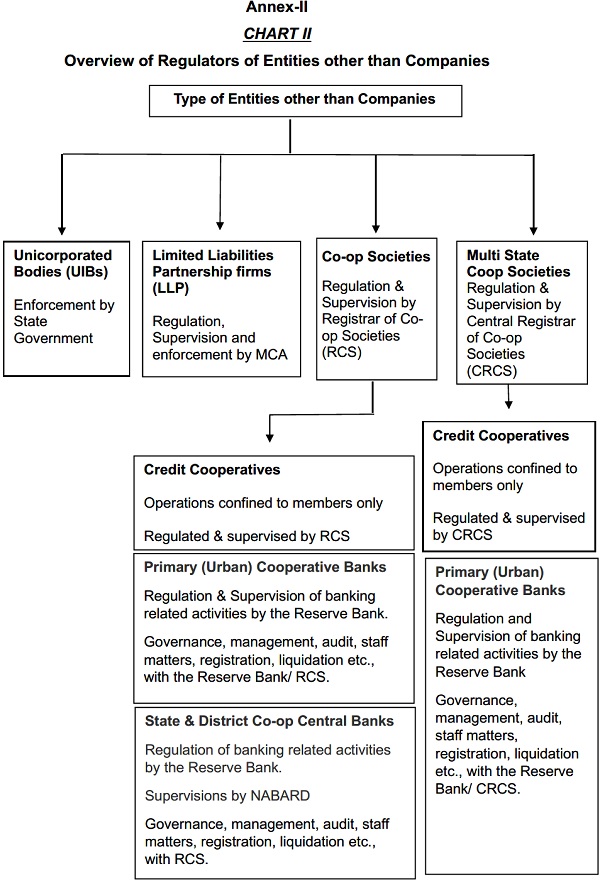
Regulatory Update. The Reserve Bank of India issued the Reserve Bank of India (Payments Banks – Concurrent Audit) Directions, 2026 under Section 35A of the Banking Regulation Act, 1949, with immediate effect from July 31, 2026. The Directions prescribe the governance, scope, appointment, accountability, tenure, remuneration, reporting, and oversight framework for concurrent audit in Payments Banks. They require the Audit Committee of the Board (ACB) to approve the audit scope, determine the tenure and remuneration of external concurrent auditors, and annually review the effectiveness of the concurrent audit system. The Directions require coverage of risk-sensitive areas, centralised processing centres, and specified activities including cash transactions, KYC/AML, FATCA, CRS, remittances, treasury, foreign exchange, clearing, card business, conduct of employees, mis-selling, and compliance with RBI directions and internal policies. They prescribe Board-approved policies for appointment, eligibility, accountability, auditor tenure, reporting of audit findings, fraud reporting, follow-up of deficiencies, and repeal earlier concurrent audit directions applicable to Payments Banks while preserving actions taken under the repealed framework.
Reserve Bank of India
RBI/DoS/2026-27/427
DoS.CO.ARG.21/08.91.021/2026-27 | Dared: July 31, 2026
Reserve Bank of India (Payments Banks — Concurrent Audit) Directions, 2026 Table of Contents
Introduction
Concurrent audit aims at shortening the interval between a transaction and its independent examination. It is, therefore, integral to the establishment of sound internal accounting functions and effective controls and is regarded as part of a bank’s early warning system to ensure timely detection of serious errors and irregularities, which also helps in averting fraudulent transactions and preventive vigilance in the bank.
In exercise of the powers conferred by Section 35A of the Banking Regulation Act, 1949, and all other provisions / laws enabling the Reserve Bank of India (RBI’) in this regard, RBI being satisfied that it is necessary and expedient in the public interest so to do, hereby, issues the Directions hereinafter specified.
Chapter I – Preliminary
A. Short Title and Commencement
1. These Directions shall be called the Reserve Bank of India (Payments Banks —Concurrent Audit) Supervisory Directions, 2026.
2. These Directions shall come into effect immediately upon issuance.
B. Applicability
3. These Directions shall be applicable to Payments Banks (hereinafter collectively referred to as ‘banks’ and individually as ‘bank’).
C. Definitions
4. In these Directions, unless the context states otherwise, the terms herein shall bear the meaning assigned to them below:
(1) ‘Audit Firm’ shall mean or a Proprietorship Firm or Partnership Firm or Limited Liability Partnership (LLP).
5. All other expressions unless defined herein shall have the same meaning as have been assigned to them under the Reserve Bank of India Act, 1934, the Banking Regulation Act, 1949, or the Companies Act, 2013, or any statutory modification or re-enactment thereto or other regulations issued by RBI or the Glossary of Terms published by RBI or as used in commercial parlance, as the case may be.
Chapter II – Governance and Oversight
A. Role of the Board
6. The detailed scope of the concurrent audit shall be determined and approved by the Audit Committee of the Board (ACB).
7. The ACB of the bank shall decide (i) the maximum tenure of external concurrent auditors, and (ii) remuneration to be paid to external concurrent auditors.
8. The ACB of the bank shall review the effectiveness of the Concurrent Audit System as well as the performance of the concurrent auditors on an annual basis and take necessary measures to suitably strengthen the system.
Chapter III – Guidelines for Concurrent Audit
A. Coverage
9. The Head of Internal Audit (HIA) at its discretion with the prior approval of the ACB, shall determine the scope of work to be entrusted to concurrent auditors, including the coverage of business activities and branches.
10. The bank shall, however, ensure that risk sensitive areas identified by it as per its specific business models are covered under concurrent audit. The broad areas of coverage under concurrent audit shall be based on the identified risk of the unit and must include random transaction testing of sufficiently large sample of such transactions wherever required.
11. The bank shall ensure that the concurrent audit, at minimum, covers the following areas, as applicable:
(1) Cash transactions, including physical verification of cash;
(2) Adherence to Know Your Customer (KYC) / Anti — Money Laundering (AML) guidelines including monitoring of transactions in accounts, compliance with Foreign Account Tax Compliance Act (FATCA) and Common Reporting Standards (CRS), monitoring of transactions in new accounts / staff accounts, and reporting of Cash Transaction Report (CTR) / Suspicious Transaction Report (STR);
(3) Remittances / Bills for Collection;
(4) Housekeeping including reconciliation of accounts, monitoring of General Ledger / Subsidiary General Ledger / Parking Accounts, and opening of internal accounts;
(5) Treasury operations;
(6) Non fund-based business;
(7) Foreign Exchange transactions;
(8) Clearing transactions;
(9) Verification of Merchant Banking Business;
(10) Verification of Credit Card / Debit card business;
(11) Conduct of employees;
(12) Mis-selling of products;
(13) Compliance with RBI directions and bank’s internal policies issued from time to time.
12. The bank shall ensure that all Centralised Processing Centres including centres undertaking business origination and monitoring functions are covered under concurrent audit.
B. Appointment of Concurrent Auditors
13. The bank shall formulate a Board approved policy specifying whether concurrent audit shall be conducted through its own staff or through external auditors, including retired staff of its own bank, as considered appropriate.
14. The HIA in the bank shall participate in selection of concurrent auditors where such function is outsourced and shall be responsible for the quality review (including skills of the staff employed) of the work of the concurrent auditors reporting to them. It shall, however, be ensured that if any partner of a Chartered Accountant firm is a Director on the Board of a bank, no partner of the same firm shall be appointed as concurrent auditor in the same bank.
15. Where the bank has engaged its own officials as concurrent auditors, it shall ensure that such officials are experienced, well trained, and sufficiently senior. The staff engaged in concurrent audit must be independent of the branch / business unit, where concurrent audit is conducted.
C. Accountability
16. Where the bank appoints an external audit firm as a concurrent auditor and identifies any serious acts of omission or commission in the discharge of its responsibilities, the bank shall provide the audit firm a reasonable opportunity of being heard before taking any adverse action; cancel the appointment of the audit firm, where such omission or commission is established, and report the matter to ACB of the bank, RBI and Institute of Chartered Accountants of India (ICAO.
17. The bank shall put in place a policy for fixing accountability in cases of serious acts of omission or commission noticed in the working of bank’s own staff or retired staff, working as concurrent auditors.
D. Tenure
18. The bank shall ensure that:
(1) the continuous tenure of an external concurrent auditor with the bank does not exceed five years;
(2) no concurrent auditor shall be allowed to continue with a branch / business unit for a period of more than three years; and
(3) the age limit for retired staff engaged as concurrent auditors does not exceed 70 years.
E. Remuneration
19. The remuneration shall be commensurate with the scope and coverage of audit, skill sets required, number of staff required and the time to be devoted for the audit.
F. Reporting System
20. The bank’s Internal Audit Department should develop a reporting system for concurrent auditors with the approval of ACB.
21. The findings of the concurrent auditors shall be received in a structured format prescribed by the bank.
22. Minor irregularities pointed out by the concurrent auditors shall be rectified on the spot. The major deficiencies / aberrations noticed during audit should be immediately brought to the notice of Head Office / Controlling Office of the concerned branch / business unit of the bank.
23. A quarterly review containing important features brought out during concurrent audits should be placed before the ACB. The zone-wise findings of concurrent audit shall be reported to ACB on a quarterly basis.
24. Whenever fraudulent transactions are detected, they should immediately be reported to Internal Audit Department (Head Office) as also to the Chief Vigilance Officer as well as Branch Managers concerned (unless the branch manager is involved).
25. Follow-up action on the concurrent audit reports and rectification of the deficiencies should be accorded high priority by the Head Office / Controlling Office of the concerned branch / business unit of the bank.
Chapter IV – Repeal and Other Provisions
A. Repeal and Saving
26. With the issue of these Directions, the existing directions, instructions, and guidelines relating to Concurrent Audit as applicable to Payments Banks stand repealed, as communicated vide circular no. DoS.CO.PPG.66/11.01.005/2026-27 dated July 31, 2026. The directions, instructions, and guidelines already repealed vide any of the directions, instructions, and guidelines listed in the above circular shall continue to remain repealed.2
27. Notwithstanding such repeal, any action taken or purported to have been taken, or initiated under the repealed directions, instructions, or guidelines shall continue to be governed by the provisions thereof. All approvals or acknowledgments granted under these repealed lists shall be deemed as governed by these Directions. Further, the repeal of these directions, instructions, or guidelines shall not in any way prejudicially affect:
(1) any right, obligation or liability acquired, accrued, or incurred thereunder;
(2) any penalty, forfeiture, or punishment incurred in respect of any contravention committed thereunder;
(3) any investigation, legal proceeding, or remedy in respect of any such right, privilege, obligation, liability, penalty, forfeiture, or punishment as aforesaid; and any such investigation, legal proceedings or remedy may be instituted, continued, or enforced and any such penalty, forfeiture or punishment may be imposed as if those directions, instructions, or guidelines had not been repealed.
B. Application of Other Laws Not barred
28. The provisions of these Directions shall be in addition to, and not in derogation of the provisions of any other laws, rules, regulations or directions, for the time being in force.
C. Interpretations
29. For giving effect to the provisions of these Directions or to remove any difficulties in the application or interpretation of the provisions of these Directions, RBI may, if it considers necessary, issue necessary clarifications in respect of any matter covered herein and the interpretation of any provision of these Directions given by RBI shall be final and binding.
(C. Saravanan)
Chief General Manager