Advertisement
Advertisement
Skip to content
Follow Us on
Advertisement
TOP STORIES
Goods and Services Tax

SC Upholds Allahabad HC Decision Describing GST Registration Cancellation as ‘Economic Death’ of Business

Case Law Details

Case Name
Anil Art And Craft Vs State of Uttar Pradesh & Anr. (Supreme Court of India)
Date of Judgement/Order
Only available for paid members
Advertisement

Anil Art And Craft Vs State of Uttar Pradesh & Anr. (Supreme Court of India)

The dispute arose from an order dated 03.02.2026 passed by the Deputy Commissioner, State Tax, Sector-2, Bhadohi, cancelling the petitioners’ GST registration under the U.P.G.S.T. Act, 2017. Before the Allahabad High Court, the petitioners submitted that following a D.G.G.I. search under the C.G.S.T. Act, 2017, proceedings under Section 61 had been initiated by notice dated 23.09.2025 and were still pending. During the pendency of those proceedings, a show cause notice dated 08.10.2025 under Section 29 was issued, resulting in cancellation of registration. The petitioners contended that the cancellation was without jurisdiction as the Section 61 proceedings had not concluded and that no premature conclusion should be drawn on allegations that their suppliers were fake. The State submitted that the petitioners had an effective statutory appellate remedy and that proceedings for adjudication and recovery of tax could run simultaneously with proceedings for cancellation of registration.

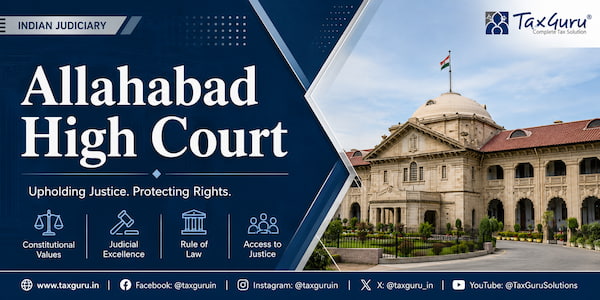
Read Allahabad HC Judgment in this case: HC Declines GST Registration Cancellation Challenge, Directs Statutory Appeal Under Section 29

The High Court held that the allegations involved disputed questions of fact which could not be examined in writ jurisdiction and should be decided on evidence before the statutory forum. It observed that Rule 21(b) could permit cancellation where allegations of fake supplies were ultimately proved and that allegations of fake supplies could simultaneously give rise to cancellation proceedings and proceedings for confirmation of demand involving reversal of ITC. The Court rejected the contention that registration had been cancelled merely because Section 61 proceedings were pending, observing that the impugned order only recorded that those proceedings had not concluded. It also declined to examine the pendency of the D.G.G.I. investigation at that stage.


The High Court distinguished M. Enterprises vs. State of Himachal Pradesh and Others, 2024 SCC OnLine HP 4786, noting that the allegations and statutory provisions involved there were different. In the present case, the revenue alleged bogus or paper transactions and absence of supplies in the transaction chain. Without expressing any opinion on the correctness of those allegations, the High Court observed that, if proved, they were serious enough to lead to cancellation of registration. The writ petitions were disposed of with liberty to file a statutory appeal within two weeks, directing that such appeal be decided expeditiously without being influenced by the Court’s observations or the pendency of the Section 61 proceedings.

The petitioners challenged the High Court’s decision before the Supreme Court. The Supreme Court held that it found no good ground to entertain the Special Leave Petitions and dismissed them. However, it granted liberty to file a statutory appeal, extending the time by four weeks. It directed that if an appeal was filed within four weeks along with an application under Section 5 read with Section 14 of the Limitation Act, 1963, the Appellate Authority should condone the delay and decide the appeal on its own merits and in accordance with law. Pending applications were disposed of. Consequently, the High Court’s order remained undisturbed, subject to the extension of time granted for availing the statutory appellate remedy.

FULL TEXT OF THE SUPREME COURT JUDGMENT/ORDER

1. We do not find any good ground to entertain these petitions. The special leave petitions are, accordingly, dismissed.

2. However, petitioner would be at liberty to file an appeal and time is extended by four weeks. In the event of such appeal being filed within a period of four weeks from today along with an application under Section 5 of the Limitation Act, 1963, read with Section 14 thereof, the Appellate Authority shall condone the delay and adjudicate the appeal on its own merits and in accordance with law.

3. Pending application(s), if any, shall stand disposed of.

Advertisement

Join TaxGuru's Network for the latest updates on Income Tax, GST, Company Law, Corporate Laws and other related subjects.

Leave a Reply

Your email address will not be published. Required fields are marked *