Case Law Details
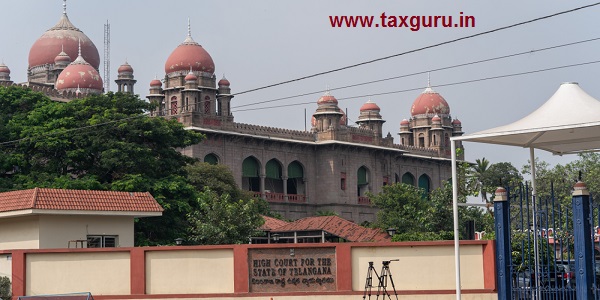
United Engineering Co. Vs Superintendent of Central Tax (Telangana High Court)
Telangana High Court Permits Taxpayer to File GST Appeal After Claiming Knowledge of Demand Through Recovery Proceedings
The Telangana High Court granted liberty to the taxpayer to pursue the statutory appellate remedy against a GST assessment order after the petitioner claimed that it became aware of the tax liability only upon initiation of recovery proceedings and bank attachment under Form GST DRC-13. The Court directed that if the appeal is filed within two weeks along with the prescribed pre-deposit, the appellate authority may consider the matter in accordance with law while taking into account the pendency of the writ proceedings.
Introduction
In M/s. United Engineering Co. v. Superintendent of Central Tax & Others, the petitioner challenged an Order-in-Original and the corresponding summary order in Form GST DRC-07 issued under Section 73 of the Central Goods and Services Tax Act, 2017.
Rather than seeking adjudication of the dispute on merits before the High Court, the petitioner requested liberty to avail the statutory appellate remedy, citing delayed knowledge of the assessment and recovery action.
Facts of the Case
The dispute arose from:
- Order-in-Original dated 27.08.2024 passed under Section 73 of the CGST Act, 2017.
- Form GST DRC-07 dated 30.08.2024 summarizing the demand.
- The proceedings related to the tax period 2019-20.
- The order imposed tax, interest, and penalty upon the petitioner.
The petitioner contended that:
- It became aware of the liability only after receiving calls from departmental authorities demanding payment.
- Recovery proceedings had been initiated through Form GST DRC-13, resulting in bank attachment.
- Consequently, the petitioner approached the High Court challenging the assessment proceedings.
Petitioner’s Contentions
The petitioner submitted that:
- Knowledge of the assessment order arose only after coercive recovery measures were initiated.
- It intended to challenge the Order-in-Original before the appellate authority.
- Some delay may have occurred in filing the appeal.
- The appellate authority should therefore be directed to consider the appeal sympathetically while examining the issue of limitation.
Revenue’s Position
The Revenue contended that:
- The petitioner was free to avail the statutory appellate remedy against both:
- The Order-in-Original dated 27.08.2024; and
- Form GST DRC-07 dated 30.08.2024.
- All factual and legal grounds could appropriately be raised before the appellate authority.
Court’s Observations
The High Court noted that:
- The petitioner itself sought permission to pursue the statutory appellate remedy.
- Since the petitioner intended to avail the appeal mechanism, it was unnecessary for the Court to examine the merits of the dispute.
- Questions concerning the assessment, demand, recovery proceedings, and limitation could be addressed by the appellate authority.
The Bench therefore refrained from expressing any opinion on the merits of the case.
Final Decision
The Telangana High Court:
- Granted liberty to the petitioner to file a statutory appeal.
- Directed that the appeal be filed within two weeks along with the prescribed statutory pre-deposit.
- Observed that the appellate authority shall consider the appeal in accordance with law.
- Directed that the appellate authority may take into account the fact that the petitioner had been pursuing a writ remedy before the High Court.
- Clarified that the petitioner would be free to raise all available legal and factual grounds before the appellate authority.
- Disposed of the writ petition without costs.
Key Takeaways
1. Statutory Appellate Remedy Remains the Preferred Route
The decision reiterates that disputes relating to GST assessments are ordinarily required to be pursued through the appellate framework prescribed under the CGST Act.
2. Recovery Proceedings Frequently Trigger Litigation
The case reflects a recurring trend where taxpayers claim to become aware of GST demands only after initiation of recovery proceedings, including bank attachment through Form GST DRC-13.
3. Pendency of Writ Proceedings May Be Relevant for Delay Consideration
The Court specifically observed that the appellate authority may consider the fact that the petitioner had been prosecuting a writ petition while examining the appeal.
4. No Opinion on Merits Preserves Appellate Rights
By declining to comment on the merits, the Court ensured that all issues remain open for adjudication before the statutory appellate authority.
Conclusion
In M/s. United Engineering Co. v. Superintendent of Central Tax & Others, the Telangana High Court once again emphasized the importance of exhausting statutory remedies under the GST regime. While declining to examine the assessment order on merits, the Court protected the taxpayer’s right to pursue an appeal by granting liberty to approach the appellate authority within a specified period and directing that the pendency of the writ proceedings be taken into consideration while examining the matter.
FULL TEXT OF THE JUDGMENT/ORDER OF TELANGANA HIGH COURT
Learned counsel Sri B.Srinivas, representing learned counsel Sri M.V.L.Narasimha Rao, appears for the petitioner.
Sri Dominic Fernandes, learned Senior Standing Counsel for Central Board of Indirect Taxes and Customs, appears for respondent No.1.
2. The writ petition has been preferred against the order-in-original dated 27.08.2024 passed under Section 73 of the Central Goods and Services Tax Act, 2017, along with the summary of the order in Form GST DRC – 07, dated 30.08.2024, for the tax period 2019-2020 imposing the tax, penalty and interest.
3. The petitioner has approached this Court alleging that it has come to know about the liability only upon receiving call from the authorities demanding the tax and in view of the bank attachment in Form GST DRC-13.
4. However, after some arguments, learned counsel for the petitioner seeks liberty to the petitioner to prefer an appeal against the order-in-original. He submits that some delay might have been occurred in approaching the appellate authority and therefore, he may be directed to consider it sympathetically.
5. Learned Senior Standing Counsel for CBIC submits that the petitioner was at liberty to prefer an appeal against the order-in-original and DRC-07 taking all the grounds as are available in law and on facts before the appellate authority in respect of the subject tax period.
6. However, upon hearing the learned counsel for the parties, since the petitioner seeks liberty to prefer an appeal, we do not wish to comment on the merits of the contentions raised by the parties.
7. If the petitioner prefers an appeal within a period of two weeks with statutory pre-deposit, the learned appellate authority would consider it in accordance with law also keeping into consideration that it has been pursuing the writ remedy before this Court in the meantime as well. The petitioner will be at liberty to take all the grounds in law and on facts before the appellate authority.
8. The writ petition is accordingly disposed of with the aforesaid liberty. However, there shall be no order as to costs.
Miscellaneous applications pending, if any, shall stand closed.