“Women must be honoured and adorned by their fathers, brothers, husbands, and brother-in-law, who desires their own welfare. Where women are honoured, there the gods are pleased; but where they are not honoured, no sacred rites yield rewards.”
— Sloka Manusmirti (Chapter III, Verse 56)
The Manusmriti, ancient India’s most recognized and debated legal treatise, positioned women at the heart of civilizational welfare. Its third chapter asserted unequivocally that a society that honours its women thrives, whereas one that does not fall inward, regardless of its rituals and pretensions. This wasn’t just sentiment. In the Manusmriti’s framework, women’s dignity was viewed as a prerequisite for social order—a fundamental requirement, not a favour bestowed by the powerful on the powerless. The fact that a country that draws heavily on this civilizational inheritance has spent seven decades developing a legal system that locks trafficking survivors in shelter homes that resemble prisons, deprives them of their autonomy in the name of protection, and re-victimizes them at every institutional turn is more than a policy failure. It is a fundamental civilizational paradox.
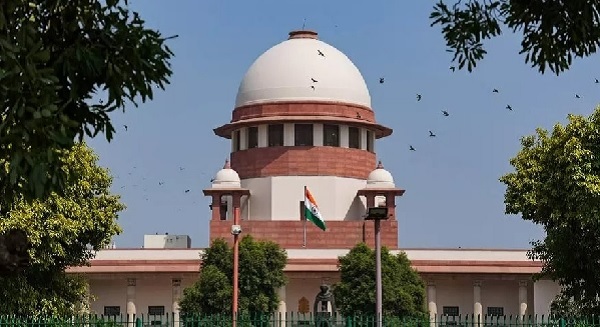
India has for decades maintained a legal framework against human trafficking that was structurally intended to fail the very people it professed to protect. On May 29, 2026, the Supreme Court of India, fed up with the state’s failure, intervened and accomplished what Parliament had failed to do for over a decade. In Prajwala v. Union of India (2026 INSC 609), a Division Bench of Justices J.B. Pardiwala and R. Mahadevan issued a comprehensive, binding “Victim Protection Plan” that governs every stage of intervention: pre-rescue, rescue, post-rescue, rehabilitation, repatriation, reintegration, prosecution, trial, prevention, and training. It further said, in language that the state cannot misinterpret, that victims of sex trafficking have a basic right to rehabilitation under Articles 21 and 23 of the Constitution.
The judgement is a rebuke. Not just the traffickers, but the entire system.
The Background: Twenty-Two Years of Watched Suffering
Prajwala, a Hyderabad-based NGO with over two decades of expertise in both anti-trafficking and survivor rehabilitation, filed the PIL that resulted in this ruling in 2004. The Supreme Court had already ruled on the main petition in 2015, at which point the Union Government made solemn promises: a dedicated Organized Crime Investigation Agency (OCIA) would be established to dismantle trafficking networks, and a comprehensive national anti-trafficking law would be enacted to replace the chaotic patchwork of ITPA, IPC provisions, POCSO, and state laws that prosecutors were expected to navigate like a blindfolded man in a minefield.
Neither promise was kept.
In 2022, Prajwala submitted a miscellaneous application. The government’s plans had not only been delayed; they had been secretly scrapped. The court agreed to hear it. The May 2026 verdict is the result of a constitutional court losing patience with presidential indifference.
The government’s anti-trafficking measure, which was purportedly written with cooperation from civil society and trafficking survivors, had been waiting for at least six years as of 2024. Survivors waited six years for a law that would help them. For six years, they were processed, jailed, and, in many cases, re-trafficked under a legal system that had not been significantly altered since 1956.
What Is Broken: The ITPA and the Indignity It Manufactures
The Immoral Traffic (Prevention) Act of 1956—ITPA—was derived from colonial repression measures and has never shed that DNA. It criminalizes prostitution in a variety of contexts rather than targeting trafficking as an organized crime. The consequences are predictable: the incorrect people are arrested. Women discovered in brothels during searches are assumed to be victims requiring rehabilitation. They are then removed from their workplaces, placed in “protective homes,” and detained for extended periods of time. The guys in charge of the activities — procurers, transporters, and financiers — vanish into the night while the state celebrates its successful rescue.
In this arrangement, rescue is sometimes mistaken for second captivity.
The numbers make it impossible to reduce the problem’s size. According to NCRB data, the number of ITPA cases registered in India has fluctuated between 1,294 in 2020 and 2,166 in 2023. These figures very probably undercount the reality—India’s own government admitted at least 30 lakh trafficking victims in 2004, and there is no credible evidence that the figure has decreased subsequently. According to projections for 2025, reported trafficking cases will total around 2,227 nationwide, with Maharashtra leading with 396 cases and Telangana following with 343. In India’s trafficking economy, around 40% of incidents involve sexual exploitation, 23% forced labour, and 30% involve children. The Court itself noted a disturbing decline in the age of victims, with traffickers increasingly targeting children and adolescents through false promises of employment, marriage, glamour, and financial security.
Despite these statistics, the conviction rate remains poor. Cases are registered but not prosecuted effectively. Prosecuted cases fail because survivors—viewed as witnesses rather than rights holders—are subjected to traumatic cross-examination or simply quit appearing after being re-victimized outside court. The institutional infrastructure is both underfunded and poorly focused.
Meanwhile, the 2023 Bharatiya Nyaya Sanhita implemented a dangerous legislative regression. Section 143 of the BNS now demands proof of all three aspects of the trafficking definition—action, means, and purpose—even in cases involving juvenile victims. This is in direct contrast to the Palermo Protocol, the international standard to which India is subject, which waives the “means” requirement for minors. One of the world’s most serious child trafficking issues now has a domestic law that makes it more difficult to punish traffickers. The Court declined to reconcile this discrepancy—that task belongs to Parliament—but its urgency has now been judicially recorded.
The Stated Promise of the Immoral Traffic (Prevention) Act
The Immoral Traffic (Prevention) Act, 1956, was adopted allegedly to carry out India’s commitments under the International Convention for the Suppression of Immoral Traffic in Persons and the Exploitation of the Prostitution of Others, 1950, to which India had signed. Its declared goals were threefold: to combat organized prostitution and commercial sexual exploitation, to rescue women and girls from human trafficking networks, and to rehabilitate those trapped in the sex trade. Parliament framed it as a protective measure, one that would eliminate exploitation rather than penalize the victimized. The Act made it illegal to run a brothel, pimp, procure sex workers, or live off their earnings. On paper, it targeted exploiters. In practice, as five decades of enforcement data show, it disproportionately affected women. The statute that promised rescue became the framework for a second incarceration.
The Court’s Central Holding: Rehabilitation as a Constitutional Entitlement
The most significant jurisprudential contribution of Prajwala 2026 is that it elevates rehabilitation from a government project that can be defunded or ignored to a basic right. The Court ruled that Article 21’s constitutional protection of life with dignity includes rehabilitation. It is not optional. It is not dependent on fiscal priorities. It is a right that a trafficking survivor can enforce in court.
This is a significant shift. Under the previous structure, a survivor who refused rehabilitation had no direct legal recourse against the state’s indifference—she could seek habeas corpus if wrongfully jailed, but there was no enforceable right to be housed, counselled, educated, or reintegrated. That gap is now closed. The constitutional wall has been constructed, and the state must answer if it attempts to pass through it.
The court also based its decisions on Article 23, which outlaws human trafficking and beggary. This is not the first time Article 23 has been used — Bandhua Mukti Morcha v. Union of India remains the benchmark — but the 2026 ruling gives the clause a level of detail that previous decisions lacked. Article 23 is more than just a prohibition on traffickers; it sets an affirmative obligation on the state to prevent trafficking and address its repercussions.
The Court ruled unequivocally that “victims shall not, at any stage, be treated as criminals or subjected to measures associated with criminal liability.” “All actors must always treat them as if they were crime victims.”
All actors. Not just police. Not just prosecutors. All actors.
The Victim Protection Plan: Six Stages Where the System Routinely Fails
The “Victim Protection Plan” is the structural heart of the decision. It is not aspirational policy rhetoric but binding judicial guidance. Its significance stems from its granularity: it understands that the system fails survivors at numerous points, rather than just one, and that a rescue operation that ends with the survivor being kept in a locked shelter house is not a rescue.
Pre-Rescue. Intelligence-led operations must prioritize survivor protection from the start. People must be trained. Rescue plans must be created so that prospective victims are not identified prior to operations being carried out. Media must be excluded. Survivors should not be viewed as informants or evidence at this point.
Rescue. The rescue operation must be carried out by trained, sensitized people, rather than generic law enforcement officers who have no understanding of trauma. At the time of rescue, and in a language the survivor knows, she must be informed that she is a victim, not an accused, and that she has rights such as legal representation, the ability to choose her rehabilitation facility, and the right not to have her statement recorded in a police station.
Post-Rescue. This is the most obvious failure point in the system. The Court ordered mandatory psychological first aid, not a superficial physical examination by a disinterested doctor. A safe and secure sanctuary that is not a correctional institution. Before making any statements, seek legal counsel. Section 183 of the BNSS requires that statements be recorded in a safe environment. Each of these approaches is a direct response to a proven pattern of institutional failure.
Rehabilitation. States must provide livelihood training, vocational education, formal schooling for minor victims, and psychosocial support. States must develop dedicated rehabilitation funds; survivors cannot be directed through general social welfare programs with no trafficking-specific expertise. Critically, the Court advocated for survivor-driven rehabilitation models, recognizing an evidence-based conclusion that official India has been slow to accept organizations managed by survivors outperform state-run facilities staffed by bureaucrats with no personal knowledge of exploitation.
Reintegration. Returning survivors, their families, and communities without preparation is another established route to re-trafficking. The Court mandated coordinated protocols between home and destination governments, safe repatriation rather than expulsion, ongoing privacy protection, and follow-up help for a minimum period following reintegration. The state’s responsibility does not end with the successful rescue. It ends—if at all—only when the survivor is secure.
Prosecution. In-camera hearings are required in trafficking cases. Survivors who appear as witnesses must be assigned support individuals. Survivors cannot be subjected to repeated or humiliating cross-examinations. Free expert legal assistance must be offered. Prosecutors and judges must be made aware of the problem. The trial stage is when the state’s commitment to the survivor has been most fully ignored, and the court is working to close that gap.
The AHTU Directions: Giving Teeth to Units That Exist on Paper
Anti-Human Trafficking Units were established across states in response to earlier Supreme Court directives. Many exist only on paper, with insufficient staffing, supervision, and technical capabilities to monitor cyber-enabled trafficking. The court ordered that AHTUs be led by officers with at least DSP level, that each unit have at least two female police officers, and that cybercrime officers be included whenever possible. These are not aspirational proposals. They are the minimal requirements, and compliance must be reported to the court.
The cyber-trafficking direction is very important. The Court noted: “Technology has become a tool for traffickers to facilitate, organize, network, transact, and evade authorities with greater speed, less cost, and more anonymity.” Online grooming has become the key recruitment method. Social media platforms and gaming apps are becoming trafficking hubs. In recent years, India has received more than 1.6 million cyber-exploitation complaints per year. Any anti-trafficking framework that lacks a specialized digital enforcement component is combating a 2026 crime using a 1956 statute.
Consent, Voluntary Sex Work, and the Dignity the Law Has Denied
One of the most politically contentious — and jurisprudentially crucial — features of the decision is its emphasis on separating consensual adult sex workers from trafficked victims. For decades, law enforcement has obliterated this divide, treating all women found in brothels as presumed victims in need of rescue. The ITPA has been weaponized in this way: women who choose their profession are forcibly taken, incarcerated, and subjected to “rehabilitation” that they did not want or need.
The court ruled unequivocally that ITPA does not allow the state to impose a rehabilitative process on an adult victim against her will. It also concluded that equating adult consensual sex employment with sex trafficking “undermines dignity.” The Constitution guarantees bodily autonomy. A woman who has not been trafficked and has not agreed to be rescued has the right to say no to the State, the shelter home, and the entire system of coercive salvation.
This differentiation serves several functions. It guarantees the autonomy of volunteer sex workers. It also guarantees that investigative resources are focused on genuine traffickers rather than being used to execute mass raids that traumatize victims without affecting the criminal networks responsible.
What Parliament Owes and Has Refused to Pay
The judgement reiterates, with obvious impatience, the need for comprehensive national anti-trafficking legislation. The existing framework divides anti-trafficking functions between ITPA, BNS, POCSO, the Bonded Labour (System Abolition) Act, the Juvenile Justice Act, and several state acts. The fragmentation is more than just unpleasant; it causes jurisdictional confusion, inconsistent enforcement, and evidentiary holes that traffickers exploit with precision.
The US State Department’s Trafficking in Persons Reports have routinely rated India’s anti-trafficking legislative measures as weak. The 2024 TIP Report stated that the complete anti-trafficking bill had been stalled for six years. The BNS, established in 2023, did not remedy this void; instead, it substituted trafficking prohibitions under the IPC with Section 143, which, in some ways, constitutes a step back from international standards.
Parliament has possessed the evidence for many years. It has received NGO support. It included survivor testimonies. It has received two decades of judicial guidance. It hasn’t generated a law. The Supreme Court rejected issuing a mandamus directing Parliament to pass legislation, which is constitutionally correct. However, its policies on all other fronts have reduced the space left for executive inaction. Any state that fails to comply with the Victim Protection Plan will face judicial scrutiny. A state that fails to pass a comprehensive anti-trafficking statute will continue to face litigation, and as this decision shows, the Court is unable to accept assurances a third time.
The Precedent: Where Prajwala 2026 Sits in the Canon
Prajwala 2026 joins a great genealogy of Supreme Court decisions that have done more than just announce rights; they have also built operational frameworks for rights that the administration had relegated to letters on paper. Vishaka v. State of Rajasthan established India’s first sexual harassment framework when Parliament declined to act. Sampurna Behura v. Union of India changed the juvenile justice system. Gaurav Jain v. Union of India concerned the rehabilitation of sex workers’ children. Each of these decisions had a similar architecture: a failure of the legislative and executive branches, a rights-holder left without recourse, and a Supreme Court that intervened with clarity rather than hyperbole.
The 2026 decision goes one step farther than its predecessors in that it renders rehabilitation constitutionally justiciable. A survivor no longer relies on the goodwill of the plan administrator. She has a right. That is not a small matter. It is, indeed, everything.
What This Means on the Ground
A decision is only as good as its implementation. The Court has ordered that the Union Government, as well as the states and UTs, submit compliance reports within three months. It has indicated that it will continue oversight. That represents judicial seriousness about enforcement, as opposed to the typical direction-and-forget that has typified so many PIL decisions.
What should happen: AHTUs must be properly manned and supported promptly. Shelter homes must be audited against the court’s minimal criteria. Training programs for law enforcement, prosecutors, and judicial officers on trauma-informed practice must be implemented rather than advertised. And Parliament must immediately implement comprehensive anti-trafficking legislation that has been developed, redrafted, reviewed, and shelved for nearly a decade.
The state has had two decades to handle trafficking victims as such. It constantly chose to do otherwise. It referred to its shelters as “protective” despite operating them like jail centers. It referred to its rescue activities as “saving” while repeatedly victimizing survivors at every institutional touchpoint. It made agreements with the Supreme Court in 2015 and then broke them without consequence.
There are no more free passes. The court has set the standard. However, let us be honest about what standards mean in a country that wrote the Manusmriti and then constructed shelter homes that double as jails. They are meaningless without the political will to implement them. The women who survived trafficking did so despite the state’s indifference, thanks to the work of NGOs like Prajwala, their own extraordinary resilience, and the slow, grinding persistence of a judiciary that refused to turn a blind eye even when every other institution did. Prajwala 2026 is not a conclusion. It’s time to face the consequences. The Constitution has always pledged dignity to these women—Article 21, Article 23, and the civilization that created the Manusmriti all said so long ago. For seventy years, the state has presented a locked door with a welfare sign. The Supreme Court has now ordered that door be opened. Whether India walks through it—whether Parliament eventually legislates, whether AHTUs are genuinely staffed, or whether shelter homes cease to function as detention facilities—will determine not only the destiny of this judgement but also the republic’s moral credibility. The survivors have waited too long. The same goes for the Constitution.
The views expressed are personal.
 |
 |
|---|---|
| Author: Abhisikta Nandy, Student of B.A. LL.B. (IPR Hons.) | Co-author: Advocate Y. Balachander Reddy, LL.M. Intellectual Property Rights (LL.M. Corporate and Securities Laws), P.G. College of Law, O.U. |
Notes:
1 Manusmriti ch. III, v. 56 (Georg Bühler trans., Sacred Books of the East vol. 25, 1886)
2 Prajwala v. Union of India, M.A. No. 530 of 2022 in W.P. (Civil) No. 56 of 2004 (Supreme Court of India, May 29, 2026)
3 India Const. arts. 21, 23.
4 Prajwala v. Union of India, W.P. (Civil) No. 56 of 2004 (Supreme Court of India, Dec. 9, 2015) (original writ petition disposed).
5 U.S. Dept. of State, Trafficking in Persons Report: India 1–3 (2024), https://www.state.gov/reports/2024-trafficking-in-persons-report/india.
6 Immoral Traffic (Prevention) Act, No. 104 of 1956, India Code (1956).
7 Nat’l Crime Records Bureau, Ministry of Home Affairs, Crime in India 2023, at tbl. 3A.1 (2024), https://ncrb.gov.in.
8 Prajwala v. Union of India, W.P. (Civil) No. 56 of 2004 (Supreme Court of India, Dec. 9, 2015) (recording Union of India’s acknowledgment on record).
9 India Data Map, 2025 Human Trafficking in India: State Rankings and Insights (Nov. 1, 2025), https://indiadatamap.com/2025/11/01/2025-human-trafficking-in-india.
10 Nat’l Crime Records Bureau, (n7), at tbl. 3A.5.
11 Bharatiya Nyaya Sanhita 2023 (India) s 143.
12 United Nations Protocol to Prevent, Suppress and Punish Trafficking in Persons, Especially Women and Children, art. 3(c), Nov. 15, 2000, 2237 U.N.T.S. 319 [hereinafter Palermo Protocol].
13 Bandhua Mukti Morcha v. Union of India, (1984) 3 SCC 161 (India).
14 Prajwala v Union of India 2026 INSC 609 (Supreme Court of India, 29 May 2026)
15 Bharatiya Nagarik Suraksha Sanhita 2023 (India) s 183.
16 Prajwala v Union of India 2026 INSC 609 (Supreme Court of India, 29 May 2026)
17 PM IAS, Child Trafficking in India (Dec. 29, 2025), https://www.pmfias.com/child-trafficking-in-india.
18 Prajwala v Union of India 2026 INSC 609 (Supreme Court of India, 29 May 2026) para ___; Immoral Traffic (Prevention) Act 1956 (India) ss 7, 8.
19 U.S. Dep’t of State, supra note 5, at 2.
20 Vishaka v. State of Rajasthan, (1997) 6 SCC 241 (India).
21 Sampurna Behura v. Union of India, (2018) 4 SCC 433 (India).
22 Gaurav Jain v. Union of India, (1997) 8 SCC 114 (India).