“She clocks in before the sun rises and clocks out after everyone else sleeps. She draws no salary, files no timesheet, and receives no pension. And yet, without her, the household stops, and with it, quietly, so does the nation.”
She Wakes Before The House Does
There is a woman in nearly every Indian household who sets no alarm, because she has never needed one. She is up before the chai, before the school bags are packed, and before the office shirts need ironing. By the time the rest of the family stirs, she has already been at work for an hourShe will not stop until well past midnight.
She cooks three meals, manages the budget, supervises homework, attends parent and teacher meetings, nurses sick children, remembers every birthday, tracks every bill, mediates every family quarrel, and still finds time to ask everyone else how their day went. She is, in every practical sense, the chief executive officer of the home, without a designation, without a contract, and without a salary.
India calls her a “housewife.” Society calls her “dependent.” Her husband’s tax return lists her as having “no income.”
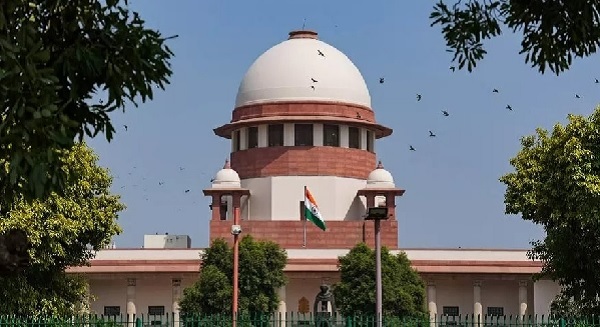
On June 11, 2026, the Supreme Court of India called her something else entirely: a nation builder.[1]
What She Actually Does (A List Nobody Asked For)
Let us be precise about the work, because precision is exactly what has been missing from this conversation for decades.
A homemaker is, on any given day, a chef, a nutritionist, a household accountant, a procurement manager, a childcare professional, a nurse, a counsellor, a teacher, a logistics coordinator, and an emotional anchor. She plans meals around dietary needs and budget constraints simultaneously. She manages domestic workers, tracks expenses against income, and decides what gets paid this month and what waits.
When a child gets sick at 2 a.m., she is the one who wakes up. When there is a family crisis, a job loss, a bereavement, or an illness, she is the one who keeps things together while everyone else comes apart. She does not have a day off when she is ill. There is no leave policy in the home economy.
Women’s unpaid caregiving work is estimated to generate 15% to 17% of India’s GDP, more than most official industry sectors, but it is not recorded on any balance sheet, does not qualify for social security benefits, and is not included in national income figuresShe is, in economic terms, producing enormous value. She is simply not being paid for it.
“You Don’t Work”, Society’s Most Comfortable Lie
Ask a homemaker to describe herself at a social gathering and watch the hesitation. “I’m just a housewife,” she will say, almost apologetically. The “just” is not incidental. It has been installed by years of being told, in a hundred subtle ways, that her work does not count.
Society has developed a very efficient system for devaluing domestic labour. The first step is to call it “help” rather than work. The second is to treat it as something women do naturally, instinctively, as if cooking for five people three times a day is an expression of biology rather than a skill. The third is to describe the homemaker as “dependent” on the earning member of the family, which neatly inverts the actual reality of who depends on whom.
The Supreme Court put it plainly: “It is ironic to describe a homemaker as dependent on earning members when, in reality, the household’s functioning depends substantially on the homemaker. The earning members are, in fact, solely dependent on the homemaker.[2]”
This is not a new observation. It is, however, the first time it has been said from the highest court in the country, in a binding judgement, where it cannot easily be ignored.
“She Is Not a Maid” The Supreme Court Said So
Homemakers endure a specific indignity in broken marriages or in households where their labour is taken for granted: the notion that their role is essentially that of a domestic servant who also lives in the house.
Justice Sanjay Karol and Justice N. Kotiswar Singh of the Supreme Court stated unequivocally that “marriage does not mean hiring a maid.” The bench highlighted that domestic responsibilities are shared by both couples.
This observation is not purely rhetorical. It gets to the heart of how judges, families, and society must rethink what a homemaker means. She is not on staff. She is not a service provider who can be fired, replaced, or reviewed on Zomato. She is the person around whom the entire home functions, and her absence, as the court considered in the context of a motor accident case, creates an irreplaceable void.
The Problem Solver Everyone Calls First
Beyond the physical labour, there is another dimension of a homemaker’s work that almost never gets discussed: the emotional and cognitive labour of keeping a family functional.
She remembers what her teenager said last Tuesday and what it probably means. She notices when her husband is under pressure before he says anything. She adjusts the household’s emotional temperature every single day, de-escalating tensions, creating comfort, and manufacturing normalcy in the middle of chaos.
Every family crisis is, in the first instance, her problem to solve. Not because she caused it, but because everyone else instinctively turns to her. She is the family’s first responder, its institutional memory, and its safety net, all at once.
What The Law Now Says
The decision in Shishupal v. Shish Ram and Ors. (SLP(C) No. 33915/2025; 2026 Live Law (SC) 617) stemmed from a motor accident compensation claim, a relatively routine category of litigation that has, over the years, exposed one of the law’s most persistent blind spots: how to calculate the loss suffered by a family when the person who died did not have a formal job.
Previously, courts used a notional income to calculate compensation for deceased homemakers, often arriving at sums that had little to do with the family’s actual economic and practical losses. The homemaker was primarily recognized as the cheapest possible substitute, a domestic worker, rather than as the person whose labour kept the household running.
The court fixed the value of “loss of domestic care” at ₹30,000 per month as a minimum and directed that this be treated as a separate, standalone head of compensation, distinct from any notional income the homemaker may have earned. Where the homemaker was also part of the paid workforce, this component is in addition to her proven monthly income. The court further ordered that this value be raised upward by 10% every three years so that it did not erode silently against inflation, as such figures typically do.
The court stated that homemakers are mostly responsible for preparing the human capital on which the country’s economic hopes hinge and that their everyday labour enables other family members to seek education, professions, and careers.
Beyond remuneration, the court stated that homemakers deserve equal consideration in jointly earned family assets, considering their essential contribution to family prosperity and stability via years of unpaid labour.
The appropriate statutory framework is Section 166 of the Motor Vehicles Act of 1988,[3] together with the principles established in National Insurance Co. Ltd. v. Pranay Sethi (2017) 16 SCC 680.[4] The court’s decision in this case introduces “loss of domestic care” as a separate compensation head, joining established heads such as loss of income and loss of consortium.
What This Changes, and What It Does Not
It would be dishonest to present this judgement as the end of the problem.
The ruling operates within the narrow frame of motor accident compensation. It does not create a salary for homemakers. It does not grant them social security benefits, provident fund contributions, or health insurance. It does not address the continuing absence of homemakers’ contributions from matrimonial property regimes in most personal laws. It does not mandate that any government scheme recognize or reimburse unpaid domestic labour.
What it does, and this is nothing, is establish, authoritatively, that the work has economic value, that describing a homemaker as “dependent” is factually wrong, and that courts must stop treating her labour as worth whatever the cheapest domestic worker costs per month.
It also does something harder to quantify it changes the language. The court expressed hope that, in recognition of the homemaker’s contributions, the word ‘housewife’ would, in the future, be replaced with ‘nation builder.’ Words shape how we think. How we think shapes how we legislate. How we legislate shapes how we treat people.
That chain is long. But it must start somewhere.
The Property Wall She Cannot Cross
The Supreme Court’s observation that homemakers “deserve equal consideration in jointly acquired family assets” is generous in nature. As a legal proposition in 2026, it remains primarily aspirational.
Here’s the reality. A woman who has spent twenty years managing a household, allowing her husband to work uninterrupted and saving the family thousands of rupees per month in childcare, cooking, and domestic management costs, has no statutory right to a share of the matrimonial property registered in her husband’s name if they divorce. None. Maintenance, certainly. Sometimes you get alimony. Property, almost definitely not, unless she can demonstrate a direct financial contribution to the purchase.
Indian matrimonial laws, whether personal or secular, do not recognize the concept of marital property. Maintenance and alimony remain the principal means of support for divorced spouses, with no structure in place for equitable allocation. Women, particularly homemakers and caregivers, bear a disproportionate burden because of the legal system’s failure to recognize their non-monetary contributions to marital life.
As recently as September 2025, the Delhi High Court was urged to rule on this specific issue. A woman contended that her work as a housewife had enabled her husband to generate money and that any property accumulated during the marriage should be considered a joint product of their combined efforts. The bench stated that, while the wife’s job as a housewife is clearly valuable, it cannot establish legal ownership in the absence of evidence of substantial financial input. “A legitimate and enforceable claim to the husband’s property must rest on proof of a meaningful and substantive contribution.”
Twenty years of cooking, cleaning, child-rearing, budgeting, and emotional management, and the law demands “proof of substantive financial involvement” before recognizing a stake. The Madras High Court has occasionally taken a more lenient stance, noting that a wife’s domestic services cut household expenses and thus indirectly contribute to the husband’s potential to acquire assets. However, that position is neither consistent, statutory, nor dependable.
The Delhi High Court did, however, admit that “the time has come” for the law to adapt, stating that homemakers’ contributions “remain hidden and downplayed.” It’s a telling phrase. Courts have been recognizing that the time has arrived for some decades. Legislation has not followed.
The Supreme Court’s June 2026 decision hints at property rights. Actual reform in this area will necessitate action by Parliament, including the establishment of a matrimonial property rule that recognizes a homemaker’s domestic labour as a true economic contribution rather than an emotional one. Until that happens, the homemaker’s right to the home she constructed, managed, and held together is up to the judgement of the judge she draws.
Nobody wants to talk about the social security gap
If the property question makes you uneasy, the social security question is even more so.
In recent years, India has made significant efforts to create a safety net for workers in the informal sector. The e-Shram platform, which was introduced in 2021, has registered over 30.58 crore unorganized workers as of January 2025[5], integrating twelve government schemes and offering access to health, pension, insurance, and skill development benefits. Gig workers, construction workers, street sellers, and rickshaw pullers are all becoming more legally protected.
The homemaker does not appear on this list.
She isn’t registered anywhere. She does not have a UAN (Universal Account Number). She cannot access Ayushman Bharat on her own. She has no provident fund. She is ineligible for a pension because she works at home. The Pradhan Mantri Shram Yogi Maan-Dhan Yojana provides a monthly pension of ₹3,000[6] to unorganized workers over the age of sixty, provided they have a verifiable income of less than ₹15,000 and proof of profession. The program is intended for workers in unorganized sectors such as street vendors, agricultural labourers, construction workers, mid-day meal workers, rickshaw pullers, rag pickers, and carpenters. The homemaker, who contributes between 15% and 17% of India’s GDP in unpaid labour, is not mentioned.
This is not accidental. It is the logical consequence of a system that has never decided to count domestic work as work. You cannot extend social security to a category of labour you have refused to formally recognize. The Supreme Court has now provided the recognition. What follows from it, whether any scheme is amended, any registration mechanism is created, any pension is offered to women who spent their working years managing homes rather than payroll or registered jobs, is entirely up to the executive. The court cannot legislate it into existence.
The Code on Social Security, 2020,[7] which superseded the Unorganised Workers’ Social Security Act of 2008, was enacted to provide social security to all employees and workers, whether organized or unorganized, or in any other sector. The phrase “any other sectors” is broad enough in theory to include domestic employment. In practice, the regulations have not shifted in that manner. The homemaker remains the largest invisible category in India’s Labour force, formally barred from receiving any benefit that her Labour ethically merits.
A Judgement Is Not a Revolution, But It Is a Beginning
There is a temptation, when a court says something powerful, to treat the saying as the doing. To read the headline, “Homemakers are Nation Builders” , and feel that the problem has been substantially addressed. It has not. But something real has happened, and it would be equally wrong to dismiss it.
Courts speak to multiple audiences simultaneously. They speak to litigants, to lower courts, and to legislators, but they also speak to the culture. A Supreme Court bench calling it “ironic” to describe a homemaker as “dependent” when the entire household depends on her is not merely making a legal point. It is correcting a social narrative that has done enormous damage to an enormous number of women.
Language has repercussions. When the law mandates that something work, society inevitably follows. When a court rules that marriage is not a domestic employment arrangement, it modifies the foundation for how families, lawyers, and legislators should approach the issue, but only marginally. The 2023 Handbook on Gender Stereotypes, used by the judge in this case, encouraged courts to replace the term “housewife” with “homemaker.”[8] The fact that the bench not only accepted the Handbook but also proposed “nation builder” as the ideal word reveals something about the judiciary’s intended agenda.
Domestic labour is not legally recognized as compensable, insurable, or pensionable work, despite a monthly compensation ceiling of ₹30,000 for automobile accidents. The path between the two is long and political and will necessitate legislative will, which has thus far been noticeably lacking. However, the court has clearly designated the destination. It has stated unequivocally that the woman who controls the household is a producer of genuine economic and social value, and she deserves to be rewarded as such.
The true test will be what India does with its holdings. A judgement is a mirror. What we build from it is up to us.
Pierce the Veil
Justice Karol’s bench used a statement that needs to be stated directly: the court must “pierce the veil” of economic invisibility that has long surrounded domestic labour. The metaphor is appropriate. A veil, not a wall. Instead of blocking, it obscures. And what is behind it, once seen, cannot be undone.
Behind that veil is a lady who got up before the dawn, hasn’t stopped working since, won’t stop tonight, and has never received a pay stub for any of it. She’s not a maid. She is not reliant. She is more than “just a housewife.”
She is, as the country’s top court has recently acknowledged, the person without whom none of the rest of it would exist, the careers, education, food, stability, and even the potential of a functioning family.
India has now spoken her name correctly.
It took long enough.
The views expressed are personal.

Author: Abhisikta Nandy
Notes:
1 Shishupal v Shish Ram SLP (C) No 33915 of 2025, 2026 LiveLaw (SC) 617.
2 Shishupal v Shish Ram
3 Motor Vehicles Act, No. 59 of 1988, s 166.
4 National Insurance Co Ltd v Pranay Sethi (2017) 16 SCC 680.
5 Ministry of Labour and Employment, Government of India, ‘e-Shram Portal Statistics’
6 Ministry of Labour and Employment, Government of India, ‘Pradhan Mantri Shram Yogi Maan-Dhan Yojana’
7 Code on Social Security 2020.
8 Supreme Court of India, Handbook on Combating Gender Stereotypes (2023).
***
Author: Author: Abhisikta Nandy, Student of B.A. LL.B. (IPR Hons.), KIIT Deemed To Be University