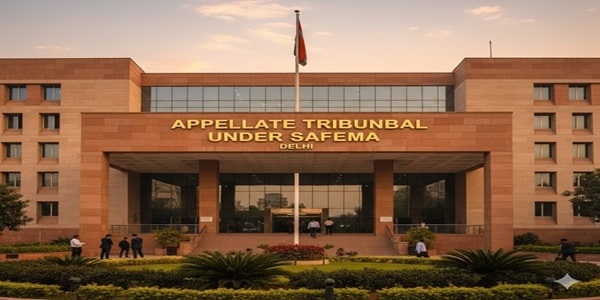
Union Bank of India Vs DCIT (ITAT Panaji)
ITAT Dismisses Union Bank’s Appeals as Time-Barred; Holds Corporate Restructuring Not a “Sufficient Cause” for 802-Day Delay u/s 253(3)
Summary: In Union Bank of India Vs DCIT, the Income Tax Appellate Tribunal (ITAT), Panaji dismissed the bank’s appeals for Assessment Years 2010-11, 2011-12 and 2014-15 as time-barred due to a delay of about 802–803 days beyond the limitation period prescribed under Section 253(3) of the Income-tax Act. The dispute originated from TDS defaults identified during a survey under Section 133A at a branch of Corporation Bank, which later merged with Union Bank of India in 2020. The Assessing Officer had treated the branch as an assessee in default under Sections 201(1) and 201(1A) for failure to deduct TDS on interest payments and for delayed deposit of deducted tax. After the National Faceless Appeal Centre dismissed the first appeals in January 2023, the bank filed second appeals before the Tribunal in June 2025. The Tribunal held that the bank failed to establish “sufficient cause” for the delay, rejecting arguments based on lack of awareness and corporate restructuring. Observing negligence and lack of diligence, the Tribunal refused condonation and dismissed the appeals.
Facts:
- The present bunch of appeals has been preferred by the appellant under Section 253(1) of the Income-tax Act, 1961 against the separate orders passed by the National Faceless Appeal Centre (NFAC), Delhi under Section 250 of the Act for Assessment Years 2010-11, 2011-12 and 2014-15. The said orders of the NFAC emanated from separate orders passed by the Dy./Asstt. Commissioner of Income Tax, TDS Circle, Panaji, Goa under Sections 201(1) and 201(1A) of the Act.
- Since the facts involved in all the three appeals were common and identical and arose out of a common survey conducted under Section 133A of the Act, the Tribunal heard the matters together and disposed of the same by a common and consolidated order, taking ITA No. 169/PAN/2025 as the lead case.
- The facts, in brief, are that the Samadevi Galli, Belgaum Branch of Corporation Bank was functioning as a registered branch of a Public Sector Bank, namely Corporation Bank. The said branch was registered with the Revenue as a tax deductor and was allotted TAN BRLC05017F. In order to verify compliance with the provisions of Chapter XVII of the Act relating to deduction and collection of tax at source, the Revenue conducted a survey/spot verification under Section 133A of the Act at the assessee branch on 03.10.2017 and 04.10.2017.
- During the course of survey, certain discrepancies were noticed in respect of compliance with the provisions relating to TDS. The discrepancies were confronted to the assessee branch. After considering the nature of non-compliance, the statement of the branch manager recorded under Section 131 of the Act and the submissions filed in response to show cause and other notices, the Assessing Officer initiated proceedings under Sections 201(1) and 201(1A) of the Act.
- The Assessing Officer held the assessee branch to be an “assessee in default” under Section 201(1) of the Act for failure to deduct tax at source from payment/credit of interest to its customers/depositors under two categories. Firstly, payment/credit of interest exceeding ₹10,000 made to customers/depositors without deducting TDS under Section 194A read with Section 197A and Rule 29C of the Income Tax Rules, 1962, where the assessee branch had defaulted in obtaining valid Form 15G/15H. Secondly, payment/credit of interest exceeding ₹10,000 to depositors/customers without deducting TDS under Section 194A of the Act. In addition to the above, default in depositing the deducted TDS to the credit of the exchequer within the prescribed time limit was also identified.
- Consequently, separate orders under Sections 201(1) and 201(1A) of the Act were passed for the three assessment years under consideration on 27.03.2018, 27.03.2019 and 05.03.2021, determining the liability towards non/short deduction of tax and the consequential interest payable thereon.
- Subsequently, as part of larger consolidation of Public Sector Banks, Corporation Bank along with all its branches merged into Union Bank of India with effect from 01.04.2020. As a result of the merger, all branches, customers and operations of the erstwhile Corporation Bank became part of Union Bank of India. The assessee branch thereafter commenced operating as a branch of Union Bank of India and was allotted a new TAN BLRU04750E. However, the earlier TAN BRLC05017F, against which the impugned assessments were framed, continued to remain active as confirmed from TRACES report and Revenue records.
- Aggrieved by the orders passed under Sections 201(1) and 201(1A), the deductor-assessee preferred appeals before the NFAC under Section 246A(1)(ha) of the Act challenging the levy of tax and interest. However, the NFAC, by separate orders dated 27.01.2023 and 31.01.2023 passed under Section 250 of the Act, dismissed the appeals.
- Aggrieved by the orders of the NFAC, the merged/amalgamated assessee bank filed the present appeals before the Tribunal. The appeals were instituted on 10/11.06.2025. As per the Registry, there was a delay of 803 days (the assessee computed 802 days) beyond the period prescribed under Section 253(3) of the Act. The appellant accordingly sought condonation of the delay by filing affidavits explaining the reasons for the delay.
Issues:
- Whether the delay of 802/803 days in instituting the present appeals under Section 253(1) of the Act is liable to be condoned in terms of Section 253(5) of the Act.
- Whether the appellant was prevented by a “reason/cause” from filing the appeals within the prescribed time limit under Section 253(3) of the Act.
- Whether the reasons stated by the appellant, namely (a) unawareness of passing of the impugned orders, and (b) pre-occupation with corporate restructuring/merger and consequential centralization of tax management, constitute “sufficient cause” for condonation of delay.
Observation:
- The Hon’ble Tribunal observed that without touching the grounds of appeal and without going into the merits of the case, it was required to first adjudicate the issue of delay in instituting the present appeals and the sufficiency of the reasons advanced for condonation under Section 253(5) of the Act.
- The Hon’ble Tribunal observed that the impugned orders of the NFAC were passed on 27.01.2023 and 31.01.2023 and, as specifically stated in Form No. 36 filed by the appellant, the said orders were communicated/served upon the appellant on the very same dates. It was further observed that the Executive Director of the appellant bank had also confirmed the said fact in his notarised affidavit. In view of such clear admission on record, the Tribunal observed that the plea raised during hearing that the appellant was unaware of the disposal of the first appeals until initiation of recovery proceedings was factually incorrect, unfounded and perverse. The Tribunal held that once the appellant had admitted service of the orders on the date of passing, the plea of ignorance could not be accepted and the case laws cited in support of such plea were of no assistance.
- The Hon’ble Tribunal further observed that the present appeals were instituted on 10/11.06.2025, resulting in a delay of 802/803 days beyond the statutory period prescribed under Section 253(3) of the Act. It was noted that admission of an appeal beyond limitation is permissible only if the appellant establishes that it was prevented by a “sufficient cause” from filing the appeal within time. The Tribunal reiterated that length of delay is not the sole determinant; rather, the acceptability and sufficiency of the explanation is the decisive factor. However, such explanation must demonstrate diligence, bona fide conduct and absence of negligence.
- The Hon’ble Tribunal observed that the burden squarely lay on the appellant to clearly and explicitly place on record all facts showing existence of sufficient cause. In the present case, apart from the plea of unawareness, the appellant relied upon corporate restructuring and merger of Corporation Bank with Union Bank of India, centralisation of taxation functions, transfer of officials and portal-related issues. The Tribunal, however, noted that the merger had taken effect from 01.04.2020, whereas the impugned appellate orders were passed in January 2023. Thus, the restructuring had been completed much prior to the passing of the impugned orders and could not reasonably explain inaction for more than two years thereafter.
- The Hon’ble Tribunal observed that there was hardly any cogent material placed on record to show that the corporate restructuring had per se prevented the appellant from filing the appeals in time. It was further observed that the appellant is a multinational commercial public sector bank dealing predominantly with financial matters and operating under strict corporate governance standards. Such an entity is expected to exercise vigilance in prosecuting pending fiscal litigation. The Tribunal found that the appellant failed to demonstrate any helplessness, lack of infrastructure, absence of trained personnel or any unavoidable circumstance that disabled it from filing the appeals within limitation.
- The Hon’ble Tribunal further observed that neither through affidavits nor through any other document did the appellant demonstrate that the delay was accidental or beyond its control. There was no whisper of any specific step taken during the intervening period to pursue the matter. On the contrary, the material on record revealed complete inaction for more than 2¼ years after service of the impugned orders. The Tribunal observed that such conduct exhibited lackadaisical propensity and sheer negligence, which cannot be condoned in the name of liberal approach.
- The Hon’ble Tribunal also observed that condonation of delay cannot be claimed as a matter of right and courts cannot show utter disregard to statutory limitation provisions. It was emphasized that where a party is found negligent or lacking bona fide, there cannot be a justified ground for condonation. In the present case, the averments made in support of delay lacked bona fide imputable and did not establish existence of sufficient cause within the meaning of Section 253(5) of the Act.
- Accordingly, the Hon’ble Tribunal observed that the reasons stated and averments made by the appellant failed to prove existence of sufficient cause. The delay remained unsupported by any adequate, enough or satisfactory explanation. In consequence, the Tribunal held that the appeals were barred by limitation under Section 253(3) and, as no case was made out for condonation under Section 253(5), the appeals were not admitted and stood dismissed.
FULL TEXT OF THE ORDER OF ITAT PANAJI