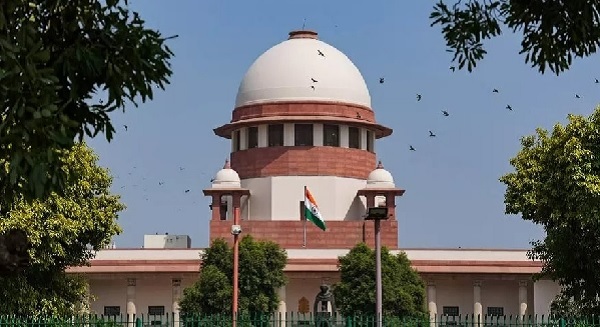
UV Asset Reconstruction Company Limited Vs Electrosteel Castings Limited (Supreme Court of India)
Deed of Undertaking Is Not a Guarantee: Resolution Plan Does Not Extinguish Rights Against Third-Party Security Providers Unless Debt Is Fully Satisfied
The Supreme Court held that Clause 2.2 of the Deed of Undertaking executed by Electrosteel Castings Limited (ECL) did not constitute a “contract of guarantee” under Section 126 of the Indian Contract Act, 1872. The clause merely imposed an obligation on ECL, as promoter, to arrange infusion of funds into the borrower (ESL) to ensure compliance with financial covenants, and did not contain any clear or unambiguous promise to discharge the borrower’s debt to the creditor upon default. An obligation to facilitate compliance or ensure financial discipline was held to be distinct from a promise to pay or discharge liability, which is the essence of a guarantee.
The Court emphasised that a guarantee requires a direct undertaking to the creditor, and contemporaneous documents—such as the sanction letter, information memorandum, assignment deed, and financial statements—clearly showed that no corporate guarantee was ever contemplated or created. The concept of a “see to it” guarantee, as understood in English law, was held to be inapplicable under Indian law where the statute requires a promise to perform or discharge the liability of the principal debtor.
On the second issue, the Court clarified that approval of a resolution plan under the Insolvency and Bankruptcy Code does not ipso facto extinguish rights against third parties or security providers, unless the plan expressly provides so or the entire debt stands fully satisfied. In the present case, although part of the debt was discharged through upfront payment and conversion of unsustainable debt into equity, the financial creditors had suffered a substantial haircut, and the resolution plan expressly preserved rights against third parties in respect of unsustainable debt.
Accordingly, the Supreme Court upheld the concurrent findings of the NCLT and NCLAT, dismissed both appeals, and reaffirmed two key principles: (i) an undertaking to infuse funds is not a guarantee, and (ii) resolution plans do not automatically wipe out creditor rights against guarantors or security providers unless clearly intended and the debt is fully extinguished
FULL TEXT OF THE SUPREME COURT JUDGMENT/ORDER