

Goods and Services Tax
Type: Articles
Read latest TaxGuru articles on Income Tax, GST, Company Law, Finance, Customs, Corporate Law, FEMA, SEBI and other tax and business topics.
Goods and Services Tax
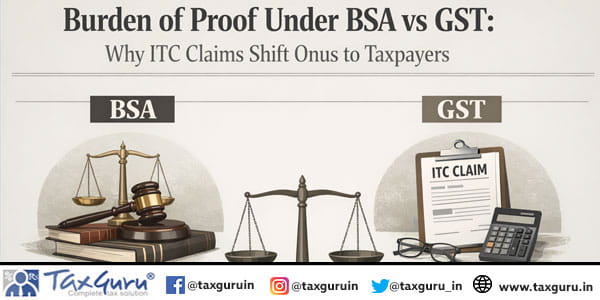
Burden of Proof Under BSA vs GST: Why ITC Claims Shift Onus to Taxpayers
Goods and Services Tax
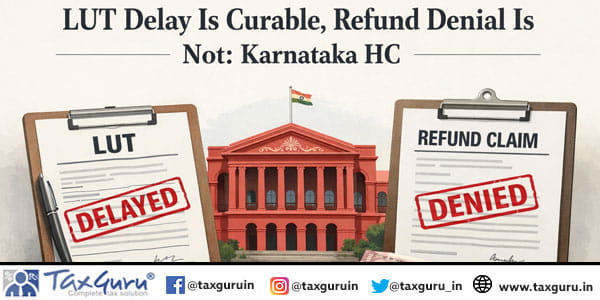
LUT Delay Is Curable, Refund Denial Is Not: Karnataka HC

Goods and Services Tax
Section 16(4) Time Limit on ITC for Imports: Analysis of Recent AAR Rulings
Goods and Services Tax
GST on Reimbursement of Expenses: Taxable vs. Non-Taxable
Goods and Services Tax
Union Budget 2026 – Amendments in GST Law

Goods and Services Tax
5 Hard Truths Every Founder & CFO Must Know About GST Litigation in 2026
Goods and Services Tax
How to get GST Refund if the same is not received after filing GSTR 1?
Goods and Services Tax
Why Bill of Entry (BoE) is not reflecting in GSTR 2B?
Articles on TaxGuru provide practical analysis, commentary and explanations across taxation, finance, corporate and business laws. This category brings together articles on Income Tax, GST, Company Law, Corporate Law, Customs, DGFT, Excise, Service Tax, FEMA/RBI, SEBI, finance and professional matters concerning CA, CS and CMA. Readers can explore contributions discussing statutory provisions, compliance requirements, regulatory changes, professional developments and practical issues affecting taxpayers and businesses. Chartered Accountants, Company Secretaries, Cost Accountants, advocates, tax professionals, businesses and taxpayers can use this archive to discover recent articles as well as useful earlier reference material published on TaxGuru.

