Most founders expanding overseas obsess over entity setup and forget the quieter risk: where their company is actually *managed* from. Set up a Delaware LLC or a Singapore Pte Ltd, run it from your laptop in Pune, and you may have just created a tax resident in two countries at once. The law that decides this isn’t in your incorporation papers. It’s buried in residency tests most people never read.
The “Place of Effective Management” Trap Nobody Warns You About
India’s Place of Effective Management rule, introduced under Section 6(3) of the Income Tax Act and effective from FY 2016-17, changed the game for outbound founders. If key commercial decisions for your foreign company are being taken in substance from India, the CBDT can treat that foreign entity as an Indian tax resident. Global income, taxed in India.
Here’s the part that surprises people. POEM doesn’t care where your board meets on paper. It cares where decisions are *actually* made. A Cayman holding company with Indian directors signing resolutions over WhatsApp from Gurugram is exactly the structure the rule was written to catch.
The CBDT’s 2017 guidelines carved out an exemption for companies with turnover under ₹50 crore in a financial year. Useful, but temporary. The moment you scale past that, your offshore structure goes under the microscope, and retrofitting governance is far harder than building it right.
DTAA Doesn’t Save You Automatically, and Founders Assume It Does
There’s a widespread belief that a Double Taxation Avoidance Agreement means you’ll never be taxed twice. It doesn’t work that way. A DTAA allocates taxing rights and offers credit mechanisms, but it requires you to actually qualify as a resident of the treaty country and prove it.
Take the India-Singapore DTAA. To claim benefits, your Singapore entity needs a valid Tax Residency Certificate from IRAS, and post the 2017 protocol amendment, capital gains exemptions that founders once relied on have largely been phased out. Many still structure around assumptions that expired six years ago.
Consider Rohan, founder of a Bengaluru-based fintech who set up a Singapore parent to attract investors. He assumed the DTAA would shield his dividend flows. What he missed was the Limitation of Benefits clause and the substance requirements under Singapore’s own rules. Without genuine local operations, his TRC was vulnerable, and the Indian tax authority could deny treaty relief entirely under the General Anti-Avoidance Rules in force since 2017.
The lesson is uncomfortable but simple. A treaty is a tool for businesses with real substance, not a loophole for shell entities.
FEMA Quietly Governs Whether You Can Even Send the Money
Tax is only half the story. Before a single rupee leaves India to fund your foreign subsidiary, the Foreign Exchange Management Act and the RBI’s Overseas Investment rules decide whether you’re allowed to.
Under the Overseas Investment Rules and Regulations notified in August 2022, an Indian resident making Overseas Direct Investment must route it through an Authorised Dealer bank and file Form FC for the investment. The framework also distinguishes between Overseas Direct Investment and Overseas Portfolio Investment, and getting that classification wrong can stall your entire structure.
Founders routinely trip over the round-tripping question. Under the 2022 rules, an Indian entity investing in a foreign company that in turn holds equity back in India is permitted only within specific limits, generally up to two layers of subsidiaries. Breach it, and you’re looking at a compounding application before the RBI and penalties under FEMA.
And the Liberalised Remittance Scheme, capped at USD 250,000 per individual per financial year, is not a backdoor for funding a serious operating subsidiary. Many first-time founders treat LRS as a convenient pipe. It isn’t built for that, and the RBI knows the difference.
Build Substance First, Structure Second
The cleanest way through all of this is to invert the usual order. Don’t pick a jurisdiction because it sounds prestigious, then scramble to justify it. Decide where genuine economic activity will live, then build the structure around that reality.
Substance is concrete. It means local directors with actual decision-making authority, a physical office, local employees, and board meetings held and minuted in the treaty country. The OECD’s BEPS framework, which India has adopted through measures including the Multilateral Instrument signed in 2017, has made paper-only structures a liability rather than an asset.
Picture Meera, who runs a Chennai-based SaaS company eyeing the UAE. Post the UAE’s introduction of a 9% corporate tax from June 2023, the old “zero-tax free zone” pitch needs rethinking. A Qualifying Free Zone Person can still access favourable rates, but only with adequate substance and qualifying income. Meera’s better move is to align her actual sales and support functions with the jurisdiction she claims, not chase a headline rate that now comes with conditions.
The structures that survive an audit are the ones where the legal form matches the operational truth.
The Takeaway
Cross-border expansion fails quietly, not loudly. It rarely collapses at setup. It unravels two or three years later when a POEM enquiry lands, a TRC gets challenged, or an ODI filing turns out to be missing. Before you incorporate anything offshore, map three things together: where decisions are made, which treaty you’re relying on, and whether FEMA permits the capital flow you’re planning. Treat those as one connected problem, because the regulators certainly do.
******
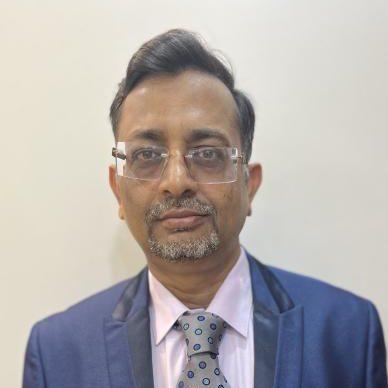
About the Author:Dr. Anil Gupta is a globally recognised international business strategist, entrepreneur, mentor, and thought leader with over three decades of experience helping businesses expand across borders. As the Founder & CEO of Connect Ventures and Chairman of Comply Globally, he has guided thousands of entrepreneurs and organisations in establishing compliant international operations across more than 50 countries. Combining expertise in global business, compliance, corporate structuring, and entrepreneurship, Dr. Gupta is known for developing innovative frameworks such as the 5Cs Growth Model and the RICH Customer Acquisition Framework. A sought-after speaker, author, and mentor, he has coached over 8,000 entrepreneurs worldwide and actively contributes to industry, academia, and policy initiatives through advisory roles with leading institutions and organisations. His mission is to empower businesses to achieve sustainable global growth through strategic vision, compliance excellence, and human-centred leadership.