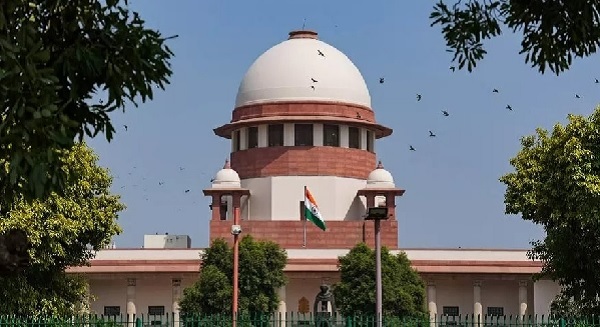
EPC Constructions India Limited Vs Matix Fertilizers And Chemicals Limited (Supreme Court of India)
SC: Redeemable Preference Shareholders Are Investors, Not Creditors—IBC Petition Not Maintainable-Conversion of Dues Into CRPS Extinguishes Debt; No Default Under IBC, Holds Apex Court
Issue
Whether holders of Cumulative Redeemable Preference Shares (CRPS) can be treated as “financial creditors” under Section 7 of the Insolvency & Bankruptcy Code, 2016 (IBC) so as to initiate CIRP against the issuing company for non-redemption.
Facts in Brief
- EPC Constructions India Ltd (formerly Essar Projects India Ltd) executed EPC contracts for Matix Fertilizers’ ammonia-urea project.
- ₹572.72 crore became payable by Matix. To support its funding, Matix proposed conversion of ₹400 crore dues into Redeemable Preference Shares.
- EPCC’s Board (30 July 2015) approved investment in 8% Cumulative Redeemable Preference Shares up to ₹400 crore, expressly noting that this would help Matix show equity infusion for lender funding.
- Matix allotted ₹250 crore CRPS (26 Aug 2015), redeemable at par after 3 years.
- When EPCC entered CIRP, its liquidator demanded ₹310 crore on CRPS maturity. Matix denied liability, stating redemption not due due to absence of profits.
- NCLT Kolkata & NCLAT dismissed EPCC’s s.7 IBC petition—holding CRPS are capital investment, not debt.
Appellant’s Contentions
- The CRPS were in substance subordinated debt; they had the commercial effect of borrowing u/s 5(8)(f) IBC.
- The arrangement aimed at repayment upon equity infusion within 3 years → thus a financial debt.
- Matix’s books showed CRPS as “unsecured loan”/“financial liability”, reinforcing the debt nature.
- Cited Pioneer Urban and Global Credit Capital to urge liberal reading of “financial debt”.
Respondent’s Contentions
- By virtue of s. 3(37) IBC r/w Companies Act 2013, preference shares are share capital, not debt.
- Preference shareholders are members, not creditors.
- s. 55 Companies Act restricts redemption only out of profits or fresh issue proceeds; absent such profits, no debt is “due”.
- Treating preference shareholders as financial creditors would blur the capital–debt distinction.
Supreme Court’s Findings Preference Shareholder ≠ Creditor
- Preference shares form part of share capital, not loan capital.
- Dividends payable only out of profits—if paid otherwise, it’s illegal return of capital.
- Lalchand Surana v. Hyderabad Vanaspathy Ltd (1990 68 Comp Cas 415 (AP)) followed: non-redemption doesn’t make the holder a creditor.
- Gower’s Principles of Modern Company Law cited to show that even redeemable preference shareholders remain equity participants, not lenders.
No “Default” under IBC
- For s. 7 IBC, default = non-payment of a “debt” due and payable (s. 3(12)).
- Here, redemption wasn’t “due” because Matix lacked profits or proceeds for redemption as mandated by s. 55 Companies Act.
- Hence, no default occurred.
Conversion Extinguished Earlier Debt
- The earlier EPC receivables were consciously converted into CRPS.
- Board minutes show EPCC accepted CRPS to improve Matix’s debt-equity ratio & aid project completion.
- Thus, the original trade debt was extinguished; EPCC became only a preference shareholder.
Accounting Entries Irrelevant
- Showing CRPS as “liability” in books or under AS-32 doesn’t alter the legal character.
- Accounting treatment cannot override statutory definition (relying on SBI v. CIT (1985) 4 SCC 585 & AGR case (2020) 3 SCC 525).
No Disbursal or Time-Value Element
- For a “financial debt”, there must be disbursal against consideration for time-value of money (s. 5(8)).
- Payment for shares is share capital, not disbursal.
- Sub-clause (f) (“commercial effect of borrowing”) also presupposes existence of a debt, which preference capital is not.
- Relied on Anuj Jain v. Axis Bank (2020 8 SCC 401) & Radha Exports (2020 10 SCC 538).
Held
- CRPS are equity capital, not debt.
- No financial debt or default existed.
- Preference shareholders cannot invoke Section 7 IBC.
- Appeal dismissed; NCLAT/NCLT orders upheld.
- No costs.
Key Takeaways
- Redeemable preference shares, even if cumulative, do not create a “financial debt” under IBC.
- Redemption obligation arises only when profits/fresh-issue funds exist (s. 55 Companies Act).
- Conversion of debt to CRPS extinguishes creditor status.
- Accounting classification cannot override legal nature of instrument.
- Preference shareholders’ remedy lies under company law, not IBC.
This landmark ruling settles the debate on whether holders of redeemable preference shares can initiate insolvency. The Supreme Court firmly preserves the debt–equity divide, preventing misuse of IBC by investors cloaking capital as debt—a vital precedent for financial structuring, resolution plans, and hybrid instruments.