Avinash Bhosale Vs Directorate of Enforcement (Bombay High Court)
PMLA Attachment Cannot Continue Without Nexus Between Transactions and Proceeds of Crime: Bombay HC
Summary: The Bombay High Court held that attachment under the Prevention of Money-Laundering Act, 2002 cannot continue where the transactions relied upon are lawful and no nexus with proceeds of crime is established. Allowing the appeal filed by Avinash Bhosale and others, the Court found no basis to retain attachment to the extent of ₹25 crore over properties in Pune and Nagpur. It also dismissed the Enforcement Directorate’s cross-appeal challenging the release of attached properties.
The cross-appeals arose from an Appellate Tribunal order dated 1 April 2026. The Tribunal had continued attachment over a Pune land parcel measuring 6,143.71 square metres, held by Samit Realty and valued at ₹14.65 crore, and the remaining amount necessary to make up ₹25 crore against land in Nagpur held by Gauri Bhosale.
The ED’s case concerned alleged proceeds of crime originating from YES Bank’s investments and lending to Dewan Housing Finance Corporation Limited (DHFL). According to its complaint, the total amount involved was ₹3,983 crore, comprising subordinated debt or privately placed bonds, masala bonds and non-convertible debentures.
The agency alleged that ₹164.64 crore received by Bhosale or his entities constituted proceeds of crime. The Court examined three categories of transactions: Nibodh Realty’s debenture investments, consultancy arrangements and the sale of a dairy business involving ABIL Dairy.
The Court considered the definitions of “proceeds of crime” under Section 2(1)(u), “scheduled offence” under Section 2(1)(y) and the offence of money laundering under Section 3 of the PMLA. It emphasised the requirement that the property must arise, directly or indirectly, from criminal activity relating to a scheduled offence.
Regarding Nibodh Realty, the record showed that it had invested ₹237.50 crore in Sanjay Chhabria’s company between October 2014 and July 2015 under three Debenture Subscription Agreements. The agreements provided for 18% annual interest. The parties presented differing calculations regarding subsequent repayments.
The ED sought to characterise ₹67.85 crore out of amounts received under these arrangements as proceeds of crime. The Court found no adequate basis for that computation. It also found that the agency had failed to establish a link between payments under the earlier agreements and YES Bank’s disbursements in 2018.
The Court noted that the repayments arose from agreements executed in 2014. On the material before it, no nexus was established between the contractual repayments and the alleged proceeds originating from the later bank disbursements.
The second category concerned consultancy agreements between DHFL and entities associated with Bhosale. The ED alleged that ₹71.82 crore represented proceeds of crime. However, the Court recorded that ₹47.52 crore had been disbursed before 12 April 2018, the date on which YES Bank granted the relevant loan to DHFL.
The Court further noted payments of ₹55.62 crore under consultancy agreements between July 2017 and May 2018, and an invoice for ₹16.20 crore raised on 6 April 2018, before the bank disbursement. It rejected the attempt to link payments received before that disbursement to the alleged proceeds flowing from it.
The third category involved ₹25 crore received by ABIL Dairy in February 2019. The Court found that the payment represented the balance consideration under a dairy business sale agreement executed in 2016, with the first 50% payment having been made in January 2016.
The fact that the remaining consideration was paid after April 2018 did not, by itself, establish that it constituted proceeds of crime. The Court treated the arrangements as independent transactions with separate corporate entities and found no nexus supporting the ED’s allegation.
The Bench also rejected the agency’s characterisation of the banking transactions on the record before it. It observed that the investments and loans received by DHFL were official banking transactions, and found the investigation’s contrary premise erroneous in the circumstances examined.
The ED additionally alleged that a ₹600 crore loan from DHFL to DOIT Urban Ventures amounted to a kickback. The Court found no cogent material even prima facie substantiating that allegation, beyond assertions in the pleadings.
After reviewing the Tribunal’s reasoning, the High Court found no perversity in its conclusions supporting release of properties. However, it held that the Tribunal had no basis to continue attachment over the remaining two properties.
Accordingly, Criminal Appeal No. 478 of 2026 was allowed, and the ED’s Criminal Appeal No. 816 of 2026 was dismissed. The decision concerned the attachment proceedings and turned on the Court’s finding that the transactions examined could not, on the material presented, be treated as proceeds of crime.
FULL TEXT OF THE JUDGMENT/ORDER OF BOMBAY HIGH COURT
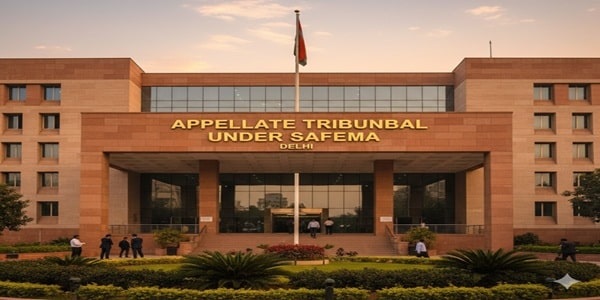
1) We have before us cross-Appeals from Order dated 1st April, 2026, passed by the Appellate Tribunal, New Delhi under the Smugglers and Foreign Exchange Manipulators (Forfeiture of Property) Act, 1976 (‘SAFEMA’).
2) By the said Order, the Appellate Tribunal has continued the provisional attachment to the extent of Rs. 25 Crores in respect of the following properties, namely:
(i) Land parcel admeasuring 6143.71 Sq. Meters in Pune, attached for the value of Rs. 14.65 Crores under the title of Samit Realty wholly; and
(ii) The remaining part to make good the amount of Rs. 25 Crores, being land admeasuring 20,200 Sq. Meters in Nagpur, valued at Rs. 15,52,87,000/-, in the name of Gauri Bhosale.
3) Criminal Appeal No. 478 of 2026 is filed by Avinash Bhosale and Others, who have been arraigned as accused in the third supplementary chargesheet filed by the Respondent Directorate of Enforcement (ED), in the investigation relating to ECIR No. ECIR/MBZO-I/03/2020. Criminal Appeal No. 816 of 2026 has been filed by the ED itself, challenging the release of the attached properties on the ground that the release is devoid of any merits.
4) We have heard Mr. Aabad Ponda, learned Senior Advocate for the Appellants in Criminal Appeal No. 478 of 2026, and Mr. Prashant Mishra, learned Special Counsel for the ED in Criminal Appeal No. 816 of 2026, and have carefully perused the record.
5) According to the original Complaint filed by the ED on 21st October, 2022, proceeds of crime to the tune of Rs. 3,983 Crores originated from YES Bank. The monies were sanctioned and disbursed to Dewan Housing Finance Corporation Limited (DHFL) against investments under:
a) Sub Debt/Private Placement of Bonds in the sum of Rs. 1000 Crores;
b) Masala Bonds in the sum of Rs. 283 Crores; and
c) Public Issue of Non-Convertible Debentures in the sum of Rs. 2700 Crores.
6) The expression ‘proceeds of crime’ is defined under Section 2 (u) of the Prevention of Money- Laundering Act, 2002 (for short, “PMLA”) which is set out hereinunder for ready reference :
“Section 2 (u)
proceeds of crime” means any property derived or obtained a scheduled offence or the value of any such property ‘[or where such directly or indirectly, by any person as a result of criminal activity relating to property is taken or held outside the country, then the property equivalent in value held within the country for abroad]].”
7) The offence of money laundering is defined under Section 3 of the PMLA and reads as under :
“Section 3 – Offence of Money-Laundering .- Whosoever directly or indirectly attempts to indulge or knowingly assists or knowingly is a party or is actually involved in any process or activity connected with the proceeds of crime including its concealment, possession, acquisition or use and projecting or claiming it as untainted property shall be guilty of offence of money-laundering.
[Explanation.—For the removal of doubts, it is hereby clarified that,—
(i) a person shall be guilty of offence of money-laundering if such person is found to have directly or indirectly attempted to indulge or knowingly assisted or knowingly is a party or is actually involved in one or more of the following processes or activities connected with proceeds of crime, namely:—
(a) concealment; or
(b) possession; or
(c) acquisition; or
(d) use; or
(e) projecting as untainted property; or
(f) claiming as untainted property,
in any manner whatsoever;
(ii) the process or activity connected with proceeds of crime is a continuing activity and continues till such time a person is directly or indirectly enjoying the proceeds of crime by its concealment or possession or acquisition or use or projecting it as untainted property or claiming it as untainted property in any manner whatsoever;] ”
8) A bare perusal of the definition of proceeds of crime shows that, it covers not only property derived or obtained from the scheduled offence, but also any property derived or obtained, directly or indirectly, as a result of criminal activity relatable to a scheduled offence. The expression ‘scheduled offence’ is defined in Section 2(1)(y) of the PMLA, which is reproduced hereinunder for ready reference :
“Section 2 (1)(y)– “scheduled offence” means—
(i) the offences specified under Part A of the Schedule; or
(ii) the offences specified under Part B of the Schedule if the total value involved in such offences is one crore rupees or more; or
(iii) the offences specified under Part C of the Schedule;]”
9) A simple analysis of the above provisions indicates that, a property must have been derived as a result of criminal activity relating to a scheduled offence specified either in Part A or Part B of the Schedule to the PMLA.
10) We are unable to comprehend, nor has the learned Special Counsel for the ED been able to explain, how official bank transaction(s) between a Bank and a Corporate entity, carried out in the usual course of business, could be construed as proceeds of crime and thereby constitute the offence of money laundering.
11) A perusal of the record indicates that, ED has alleged proceeds of crime to the tune of Rs.164.64 Crores received by Appellant No.1- Avinash Bhosale and/or his entities (i) Nibhodh Realty (Nibodh) (ii) Consultancy and (iii) ABIL Dairy (ABIL) Transactions.
12) The record shows that, between 15th October 2014 to 23rd July 2015, Nibodh invested a total of Rs.237.50 Crores in Sanjay Chhabria’s Company under three Debenture Subscription Agreements (‘DSA’). As per the terms of DSAs, the monies advanced carried an interest @ of Rs.18% per annum. Apparently, as per Mr. Ponda’s calculations, Sanjay Chhabria has repaid a sum of Rs. 499.63 Crores i.e. Rs.163.93 Crores prior to 12th April 2018 and Rs. 335.70 Crores after 12th April 2018, under the aforesaid Agreements.
13) However, as per Mr. Mishra’s calculation, Sanjay Chhabria had agreed to repay Rs. 766 Crores against Rs. 237 Crores lent at 18% interest p.a. in 2014-15. According to him, Rs. 431 Crores were repaid and Rs. 267 Crores were transferred in 2018. In our view, by using words ‘repaid’ and ‘transferred’ in the explanation tendered do not explain what he implies.
The proceeds of crime calculation showing Rs. 431.33 Crores repaid, Rs. 237.50 Crores principal, Rs. 122.61 Crores IBFL’s Interest and Rs. 3.37 Crores processing fee, totaling to Rs. 794.81 Crores. If Rs. 766 Crores is deducted therefrom, the balance is Rs. 28.81 Crores. Therefore, there is no basis to suggest Rs. 67.85 Crores constitutes proceeds of crime.
14) Under these transactions, we find no basis for the contention that, out of Rs.335.70 Crores received by Nibodh under the DSAs after 12th April 2018, Rs.67.85 Crores are proceeds of crime. The conclusion arrived by ED is entirely baseless because, the monies were repaid by Sanjay Chhabria under the DSAs executed in 2014. Therefore, no link is established between payment made to Nibodh by Sanjay Chhabria under the DSAs, the consultancy fee and the monies disbursed by YES Bank in 2018. There could not have been proceeds of crime even before the disbursement by YES Bank.
15) With regard to the consultancy transaction, ED alleges that, DHFL has entered into a series of consultancy Agreements with entities of Appellant No.1, and that the proceeds of crime is alleged to be Rs.71.82 Crores. An examination of the record indicates that, amount of Rs. 47.52 Crores was disbursed by DHFL prior to YES Bank granting a loan to DHFL on 12th April 2018. Thus, an amount of Rs.47.52 Crores received prior to the date of disbursal of the loan, being 12th April 2018, cannot have any connection with the proceeds of crime.
16) Thus, the theory of ED for DHFL diverted the monies to Appellant No.1 under consultancy Agreement is entirely erroneous because an amount of Rs.55.62 Crores was disbursed under the consultancy Agreements between 4th July 2017 and 11th May 2018, and an invoice of Rs.16.20 Crores was raised on 6th April 2018 i.e. six days prior to 12th April 2018.
17) In our view therefore, the amounts paid by DHFL and received by Appellant No.1 under the consultancy Agreements prior to the disbursal of the loan on 12th April 2018, therefore cannot be linked to proceeds of crime.
18) With regard to the ABIL, ED alleges that Rs.25 Crores received by ABIL from Sanjay Chhabria on 18th February 2019, constitutes proceeds of crime. It is inconceivable that, a payment made under an Agreement that, sale of a dairy business executed in the year 2016 alongwith first payment of 50% made on 15th January 2016, can be linked to proceeds of crime merely because the balance 50% was paid by Sanjay Chhabria to ABIL Dairy LLP on 28th February 2019 i.e. after 12th April 2018.
In our view, each transaction was an independent transaction with an independent Corporate entity and none of them is, by any stretch of the imagination, illegal. We find there is no nexus between them.
19) As per ED’s own case, during April and June 2018, YES Bank ‘invested Rs. 2700 Crores in Debentures of DHFL’ and further granted loans of Rs. 1,283 Crores to DHFL. The receipt of these monies by DHFL, whether as an investment or as a loan from YES Bank, cannot be faulted in law. These are official banking transactions and cannot be construed as proceeds of crime. If the contention is to be accepted it would mean that the money held by the bank was illicit and consequently, the transactions are fraudulent and illegal. This contention is only to be stated to be rejected.
20) In that view of the matter, the subsequent disbursement by DHFL to other legal entities cannot be construed as illegal transactions either, as they too are recognized lawful transactions. The entire basis of the investigation is therefore proceeds on erroneous hypothesis and the transactions cannot be treated as illegal, as alleged by the ED.
21) The ED contends that, in July 2018, DHFL lent Rs. 600 Crores to DOIT Urban Ventures, allegedly the family entity of Rana Kapoor, by way of kickback. This contention is wholly unfounded. A loan transaction cannot, in the first place, be termed as a kickback and there is no basis for such an allegation. A loan transaction may be extended with or without appropriate security, and it is entirely for the lender, in its own commercial wisdom, to decide whether to lend monies to an individual or entity. Except bald statements in the pleadings, there is no cogent material on record to even prima facie substantiate the same.
22) We find that, the arguments of Mr. Mishra are entirely without substance. Having perused the impugned Order, we find that, it has considered all the submissions of both the parties, analysed the case in its proper perspective, and that the conclusion arrived at, on the material placed before it, is not perverse.
23) However, we find no basis for the continuation of the attachment of the said two properties by the Appellate Tribunal.
24) Having concluded that all the transactions were legal transactions and could not be construed as proceeds of crime, we find no basis for continuing the attachment of the properties. We therefore pass the following Order:
i) Criminal Appeal No. 478 of 2026 is allowed in terms of prayer clause (a).
ii) Criminal Appeal No. 816 of 2026 filed by the ED is accordingly dismissed.