Judgement comes easily; understanding requires effort. In workplaces, decisions about leave, professional qualifications and performance are often assessed through visible outcomes. Yet every outcome carries a story that may not be apparent to the person evaluating it. The three-part visual series, ‘Animation Ink to the Art of Judgement: Critique → Care’, explores how constructive feedback can acknowledge context without abandoning accountability.
The sketches contrast critique, which focuses on what is immediately visible, with care, which considers the circumstances and effort behind it. Their message is not that standards should disappear, but that thoughtful judgement is more useful than a quick verdict.
1. Leave Priority: Understanding Competing Needs
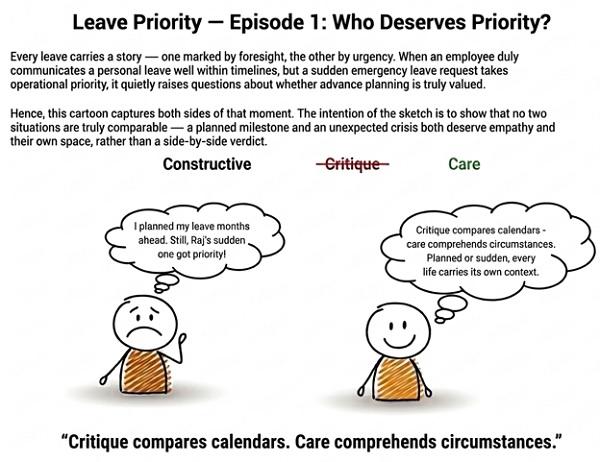
The first illustration considers an employee who planned personal leave months in advance, only to find that a colleague’s sudden emergency receives operational priority. The planned absence represents foresight and an important personal commitment; the unexpected request reflects an urgent need that could not have been scheduled.
A purely comparative response asks whose leave matters more. A caring response recognises that both situations deserve attention. Managers can explain the constraints, explore alternatives and avoid making either employee feel that their circumstances are unimportant. Fairness requires a reasoned process, not necessarily identical outcomes.
2. Certification: Recognising the Attempt
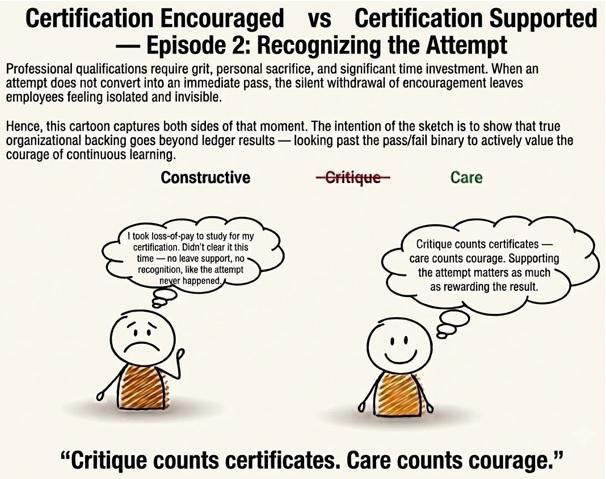
The second illustration examines professional certification. Employees may invest personal time, sacrifice earnings or take leave to prepare for examinations. When the immediate result is not a pass, encouragement can disappear precisely when it is most needed.
Certification remains a measurable achievement, and employers may legitimately require it for particular responsibilities. But development also involves commitment, learning and resilience. Constructive feedback can recognise serious effort, identify knowledge gaps and support a realistic next attempt. This approach respects the result while encouraging continued professional growth.
3. Performance: Looking Beyond the Final Score
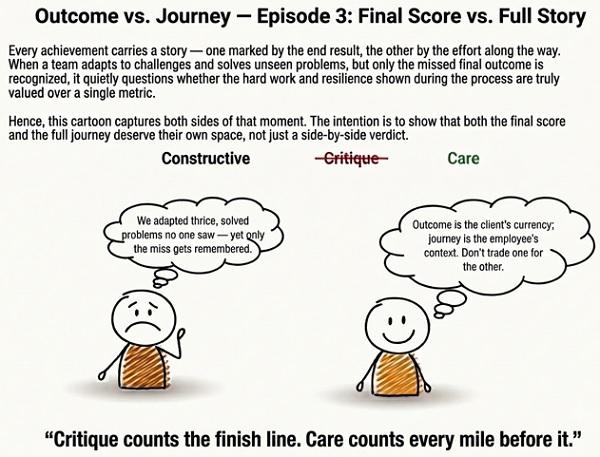
The final illustration focuses on teams that overcome unexpected problems but miss a target. Clients and businesses understandably measure delivery through outcomes. Employees, however, experience the full journey: adapting plans, resolving obstacles and sustaining work under pressure.
A review limited to the final score can overlook valuable problem-solving. A balanced assessment examines both the missed target and the decisions taken along the way. Leaders can ask what went wrong, what was within the team’s control, what was learned and which improvements will make future delivery stronger. Recognition of effort should complement, not replace, accountability.
Building a Culture of Constructive Feedback
Across all three episodes, the distinction is between criticism that stops at the visible result and feedback that investigates the fuller situation. Care does not mean automatically approving leave, awarding credentials without qualification or overlooking missed performance targets. It means listening before judging, applying consistent criteria and communicating decisions respectfully.
For organisations, this mindset can improve trust and make feedback more actionable. Employees are better placed to respond when they understand the reasons for a decision and believe their circumstances have been heard. Managers, in turn, gain a clearer picture of operational pressures, development needs and preventable obstacles.
The central lesson of #CritiqueToCare is simple: sound judgement combines candour with compassion. Outcomes matter, but context helps explain them. When both are considered, critique becomes an opportunity for learning rather than merely a verdict.