Dyarapogu Kurumaiah Vs Additional Commissioner (Telangana High Court)
When a tax dispute reaches a dead end due to procedural delays, it can feel like your options have evaporated. However, a recent ruling from the High Court for the State of Telangana offers a vital lesson for taxpayers on how to keep their legal fight alive even when administrative doors seem shut.
In the case of Dyarapogu Kurumaiah vs. Additional Commissioner, Ranga Reddy GST Commissionerate (Writ Petition No. 9054 of 2026), the court provided a clear path forward for those struggling with time-barred tax orders.
Case Background
The petitioner, Dyarapogu Kurumaiah, approached the High Court to challenge an Order-in-Original (dated 30.03.2022) and a subsequent Order-in-Appeal (dated 12.06.2024). The petitioner argued that the appellate authority had rejected his appeal solely on the grounds of limitation, failing to consider his submission that he never received the original Show Cause Notice or the Order-in-Original in a timely manner.
Key Legal Issue
The primary question before the court was whether it should exercise its writ jurisdiction to intervene in a matter where the petitioner had already exhausted his administrative appeal avenue, which was rejected on technical grounds of limitation.
Arguments Presented
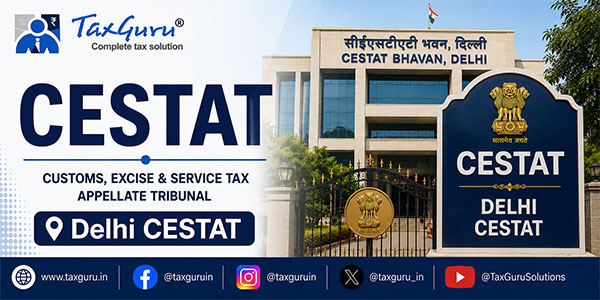
- Petitioner’s Stand: The counsel for the petitioner requested permission to withdraw the writ petition to instead approach the Customs, Excise and Service Tax Appellate Tribunal (CESTAT). They specifically sought the liberty to file a “delay condonation application” to address the expired appeal period.
- Respondents’ Stand: The Senior Standing Counsel for the Central Board of Indirect Taxes and Customs (CBIC) argued that the writ petition itself was filed with significant delay. Relying on the precedent of Assistant Commissioner (CT) LTU, Kakinada, v. Glaxo Smith Kline Consumer Health Care Limited, the respondents contended that the court should not entertain the writ petition given the existence of an alternative statutory remedy.Court Observations
The court, led by The Hon’ble The Chief Justice Sri Aparesh Kumar Singh and The Hon’ble Sri Justice G.M. Mohiuddin, acknowledged the procedural context. They noted that the order-in-appeal passed under Section 85 of the Finance Act, 1994, is appealable before the CESTAT under Section 86 of the Act. Consequently, the court found it appropriate to allow the petitioner to pursue the correct statutory forum.