Sarita Cooperative Housing Society Ltd. Vs Minister for Cooperation & Textile Department & Ors. (Bombay High Court)
Registration of New Cooperative Society Quashed Due to Absence of Statutory Bifurcation; Authorities Cannot Create Separate Society for Shops Within Existing Registered Building: Bombay HC; Registration Under Section 9 Cannot Be Used to Fragment an Existing Cooperative Society; Separate Cooperative Society for Shops Not Permissible Without Lawful Division of Existing Society
The case before the Bombay High Court concerned the legality of the registration of a separate cooperative society consisting of shop owners who were formerly members of an existing housing society. The petitioner society challenged the orders passed by authorities under the Maharashtra Cooperative Societies Act, 1960, particularly the order of the Registrar under Section 9 registering a new society for ten commercial shops situated within the same building governed by the petitioner society.
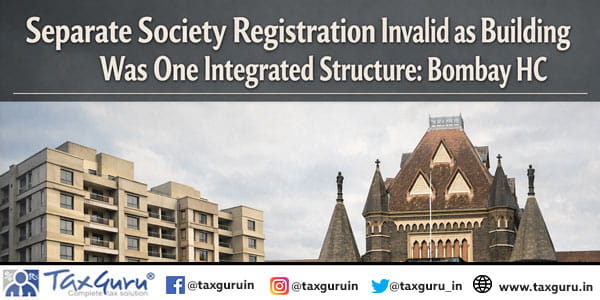
The petitioner society had been registered on 30 January 1986. The building known as “G–Sarita” consists of a ground floor and six upper floors. The ground floor contains ten commercial shops and eight residential flats, while the upper floors contain residential flats. In total, the building comprises 56 residential flats and ten shops. According to the petitioner, the entire building forms a single integrated and structurally interlinked construction, sharing common walls and forming part of a unified structural framework.
Subsequently, the shop owners resigned from the petitioner society and proposed the formation of a separate cooperative society exclusively for the ten shops. A show cause notice dated 4 February 2010 was issued by the Deputy Registrar calling upon the petitioner to explain why a separate society should not be registered for these shop premises. The petitioner opposed the proposal in its reply dated 10 February 2010. It argued that the shops formed an inseparable part of the same building structure and were already included within a duly registered cooperative society. The petitioner contended that merely satisfying the minimum numerical requirement for registration could not justify forming a new society for premises that already formed part of an existing society.
Despite these objections, the Deputy Registrar granted registration to the proposed society. While doing so, the authorities recorded a finding that the portion of the building consisting of the shops constituted an independent structure. Aggrieved by this decision, the petitioner filed an appeal under Section 152 of the Act and also submitted an application under Section 21A seeking de-registration of the newly registered society. However, the appeal, revision proceedings, and the application for de-registration were all dismissed.
The petitioner therefore approached the High Court by filing writ petitions challenging these orders. Notice was served on the newly registered society. Although an advocate had entered appearance and filed a reply opposing the petition, no one appeared on its behalf during the final hearing despite the matter being adjourned and listed with a clear indication that the adjournment would be the last opportunity. In these circumstances, the Court proceeded to decide the petition on merits in the absence of the respondent society.
After hearing the petitioner’s counsel and examining the record, the Court concluded that the orders granting registration to the separate society could not be sustained. The Court noted that the persons who proposed the new society were originally members of the petitioner society and that the petitioner society had governed the building since 1986. The proposal to form a separate society was made much later in 2010. The Court also observed that the entire building—consisting of 56 flats and 10 shops—had been constructed under a single sanctioned building plan. There was no material on record to indicate that the shops had been conceived or approved as a separate or independent unit.
The Court held that the building constituted a composite structure in both design and legal character. When a cooperative society is formed and registered in respect of a building constructed under a single sanctioned plan, all units forming part of that plan ordinarily fall within the same society unless they are lawfully separated in accordance with statutory provisions.
The Court further clarified that the central issue was not whether the shop premises could be physically separated from the residential flats. Physical separability alone does not determine the legal position. Such considerations may arise where the competent authority exercises statutory powers of division or bifurcation under Sections 17 and 18 of the Act after following the prescribed procedure and recording reasons. In the present case, however, no order of bifurcation had been passed and the original society continued to exist.
In the absence of a statutory division of the existing society, the authorities could not allow the registration of another society for premises already forming part of the existing registered society. The Court held that registration under Section 9 cannot be used as a mechanism to indirectly fragment an existing cooperative society. Permitting such a course would undermine the scheme of the Act and create overlapping authority over the same property.
The Court observed that the authorities had failed to appreciate the legal effect of the prior registration of the petitioner society and the absence of any lawful bifurcation under Sections 17 or 18. By treating a portion of the same building as an independent structure without following the statutory process, the authorities misdirected themselves in law. This resulted in two societies claiming authority over different parts of a single integrated building, a situation not contemplated by the statute without proper division.
Consequently, the Court held that the impugned orders suffered from a misapplication of the provisions of the Act and amounted to an erroneous exercise of jurisdiction. The orders granting registration to the new society were therefore quashed and set aside. The rule was made absolute and the writ petition was disposed of without any order as to costs.
FULL TEXT OF THE JUDGMENT/ORDER OF BOMBAY HIGH COURT
1. Rule made returnable forthwith.
2. The present writ petitions call in question the legality and validity of the order passed by the Registrar in exercise of powers under Section 9 of the Maharashtra Cooperative Societies Act, 1960, whereby a separate cooperative society has been registered consisting of certain persons who were formerly members of the petitioner society.
3. According to the petitioner, the building known as “G–Sarita” comprises a ground floor and six upper floors. The ground floor consists of 10 commercial shops and 8 residential flats, all forming part of a common structural framework and sharing a common wall. In aggregate, the building consists of 56 residential flats and 10 shops. The entire construction is structurally interlinked and constitutes one composite and integrated building.
4. The petitioner society came to be registered under the provisions of the MCS Act on 30 January 1986. Subsequently, the shop owners tendered their resignations from the membership of the petitioner society and submitted a proposal seeking registration of a separate cooperative society in respect of the 10 shops. These shops admittedly form part of the same building for which the petitioner society stands registered.
5. By a show cause notice dated 4 February 2010, the Deputy Registrar called upon the petitioner to explain why a separate society should not be registered in respect of the said shops. The petitioner submitted its reply on 10 February 2010 opposing the proposal. It was contended that the shop premises form an inseparable part of a single integrated structure and that mere fulfilment of the minimum numerical requirement prescribed for registration cannot justify registration of a new cooperative society when the premises are already included within an existing registered society. The Deputy Registrar rejected these objections and proceeded to grant registration to respondent No.4 society.
6. While granting registration to respondent No.4, the authorities under the Act recorded a finding that the portion of the building for which registration was sought constituted an independent structure. The petitioner thereafter preferred an appeal under Section 152 of the MCS Act and also filed an application under Section 21A seeking de-registration of respondent No.4 society. The appeal, revision and the application under Section 21A were all dismissed. Being aggrieved by these concurrent orders, the petitioner has invoked the writ jurisdiction of this Court.
7. Respondent No.4 was duly served with notice of the present petition. An Advocate entered appearance on its behalf and filed a reply opposing the petition. On 10 February 2026, when the matter was called out, none appeared on behalf of respondent No.4. The matter was adjourned and placed for final hearing with a clear indication that the adjournment was being granted as a last opportunity. Even on the adjourned date, there is no appearance on behalf of respondent No.4, though the name of its Advocate continues to be shown on the board. In these circumstances, the Court proceeds to decide the petition on merits in the absence of respondent No.4.
8. Having heard the learned Advocate appearing for the petitioner and having examined the material placed on record, this Court is of the considered view that the impugned orders granting registration to respondent No.4 society cannot be sustained in law and are liable to be quashed and set aside for the reasons recorded hereinafter.
9. It is not in dispute that the persons who moved the proposal for registration of respondent No.4 society were, at the relevant time, members of the petitioner society. The petitioner society has been in existence since 1986. For more than two decades, the building stood governed by one registered society. The proposal for forming a separate society came much later, in the year 2010. The record further shows that the entire structure, consisting of 10 shops and 56 flats, was constructed under a single sanctioned building plan. There is no material to suggest that the shops were conceived or approved as a separate and independent unit. The building is one composite structure, both in design and in legal character. When a society is formed and registered in respect of a building constructed under one sanctioned plan, all units forming part of that plan ordinarily fall within its fold, unless lawfully separated in accordance with statutory procedure.
10. The core question is not whether the shops can be physically demarcated from the residential flats. Physical separability by itself does not determine the legal position. Such an inquiry may become relevant where the competent authority exercises statutory power of division or bifurcation under Sections 17 and 18 of the MCS Act, after following due procedure and recording reasons. In the present case, there is no order of bifurcation. The original society continues to subsist. In the absence of a statutory division of the existing society, the authorities could not have permitted registration of another society in respect of premises which already form part of a duly registered cooperative society. Registration under Section 9 cannot be used as a means to indirectly fragment an existing society. If such a course is permitted, it would defeat the scheme of the Act and create overlapping jurisdictions over the same property. The statute contemplates orderly formation, alteration, and division of societies through defined procedures. Those safeguards cannot be bypassed.
11. In my considered view, the authorities have failed to appreciate the legal effect of the prior registration of the petitioner society and the absence of any order under Sections 17 or 18. By treating a portion of the same building as an independent structure without a lawful process of bifurcation, the authorities have misdirected themselves in law. The result is that two societies now claim authority over different parts of one integrated building, which the statute does not contemplate without proper division. This approach amounts to a misapplication of the provisions of the MCS Act and has led to an erroneous exercise of jurisdiction. The impugned orders, therefore, cannot be allowed to stand.
12. Rule is made absolute in terms of prayer clause (a).
13. The writ petition stands disposed of. No order as to costs.