
Type: News
Read latest TaxGuru news on taxation, GST, Income Tax, finance, business, corporate laws, regulatory developments and professional updates.

Penalty Invalid Without Proper Notice Service Under Companies Act: ICSI
DIR-3 KYC Filing Reduced to Once Every Three Years to Cut Compliance Burden

Government Proposes Tougher Information Technology Rules for Intermediaries
Format of Letter of Intent for Lease

Clarification on Section 194A TDS on interest in case of banking institutions

IRDAI Confirmed Ind AS Implementation Despite Stakeholder Concerns
Ind AS Reporting Made Mandatory for Insurers from 1st April 2026
Seven Convicted in Income Tax Refund Fraud Due to Forged Documents and Fake Identities
ICMAI Restricts Misleading Ads to Protect Professional Integrity of Cost Accountants

Free Webinar: Corporate NPS & ₹7.5L Tax Savings
NFRA Pulls Up Walker Chandiok & Co. LLP for Independence & Non-Audit Violations
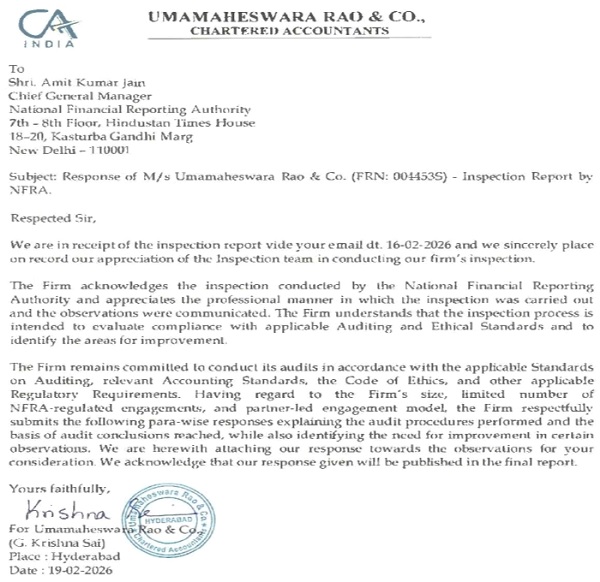
NFRA Flags Major Audit Lapses in Quality Inspection Report of Umamaheswara Rao & Co.
NFRA Pulled Up B D G & CO LLP as Independence and SQC Policies Not Fully Aligned
NFRA Pulled Up CNK & Associates for Deficiencies in Audit Procedures
News brings together important developments affecting taxpayers, businesses, professionals and the financial and regulatory ecosystem. TaxGuru covers news relating to Income Tax, GST, Company Law, Corporate Law, Customs, DGFT, FEMA/RBI, SEBI, finance, business, professional bodies and other tax and regulatory subjects. The category includes developments arising from government decisions, regulators, departments, courts, professional institutions and other relevant sources. Readers can use this page to stay informed about recent changes, announcements and developments having implications for taxation, compliance, finance, business and professional practice.

