When the Jammu & Kashmir GST Act was passed on 7 July 2017, it was more than a fiscal formality — it was the moment J&K’s markets, traders, and industries formally joined the single largest common market in the world. Before GST, a trader in Srinagar moving goods to Delhi or Mumbai navigated a thicket of central excise duty, state VAT, entry tax, and octroi — each with its own paperwork, its own inspector, its own delay. GST swept that away, replacing it with one tax, one return, one national market. For a region long seen as economically distant from the mainland, this was genuine integration — not just symbolic, but structural.
What GST Has Delivered
The benefits are tangible and growing. Input Tax Credit has eliminated the old “tax on tax” cascade, lowering effective costs for manufacturers and traders across sectors from cement to carpets. Interstate trade barriers have fallen: a Kashmiri exporter selling Pashmina to Gujarat or a Jammu-based auto-parts dealer supplying Punjab now operates under the same rulebook as any trader in Mumbai or Chennai — a levelling that has quietly opened new markets for local businesses that earlier compliance costs kept confined to home turf.
The numbers back this up. Revenue collections have shown consistent, healthy growth year on year, with the State Taxes Department’s monthly contributions to the exchequer — cash and settlement receipts combined — now running into hundreds of crores routinely, a scale unimaginable under the fragmented pre-2017 tax structure. The Centre’s compensation mechanism cushioned the transition years, and IGST settlement has ensured J&K receives its fair share of tax on goods consumed here, even when produced elsewhere — a fairness the old origin-based tax system never guaranteed.
Technologically too, the system has matured. Auto-drafted ITC statements, sequential return filing, e-invoicing thresholds, and biometric-based registration verification have all tightened the net against fraud while easing genuine compliance — recent Council-level reforms on provisional refunds have specifically responded to exporter and small-trader concerns, showing a system willing to correct itself.
None of this means the job is finished, and saying so plainly serves traders better than platitudes. The GST Appellate Tribunal took far too long to become operational, leaving years of disputes without a dedicated forum short of the High Court. J&K’s handicraft exporters — a sector this region cannot afford to disadvantage — still face compliance requirements, such as mandatory e-way bills with no value threshold, that do not fully account for the informal, artisan-led nature of that trade. And with national rate rationalisation reducing some revenue inflows, J&K’s own-resource base — already thin — needs sustained Central support and sharper local revenue mobilisation to keep pace with development spending.
These are not indictments of the system; they are the natural friction points of a reform still settling into a region with its own economic texture. The Council and the administration have shown, repeatedly, a willingness to listen and adjust — from refund reforms to rate simplification.
Looking Ahead
Nine years on, GST has done what decades of policy discussion could not: it has stitched J&K’s economy seamlessly into India’s own. The task now is to keep refining implementation — faster dispute resolution, sector-sensitive compliance for handicrafts, and stronger last-mile awareness — so that integration on paper becomes prosperity in practice for every trader, artisan, and consumer in the Union Territory.
*****
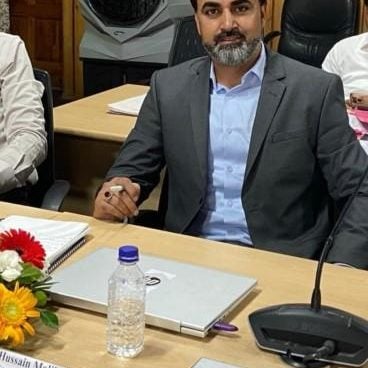
Aijaz Hussain Malik, (Author is 2015 batch JKAS Officer, presently posted as State Taxes Officer, Srinagar and can be reached at [email protected])