Income Tax : The Tribunal ruled that penalty under Section 271A cannot be levied merely because books were rejected and income was estimated. S...
Income Tax : Section 44AA mandates books for professionals and businesses exceeding income thresholds. Details presumptive tax rules, required ...
Income Tax : Detailed overview of penalties under various sections of the Income Tax Act, covering defaults in tax payment, reporting, document...
Income Tax : A summary of key penalties under the Income Tax Act for AY 2026-27, covering defaults from late filing and non-payment to misrepor...
Income Tax : Explore recent ITAT judgment in Rakesh Kr. Jha vs. ITO, delving into interpretation of Sections 271A and 271B, highlighting confli...
Income Tax : Explore amendments to section 253 of Income-tax Act, adjusting time limits for filing appeals to the Income Tax Appellate Tribunal...
Income Tax : Orissa High Court held that post search operation all pending assessments/reassessments doesn’t not automatically get abated as ...
Income Tax : The ITAT Bangalore held that cash received as part of sale consideration for immovable property does not automatically attract pen...
Income Tax : The dispute centered on a statutory obligation to maintain books of account. The tribunal confirmed that non-compliance attracts p...
Income Tax : The tribunal held that once penalty is imposed for non-maintenance of books, a second penalty for non-audit cannot be levied. Levy...
Income Tax : The Tribunal deleted a penalty imposed for alleged non-maintenance of accounts. It held that audited books, even if defective, do ...
Orissa High Court held that post search operation all pending assessments/reassessments doesn’t not automatically get abated as provisions of section 158BA(2) of the Income Tax Act. Matter must specifically fall within Block Assessment Scheme for abatement. However, writ dismissed as power under Article 226 not invoked.
The ITAT Bangalore held that cash received as part of sale consideration for immovable property does not automatically attract penalty under Section 271D if reasonable cause is established under Section 273B.
The dispute centered on a statutory obligation to maintain books of account. The tribunal confirmed that non-compliance attracts penalty under Section 271A, which cannot be deleted without substantive rebuttal.
The tribunal held that once penalty is imposed for non-maintenance of books, a second penalty for non-audit cannot be levied. Levy of section 271B was held to be impermissible double penalisation.
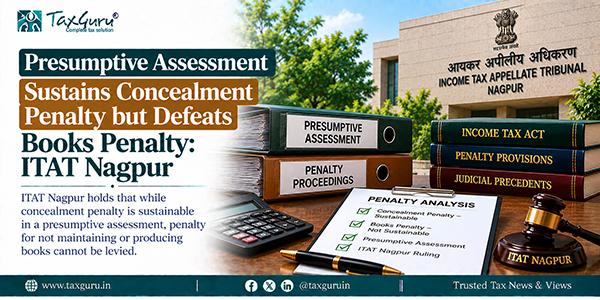
The Tribunal ruled that penalty under Section 271A cannot be levied merely because books were rejected and income was estimated. Since audited books were available, there was no failure to maintain accounts.
The Tribunal deleted a penalty imposed for alleged non-maintenance of accounts. It held that audited books, even if defective, do not attract penalty under Section 271A.
The Tribunal held that only the first non-compliance under Section 142(1) could attract penalty, deleting the remaining ₹50,000 imposed for repeated defaults. It also restored penalties under Sections 271A and 271(1)(c) for fresh adjudication since they depend on the pending quantum appeal.
Section 44AA mandates books for professionals and businesses exceeding income thresholds. Details presumptive tax rules, required records, retention period, and ₹25,000 penalty.
Detailed overview of penalties under various sections of the Income Tax Act, covering defaults in tax payment, reporting, documentation, and TDS/TCS compliance with prescribed penalty amounts.
A summary of key penalties under the Income Tax Act for AY 2026-27, covering defaults from late filing and non-payment to misreporting income and non-compliance with compliance. Learn about financial penalties and potential rigorous imprisonment for serious tax offenses.