Income Tax : This document provides a complete reference on compounding of offences, including application procedures, offence-wise charges, re...
Income Tax : The FAQs explain the revised CBDT guidelines on compounding offences under the Income-tax Act effective from 17 October 2024. They...
Income Tax : The FAQs explain the prosecution provisions under the Income-tax Act, covering offences such as tax evasion, non-payment of TDS/TC...
Income Tax : Judicial rulings clarify that satisfaction for initiating action against other persons in search cases must be recorded promptly. ...
Income Tax : Courts are divided on whether the DRP-specific deadline under Section 144C(13) overrides the general assessment time bar in Sectio...
Income Tax : Learn about the new block assessment provisions for cases involving searches under section 132 and requisitions under section 132A...
Income Tax : ITAT Delhi quashed a Section 153C assessment, holding that a consolidated and defective satisfaction note invalidated jurisdiction...
Income Tax : ITAT held that a registered sale deed without corroborative evidence is not incriminating material and cannot support additions in...
Income Tax : ITAT held reassessment under Sections 147/148 invalid because it was based on a pre-1 April 2021 third-party search, requiring pro...
Income Tax : ITAT Mumbai quashed a Section 148 notice issued after the limitation under the first proviso to Section 149, holding the reassessm...
Income Tax : ITAT held that penalty under Section 271D cannot survive where the Assessing Officer failed to record satisfaction in the assessme...
Income Tax : Availability of Miscellaneous Functionalities related to ‘Selection of Case of Search Year’ and ‘Relevant Search...
Delhi ITAT held that assessments under Section 153C were invalid where the satisfaction note for the non-searched person was recorded after 01.04.2021. The Tribunal ruled that Section 153C(3) barred such proceedings, rendering the assessments void.
The Tribunal found that none of the purchasers examined by the Department had admitted making cash payments to the assessee. In the absence of statements, receipts, diaries, or other incriminating material, the allegation of on-money remained unsubstantiated. The addition based on presumptions was therefore set aside.
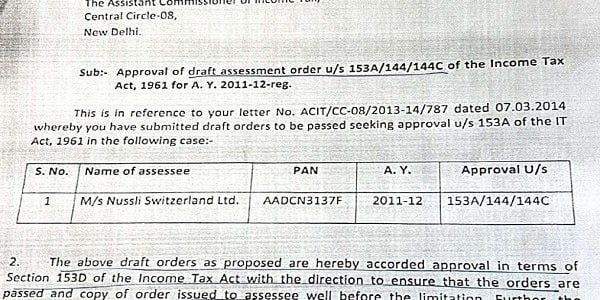
Assessment orders passed pursuant to express liberty granted by the High Court during pendency of settlement-related litigation remain valid and enforceable. Mere keeping of demand in abeyance did not invalidate already communicated assessment orders, nor did it require passing of fresh assessment orders after rejection or abatement of settlement proceedings.
The Delhi ITAT held that rejection of books under Section 145(3) was unjustified where the tax authorities failed to identify specific discrepancies. The Tribunal deleted the profit estimation-based addition and emphasized the need for concrete defects before rejecting accounts.
TAT Mumbai held that additions under Sections 68 and 69C could not be sustained where the Revenue failed to establish any connection between the assessee and alleged price-rigging operators. The Tribunal found that the transactions were supported by demat records, banking documents, and stock exchange evidence. The LTCG exemption under Section 10(38) was restored.
The Delhi High Court held that the period consumed in granting time to the assessee under Section 148A(b) must be excluded while computing limitation. As reassessment proceedings were initiated within time, the Section 148 notice was held valid.
ITAT Hyderabad held that reassessment beyond three years was invalid as the Assessing Officer failed to demonstrate that the alleged escaped income was represented by an asset, expenditure, or book entry as required under Section 149(1)(b). The ruling underscores the mandatory jurisdictional conditions for reopening assessments.
The ITAT held that compensation paid to terminate a land sale agreement was a business expenditure incurred for commercial reasons. The amount could not be treated as part of closing stock and was allowable under Section 37.
The Tribunal held that the satisfaction note failed to identify the documents allegedly found during the search or their connection to the taxpayer. The ruling confirms that vague references to seized material are insufficient.
The Tribunal held that the Revenue failed to establish escaped income of ₹50 lakh or more, a prerequisite for extending the assessment period beyond six years. The ruling reinforces strict compliance with statutory thresholds for extended reassessment.