Income Tax : The framework clarifies that companies must pay MAT where normal tax liability is lower than 15% of book profit. It establishes MA...
Income Tax : The amendment removes MAT for additional specified non-resident businesses taxed on a presumptive basis. This ensures uniform tax ...
Income Tax : MAT will become a final tax in the old regime at 14%, replacing the earlier credit-based mechanism. The change simplifies complian...
Income Tax : Detailed overview of corporate tax rates, surcharges, and MAT for AY 2021-22 to AY 2025-26, applicable for various domestic and ma...
Income Tax : Summary of key income tax benefits and residency rules for non-residents (NRs) in India for AY 2026-27. Covers the scope of taxati...
Income Tax : Understand PFA and defective return queries for ITR 1-6 for AY 24-25, including MAT applicability, TDS/TCS claims, and income disc...
Income Tax : In order to attract fresh investment in manufacturing and provide boost to 'Make-in India' initiative of the Government, another p...
Income Tax : The computation of book profit under section 115JB is a complicated and vexed issue with diverse interpretations possible on vario...
Income Tax : Relaxation in the provisions relating to levy of Minimum Alternate Tax (MAT) in case of companies against whom an application for ...
Income Tax : The ITAT Delhi held that the Assessing Officer could not alter book profit under Section 115JB by disallowing losses from alleged ...
Income Tax : The issue was denial of concessional tax regime due to incorrect ITR disclosure and alleged delay in filing Form 10-IC. The Tribun...
Income Tax : The SC upheld that reinsurance premiums paid to foreign entities are not taxable in India. It confirmed that absence of income acc...
Income Tax : The High Court held that reinsurance premiums paid to non-residents are not taxable in India and no TDS is required. It upheld Tri...
Income Tax : ITAT ruled that once the Assessing Officer makes no addition on the issue forming the basis of reopening, other additions cannot s...
Income Tax : Representations have been received from the stakeholders seeking clarification on following issues relating to exercise of option ...
Income Tax : Details of the amount required to be increased or decreased in accordance with sub-section (2A) of section 115JB- [Applicable only...
Income Tax : Clarifications with FAQs on computation of book profit for the purposes of levy of Minimum Alternate Tax (MAT) under section 115JB...
Income Tax : CBDT press release on Issues arising from the implementation of Minimum Alternate Tax (MAT) provisions relating to Indian Accounti...
Income Tax : CIRCULAR NO. 25/2015 Penalty u/s 271(1)(c) wherein additions/disallowances made under normal provisions of the Income Tax Act, 196...
The ITAT Delhi held that the Assessing Officer could not alter book profit under Section 115JB by disallowing losses from alleged penny stock transactions. The Tribunal ruled that such adjustment was not permitted under the statutory explanations to Section 115JB.
The issue was denial of concessional tax regime due to incorrect ITR disclosure and alleged delay in filing Form 10-IC. The Tribunal held that due date depends on the class of assessee, not procedural lapses, and allowed Section 115BAA benefit.
The SC upheld that reinsurance premiums paid to foreign entities are not taxable in India. It confirmed that absence of income accrual and PE eliminates TDS liability.
The High Court held that reinsurance premiums paid to non-residents are not taxable in India and no TDS is required. It upheld Tribunal findings and rejected Revenue’s challenge across multiple years.
The framework clarifies that companies must pay MAT where normal tax liability is lower than 15% of book profit. It establishes MAT as a minimum tax safeguard, ensuring consistent tax contributions regardless of reported income.
ITAT ruled that once the Assessing Officer makes no addition on the issue forming the basis of reopening, other additions cannot survive. MAT demand under Section 115JB was therefore struck down as unlawful.
The Tribunal ruled that reopening based merely on audit objection without independent application of mind is unsustainable. An audit note cannot replace the Assessing Officers reasoned belief.
The Court held that Explanation 1(f) to Section 115JB does not expressly permit addition of Section 14A disallowance, leading to dismissal of the Revenue s appeal.
The amendment removes MAT for additional specified non-resident businesses taxed on a presumptive basis. This ensures uniform tax treatment across all eligible activities and avoids unintended MAT exposure.
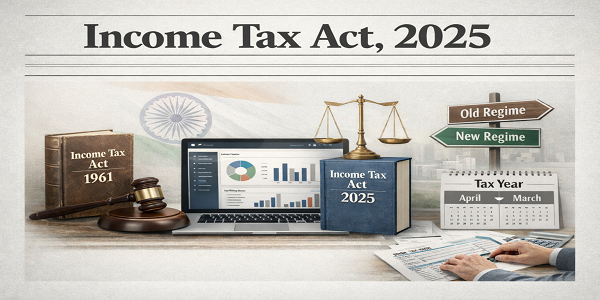
MAT will become a final tax in the old regime at 14%, replacing the earlier credit-based mechanism. The change simplifies compliance while nudging companies toward the new tax regime.